{"title":"Linking Peroxiredoxin and Vacuolar-ATPase Functions in Calorie Restriction-Mediated Life Span Extension.","authors":"Mikael Molin, Ayse Banu Demir","doi":"10.1155/2014/913071","DOIUrl":null,"url":null,"abstract":"<p><p>Calorie restriction (CR) is an intervention extending the life spans of many organisms. The mechanisms underlying CR-dependent retardation of aging are still poorly understood. Despite mechanisms involving conserved nutrient signaling pathways proposed, few target processes that can account for CR-mediated longevity have so far been identified. Recently, both peroxiredoxins and vacuolar-ATPases were reported to control CR-mediated retardation of aging downstream of conserved nutrient signaling pathways. In this review, we focus on peroxiredoxin-mediated stress-defence and vacuolar-ATPase regulated acidification and pinpoint common denominators between the two mechanisms proposed for how CR extends life span. Both the activities of peroxiredoxins and vacuolar-ATPases are stimulated upon CR through reduced activities in conserved nutrient signaling pathways and both seem to stimulate cellular resistance to peroxide-stress. However, whereas vacuolar-ATPases have recently been suggested to control both Ras-cAMP-PKA- and TORC1-mediated nutrient signaling, neither the physiological benefits of a proposed role for peroxiredoxins in H2O2-signaling nor downstream targets regulated are known. Both peroxiredoxins and vacuolar-ATPases do, however, impinge on mitochondrial iron-metabolism and further characterization of their impact on iron homeostasis and peroxide-resistance might therefore increase our understanding of the beneficial effects of CR on aging and age-related diseases. </p>","PeriodicalId":39084,"journal":{"name":"International Journal of Cell Biology","volume":"2014 ","pages":"913071"},"PeriodicalIF":0.0000,"publicationDate":"2014-01-01","publicationTypes":"Journal Article","fieldsOfStudy":null,"isOpenAccess":false,"openAccessPdf":"https://www.ncbi.nlm.nih.gov/pmc/articles/PMC3930189/pdf/","citationCount":"0","resultStr":null,"platform":"Semanticscholar","paperid":null,"PeriodicalName":"International Journal of Cell Biology","FirstCategoryId":"1085","ListUrlMain":"https://doi.org/10.1155/2014/913071","RegionNum":0,"RegionCategory":null,"ArticlePicture":[],"TitleCN":null,"AbstractTextCN":null,"PMCID":null,"EPubDate":"2014/2/3 0:00:00","PubModel":"Epub","JCR":"Q3","JCRName":"Biochemistry, Genetics and Molecular Biology","Score":null,"Total":0}
引用次数: 0
Abstract
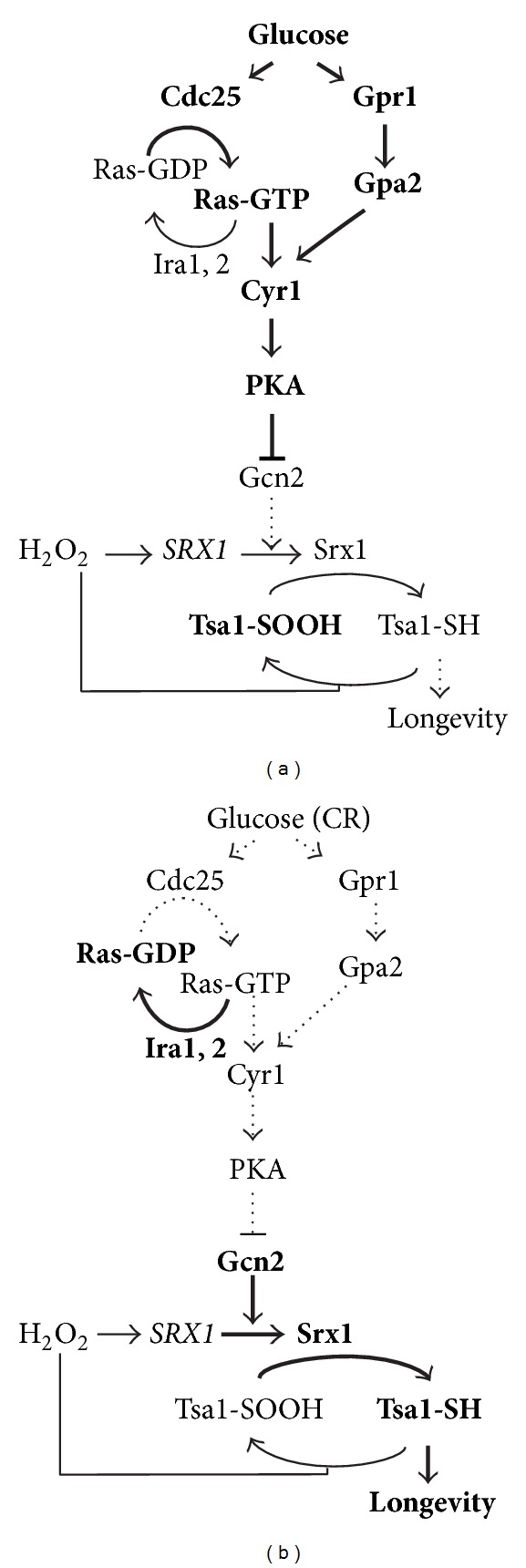
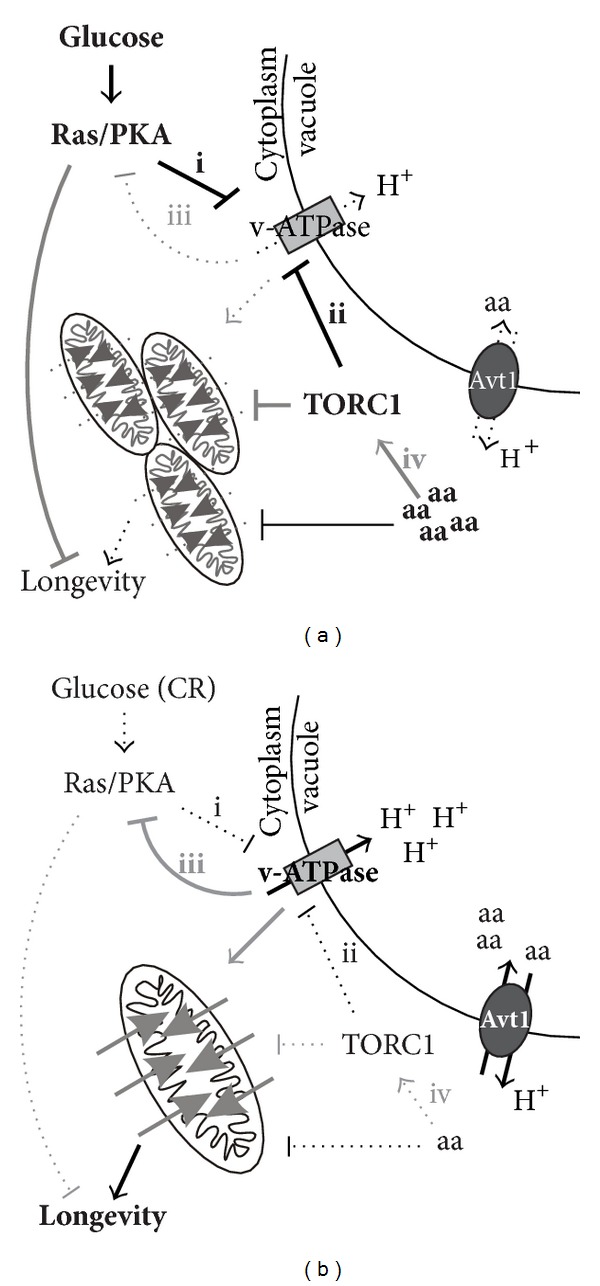
Calorie restriction (CR) is an intervention extending the life spans of many organisms. The mechanisms underlying CR-dependent retardation of aging are still poorly understood. Despite mechanisms involving conserved nutrient signaling pathways proposed, few target processes that can account for CR-mediated longevity have so far been identified. Recently, both peroxiredoxins and vacuolar-ATPases were reported to control CR-mediated retardation of aging downstream of conserved nutrient signaling pathways. In this review, we focus on peroxiredoxin-mediated stress-defence and vacuolar-ATPase regulated acidification and pinpoint common denominators between the two mechanisms proposed for how CR extends life span. Both the activities of peroxiredoxins and vacuolar-ATPases are stimulated upon CR through reduced activities in conserved nutrient signaling pathways and both seem to stimulate cellular resistance to peroxide-stress. However, whereas vacuolar-ATPases have recently been suggested to control both Ras-cAMP-PKA- and TORC1-mediated nutrient signaling, neither the physiological benefits of a proposed role for peroxiredoxins in H2O2-signaling nor downstream targets regulated are known. Both peroxiredoxins and vacuolar-ATPases do, however, impinge on mitochondrial iron-metabolism and further characterization of their impact on iron homeostasis and peroxide-resistance might therefore increase our understanding of the beneficial effects of CR on aging and age-related diseases.




 京公网安备 11010802042870号
京ICP备2023020795号-1
京公网安备 11010802042870号
京ICP备2023020795号-1

 分享
分享
 求助内容:
求助内容: 应助结果提醒方式:
 扫码关注我们
