Ariane Giannattasio, Sandra Weil, Stephan Kloess, Nariman Ansari, Ernst H K Stelzer, Adelheid Cerwenka, Alexander Steinle, Ulrike Koehl, Joachim Koch
{"title":"Cytotoxicity and infiltration of human NK cells in in vivo-like tumor spheroids.","authors":"Ariane Giannattasio, Sandra Weil, Stephan Kloess, Nariman Ansari, Ernst H K Stelzer, Adelheid Cerwenka, Alexander Steinle, Ulrike Koehl, Joachim Koch","doi":"10.1186/s12885-015-1321-y","DOIUrl":null,"url":null,"abstract":"<p><strong>Background: </strong>The complex cellular networks within tumors, the cytokine milieu, and tumor immune escape mechanisms affecting infiltration and anti-tumor activity of immune cells are of great interest to understand tumor formation and to decipher novel access points for cancer therapy. However, cellular in vitro assays, which rely on monolayer cultures of mammalian cell lines, neglect the three-dimensional architecture of a tumor, thus limiting their validity for the in vivo situation.</p><p><strong>Methods: </strong>Three-dimensional in vivo-like tumor spheroid were established from human cervical carcinoma cell lines as proof of concept to investigate infiltration and cytotoxicity of NK cells in a 96-well plate format, which is applicable for high-throughput screening. Tumor spheroids were monitored for NK cell infiltration and cytotoxicity by flow cytometry. Infiltrated NK cells, could be recovered by magnetic cell separation.</p><p><strong>Results: </strong>The tumor spheroids were stable over several days with minor alterations in phenotypic appearance. The tumor spheroids expressed high levels of cellular ligands for the natural killer (NK) group 2D receptor (NKG2D), mediating spheroid destruction by primary human NK cells. Interestingly, destruction of a three-dimensional tumor spheroid took much longer when compared to the parental monolayer cultures. Moreover, destruction of tumor spheroids was accompanied by infiltration of a fraction of NK cells, which could be recovered at high purity.</p><p><strong>Conclusion: </strong>Tumor spheroids represent a versatile in vivo-like model system to study cytotoxicity and infiltration of immune cells in high-throughput screening. This system might proof useful for the investigation of the modulatory potential of soluble factors and cells of the tumor microenvironment on immune cell activity as well as profiling of patient-/donor-derived immune cells to personalize cellular immunotherapy.</p>","PeriodicalId":9131,"journal":{"name":"BMC Cancer","volume":" ","pages":"351"},"PeriodicalIF":3.4000,"publicationDate":"2015-05-03","publicationTypes":"Journal Article","fieldsOfStudy":null,"isOpenAccess":false,"openAccessPdf":"https://sci-hub-pdf.com/10.1186/s12885-015-1321-y","citationCount":"71","resultStr":null,"platform":"Semanticscholar","paperid":null,"PeriodicalName":"BMC Cancer","FirstCategoryId":"3","ListUrlMain":"https://doi.org/10.1186/s12885-015-1321-y","RegionNum":2,"RegionCategory":"医学","ArticlePicture":[],"TitleCN":null,"AbstractTextCN":null,"PMCID":null,"EPubDate":"","PubModel":"","JCR":"Q2","JCRName":"ONCOLOGY","Score":null,"Total":0}
引用次数: 71
Abstract
Background: The complex cellular networks within tumors, the cytokine milieu, and tumor immune escape mechanisms affecting infiltration and anti-tumor activity of immune cells are of great interest to understand tumor formation and to decipher novel access points for cancer therapy. However, cellular in vitro assays, which rely on monolayer cultures of mammalian cell lines, neglect the three-dimensional architecture of a tumor, thus limiting their validity for the in vivo situation.
Methods: Three-dimensional in vivo-like tumor spheroid were established from human cervical carcinoma cell lines as proof of concept to investigate infiltration and cytotoxicity of NK cells in a 96-well plate format, which is applicable for high-throughput screening. Tumor spheroids were monitored for NK cell infiltration and cytotoxicity by flow cytometry. Infiltrated NK cells, could be recovered by magnetic cell separation.
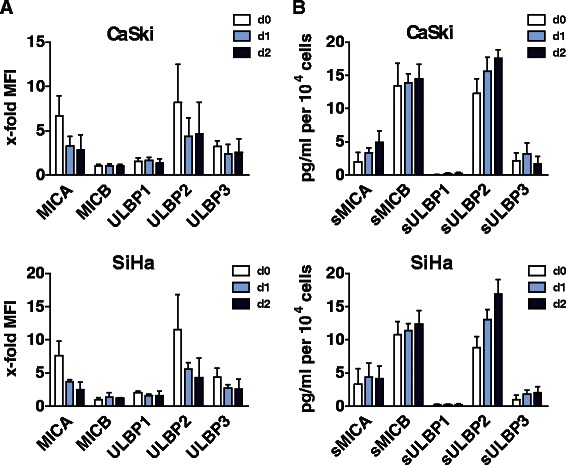
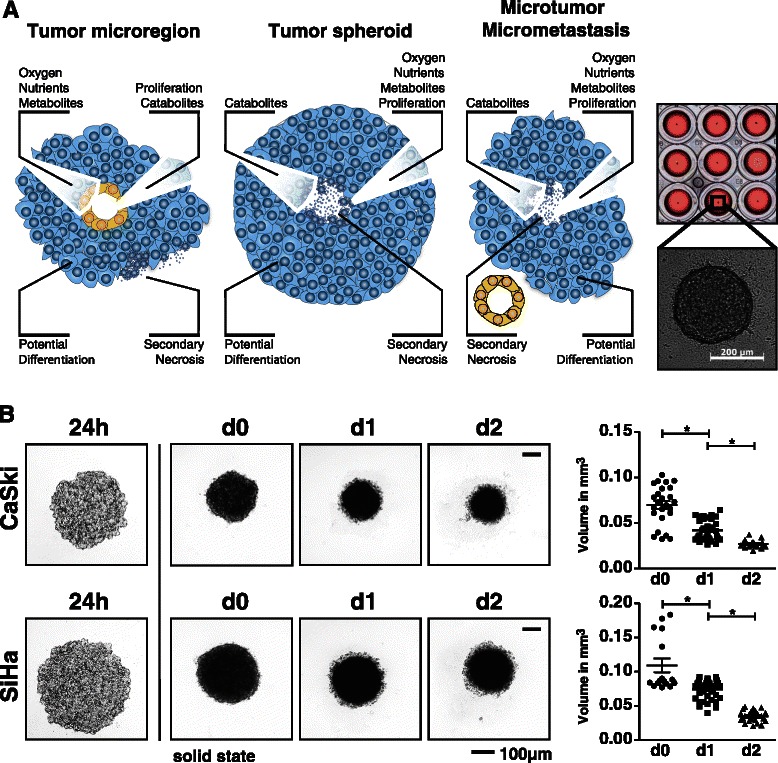
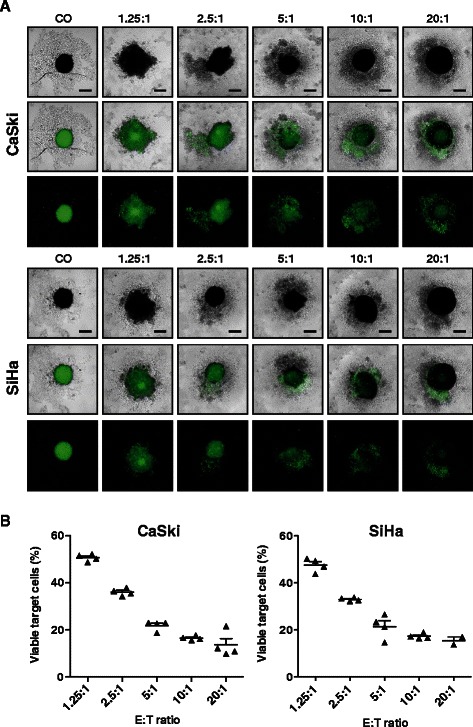
Results: The tumor spheroids were stable over several days with minor alterations in phenotypic appearance. The tumor spheroids expressed high levels of cellular ligands for the natural killer (NK) group 2D receptor (NKG2D), mediating spheroid destruction by primary human NK cells. Interestingly, destruction of a three-dimensional tumor spheroid took much longer when compared to the parental monolayer cultures. Moreover, destruction of tumor spheroids was accompanied by infiltration of a fraction of NK cells, which could be recovered at high purity.
Conclusion: Tumor spheroids represent a versatile in vivo-like model system to study cytotoxicity and infiltration of immune cells in high-throughput screening. This system might proof useful for the investigation of the modulatory potential of soluble factors and cells of the tumor microenvironment on immune cell activity as well as profiling of patient-/donor-derived immune cells to personalize cellular immunotherapy.
期刊介绍:
BMC Cancer is an open access, peer-reviewed journal that considers articles on all aspects of cancer research, including the pathophysiology, prevention, diagnosis and treatment of cancers. The journal welcomes submissions concerning molecular and cellular biology, genetics, epidemiology, and clinical trials.




 京公网安备 11010802042870号
京ICP备2023020795号-1
京公网安备 11010802042870号
京ICP备2023020795号-1

 分享
分享
 求助内容:
求助内容: 应助结果提醒方式:
 扫码关注我们
