B A Ezeala-Adikaibe, C Orjioke, O S Ekenze, U Ijoma, O Onodugo, G Okudo, C Okwara, P Chime, N Mbadiwe, A Eddy, C Onyekonwu, G Onyebueke, I Ulasi, A U Mba
{"title":"Population-based prevalence of high blood pressure among adults in an urban slum in Enugu, South East Nigeria","authors":"B A Ezeala-Adikaibe, C Orjioke, O S Ekenze, U Ijoma, O Onodugo, G Okudo, C Okwara, P Chime, N Mbadiwe, A Eddy, C Onyekonwu, G Onyebueke, I Ulasi, A U Mba","doi":"10.1038/jhh.2015.49","DOIUrl":null,"url":null,"abstract":"In sub-Saharan Africa (SSA), rapid urbanization and changing lifestyle have modified the profile and pattern of various medical disorders. Apart from high prevalence rates, recent trends with regard to hypertension in Africa include: low levels of awareness, treatment and control. Although a large number of studies provide data about hypertension in SSA, few studies focused on special populations such as urban slum dwellers. The WHO STEP-wise approach to surveillance of noncommunicable diseases was used to access the prevalence of hypertension among adults in one of the urban slums in Enugu. Out of the 811 individuals aged 20 years and above surveyed, 774 (95.4%) cases were analyzed. About 4.7% and 2.7% reported a past history of diabetes and stroke, respectively, whereas 15% had a positive family history of hypertension. The mean (95% confidence interval (CI)) body mass index (BMI) was 23.7 (23.2–24.2) kg m−2 among males and 26.6 (25.7–26.7) kg m−2 among females (P<0.0001). The prevalence of hypertension was 52.5% (95% CI: 48.9–56.0) and 55.4% (95% CI: 49.5–61.3) in males and 50.8% (95% CI: 46.4–55.1) in females (P=0.23). It increased with age peaking at 45–54 years in females and ⩾55 years in males. About 40.1% were aware of their hypertension and 28.8% of those aware had normal blood pressure. In regression analysis, systolic (R2=0.192) and diastolic (R2=0.129) blood pressures increased with age and BMI. The prevalence of high blood pressure among adults in Enugu slums is very high and a cause for concern, and calls for urgent attention.","PeriodicalId":16070,"journal":{"name":"Journal of Human Hypertension","volume":"30 4","pages":"285-291"},"PeriodicalIF":3.4000,"publicationDate":"2015-05-28","publicationTypes":"Journal Article","fieldsOfStudy":null,"isOpenAccess":false,"openAccessPdf":"https://sci-hub-pdf.com/10.1038/jhh.2015.49","citationCount":"22","resultStr":null,"platform":"Semanticscholar","paperid":null,"PeriodicalName":"Journal of Human Hypertension","FirstCategoryId":"3","ListUrlMain":"https://www.nature.com/articles/jhh201549","RegionNum":4,"RegionCategory":"医学","ArticlePicture":[],"TitleCN":null,"AbstractTextCN":null,"PMCID":null,"EPubDate":"","PubModel":"","JCR":"Q2","JCRName":"PERIPHERAL VASCULAR DISEASE","Score":null,"Total":0}
引用次数: 22
Abstract
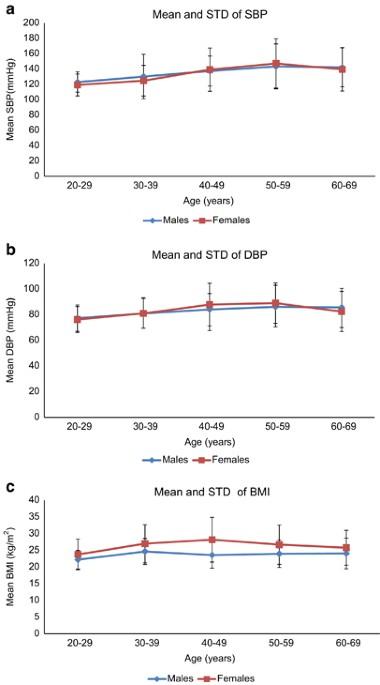
In sub-Saharan Africa (SSA), rapid urbanization and changing lifestyle have modified the profile and pattern of various medical disorders. Apart from high prevalence rates, recent trends with regard to hypertension in Africa include: low levels of awareness, treatment and control. Although a large number of studies provide data about hypertension in SSA, few studies focused on special populations such as urban slum dwellers. The WHO STEP-wise approach to surveillance of noncommunicable diseases was used to access the prevalence of hypertension among adults in one of the urban slums in Enugu. Out of the 811 individuals aged 20 years and above surveyed, 774 (95.4%) cases were analyzed. About 4.7% and 2.7% reported a past history of diabetes and stroke, respectively, whereas 15% had a positive family history of hypertension. The mean (95% confidence interval (CI)) body mass index (BMI) was 23.7 (23.2–24.2) kg m−2 among males and 26.6 (25.7–26.7) kg m−2 among females (P<0.0001). The prevalence of hypertension was 52.5% (95% CI: 48.9–56.0) and 55.4% (95% CI: 49.5–61.3) in males and 50.8% (95% CI: 46.4–55.1) in females (P=0.23). It increased with age peaking at 45–54 years in females and ⩾55 years in males. About 40.1% were aware of their hypertension and 28.8% of those aware had normal blood pressure. In regression analysis, systolic (R2=0.192) and diastolic (R2=0.129) blood pressures increased with age and BMI. The prevalence of high blood pressure among adults in Enugu slums is very high and a cause for concern, and calls for urgent attention.
期刊介绍:
Journal of Human Hypertension is published monthly and is of interest to health care professionals who deal with hypertension (specialists, internists, primary care physicians) and public health workers. We believe that our patients benefit from robust scientific data that are based on well conducted clinical trials. We also believe that basic sciences are the foundations on which we build our knowledge of clinical conditions and their management. Towards this end, although we are primarily a clinical based journal, we also welcome suitable basic sciences studies that promote our understanding of human hypertension.
The journal aims to perform the dual role of increasing knowledge in the field of high blood pressure as well as improving the standard of care of patients. The editors will consider for publication all suitable papers dealing directly or indirectly with clinical aspects of hypertension, including but not limited to epidemiology, pathophysiology, therapeutics and basic sciences involving human subjects or tissues. We also consider papers from all specialties such as ophthalmology, cardiology, nephrology, obstetrics and stroke medicine that deal with the various aspects of hypertension and its complications.



 京公网安备 11010802042870号
京ICP备2023020795号-1
京公网安备 11010802042870号
京ICP备2023020795号-1

 分享
分享
 求助内容:
求助内容: 应助结果提醒方式:
 扫码关注我们
