Stefano Miceli Sopo, Dario Sinatti, Giorgio Sodero, Mariannita Gelsomino, Francesco Mastellone
{"title":"Adherence to dietary prescriptions in patients with acute food protein-induced enterocolitis syndrome.","authors":"Stefano Miceli Sopo, Dario Sinatti, Giorgio Sodero, Mariannita Gelsomino, Francesco Mastellone","doi":"10.1002/ped4.12333","DOIUrl":null,"url":null,"abstract":"<p><p>Food protein-induced enterocolitis syndrome (FPIES) is a non-Immunoglobulin (non-IgE)-mediated food allergy. The elimination diet is the only therapy, the culprit food will be reintroduced if tolerance is acquired. However, it is possible that patients do not follow the recommendations given by the healthcare professional. We investigated if our advice to avoid the trigger food in patients with active FPIES and to reintroduce it in the diet in patients who achieved tolerance had been implemented. We interviewed by telephone the parents of children who were diagnosed with acute FPIES. About 23.2% of our patients disregarded our dietary recommendations: 6/42 (14.3%) of patients who passed a tolerance oral food challenge (OFC) did not eat the trigger food, 4/22 (18.2%) of patients who failed OFC ate the trigger food, and 9/18 (50.0%) of patients who did not perform a tolerance OFC ate the trigger food. We have analyzed some possible influencing factors and no difference was found to be statistically significant. Our results are in line with those reported for IgE-mediated food allergies. As has already been proposed by others, we suggest reassessing food consumption in all patients after a food challenge.</p>","PeriodicalId":1,"journal":{"name":"Accounts of Chemical Research","volume":" ","pages":"207-210"},"PeriodicalIF":17.7000,"publicationDate":"2022-06-10","publicationTypes":"Journal Article","fieldsOfStudy":null,"isOpenAccess":false,"openAccessPdf":"https://ftp.ncbi.nlm.nih.gov/pub/pmc/oa_pdf/32/b7/PED4-6-207.PMC9523800.pdf","citationCount":"0","resultStr":null,"platform":"Semanticscholar","paperid":null,"PeriodicalName":"Accounts of Chemical Research","FirstCategoryId":"3","ListUrlMain":"https://doi.org/10.1002/ped4.12333","RegionNum":1,"RegionCategory":"化学","ArticlePicture":[],"TitleCN":null,"AbstractTextCN":null,"PMCID":null,"EPubDate":"2022/9/1 0:00:00","PubModel":"eCollection","JCR":"Q1","JCRName":"CHEMISTRY, MULTIDISCIPLINARY","Score":null,"Total":0}
引用次数: 0
Abstract
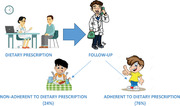
Food protein-induced enterocolitis syndrome (FPIES) is a non-Immunoglobulin (non-IgE)-mediated food allergy. The elimination diet is the only therapy, the culprit food will be reintroduced if tolerance is acquired. However, it is possible that patients do not follow the recommendations given by the healthcare professional. We investigated if our advice to avoid the trigger food in patients with active FPIES and to reintroduce it in the diet in patients who achieved tolerance had been implemented. We interviewed by telephone the parents of children who were diagnosed with acute FPIES. About 23.2% of our patients disregarded our dietary recommendations: 6/42 (14.3%) of patients who passed a tolerance oral food challenge (OFC) did not eat the trigger food, 4/22 (18.2%) of patients who failed OFC ate the trigger food, and 9/18 (50.0%) of patients who did not perform a tolerance OFC ate the trigger food. We have analyzed some possible influencing factors and no difference was found to be statistically significant. Our results are in line with those reported for IgE-mediated food allergies. As has already been proposed by others, we suggest reassessing food consumption in all patients after a food challenge.
期刊介绍:
Accounts of Chemical Research presents short, concise and critical articles offering easy-to-read overviews of basic research and applications in all areas of chemistry and biochemistry. These short reviews focus on research from the author’s own laboratory and are designed to teach the reader about a research project. In addition, Accounts of Chemical Research publishes commentaries that give an informed opinion on a current research problem. Special Issues online are devoted to a single topic of unusual activity and significance.
Accounts of Chemical Research replaces the traditional article abstract with an article "Conspectus." These entries synopsize the research affording the reader a closer look at the content and significance of an article. Through this provision of a more detailed description of the article contents, the Conspectus enhances the article's discoverability by search engines and the exposure for the research.




 京公网安备 11010802042870号
京ICP备2023020795号-1
京公网安备 11010802042870号
京ICP备2023020795号-1

 分享
分享
 求助内容:
求助内容: 应助结果提醒方式:
 扫码关注我们
