Christian A Inchaustegui, Ashley Patel, Harveen K Lamba, Andrew Brown, Justin Arunthamakun, Kevin Ting, Subhasis Chatterjee, Ajith P Nair, Joggy K George, Alexis E Shafii, Kenneth K Liao, Andrew B Civitello
{"title":"Impact of time off anticoagulation in patients with continuous-flow left ventricular assist devices.","authors":"Christian A Inchaustegui, Ashley Patel, Harveen K Lamba, Andrew Brown, Justin Arunthamakun, Kevin Ting, Subhasis Chatterjee, Ajith P Nair, Joggy K George, Alexis E Shafii, Kenneth K Liao, Andrew B Civitello","doi":"10.1007/s10047-022-01367-8","DOIUrl":null,"url":null,"abstract":"<p><p>Patients with left ventricular assist devices (LVADs) receive anticoagulation to decrease the risk of thrombosis. Various circumstances require discontinuing anticoagulation in LVAD patients, but the risks entailed are not well defined. In a retrospective review of LVAD implantation procedures, we examined the effect of time off anticoagulation on thrombosis and mortality rates after implantation. An international normalized ratio ≤ 1.5 was used to screen for patients taken off anticoagulation. Patients were divided into three groups by the cumulative number of days off anticoagulation: no discontinuation, short-term discontinuation (< 30 days), and long-term discontinuation (≥ 30 days). Rates of ischemic stroke, pump thrombosis, and mortality were compared among groups. Of 245 patients who underwent LVAD implantation during the study, 70 (28.6%) were off anticoagulation during follow-up: 37 (15.1%) had short-term discontinuation (median, 11 days), and 33 (13.5%) had long-term discontinuation (median, 124 days). Patients with long-term discontinuation had a higher rate of ischemic stroke (adjusted hazard ratio 8.5, p = 0.001) and death (adjusted hazard ratio 3.9, p = 0.001). The three groups did not differ in pump thrombosis rate. We conclude that after LVAD implantation, discontinuing anticoagulation for ≥ 30 days is independently associated with an increased risk of ischemic stroke and death.</p>","PeriodicalId":1,"journal":{"name":"Accounts of Chemical Research","volume":" ","pages":"275-286"},"PeriodicalIF":17.7000,"publicationDate":"2023-12-01","publicationTypes":"Journal Article","fieldsOfStudy":null,"isOpenAccess":false,"openAccessPdf":"","citationCount":"0","resultStr":null,"platform":"Semanticscholar","paperid":null,"PeriodicalName":"Accounts of Chemical Research","FirstCategoryId":"5","ListUrlMain":"https://doi.org/10.1007/s10047-022-01367-8","RegionNum":1,"RegionCategory":"化学","ArticlePicture":[],"TitleCN":null,"AbstractTextCN":null,"PMCID":null,"EPubDate":"2022/10/8 0:00:00","PubModel":"Epub","JCR":"Q1","JCRName":"CHEMISTRY, MULTIDISCIPLINARY","Score":null,"Total":0}
引用次数: 0
Abstract
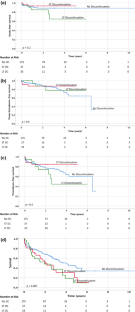
Patients with left ventricular assist devices (LVADs) receive anticoagulation to decrease the risk of thrombosis. Various circumstances require discontinuing anticoagulation in LVAD patients, but the risks entailed are not well defined. In a retrospective review of LVAD implantation procedures, we examined the effect of time off anticoagulation on thrombosis and mortality rates after implantation. An international normalized ratio ≤ 1.5 was used to screen for patients taken off anticoagulation. Patients were divided into three groups by the cumulative number of days off anticoagulation: no discontinuation, short-term discontinuation (< 30 days), and long-term discontinuation (≥ 30 days). Rates of ischemic stroke, pump thrombosis, and mortality were compared among groups. Of 245 patients who underwent LVAD implantation during the study, 70 (28.6%) were off anticoagulation during follow-up: 37 (15.1%) had short-term discontinuation (median, 11 days), and 33 (13.5%) had long-term discontinuation (median, 124 days). Patients with long-term discontinuation had a higher rate of ischemic stroke (adjusted hazard ratio 8.5, p = 0.001) and death (adjusted hazard ratio 3.9, p = 0.001). The three groups did not differ in pump thrombosis rate. We conclude that after LVAD implantation, discontinuing anticoagulation for ≥ 30 days is independently associated with an increased risk of ischemic stroke and death.
期刊介绍:
Accounts of Chemical Research presents short, concise and critical articles offering easy-to-read overviews of basic research and applications in all areas of chemistry and biochemistry. These short reviews focus on research from the author’s own laboratory and are designed to teach the reader about a research project. In addition, Accounts of Chemical Research publishes commentaries that give an informed opinion on a current research problem. Special Issues online are devoted to a single topic of unusual activity and significance.
Accounts of Chemical Research replaces the traditional article abstract with an article "Conspectus." These entries synopsize the research affording the reader a closer look at the content and significance of an article. Through this provision of a more detailed description of the article contents, the Conspectus enhances the article's discoverability by search engines and the exposure for the research.




 京公网安备 11010802042870号
京ICP备2023020795号-1
京公网安备 11010802042870号
京ICP备2023020795号-1

 分享
分享
 求助内容:
求助内容: 应助结果提醒方式:
 扫码关注我们
