A Bérubé, D Tapp, S Dupéré, A Plaisance, G Bravo, J Downar, V Couture
{"title":"Do Socioeconomic Factors Influence Knowledge, Attitudes, and Representations of End-of-Life Practices? A Cross-Sectional Study.","authors":"A Bérubé, D Tapp, S Dupéré, A Plaisance, G Bravo, J Downar, V Couture","doi":"10.1177/08258597221131658","DOIUrl":null,"url":null,"abstract":"<p><p>ObjectiveAccess to palliative and end-of-life (EOL) care might be influenced by knowledge, attitudes, and representations of these practices. Socioeconomic factors might then affect what people know about EOL care practices, and how they perceive them. This study aims to compare knowledge, attitudes, and representations regarding EOL practices including assisted suicide, medical assistance in dying, and continuous palliative sedation of adults, according to socioeconomic variables.MethodsA cross-sectional community-based questionnaire study featuring two evolving vignettes and five end-of-life practices was conducted in Quebec, Canada. Three sample subgroups were created according to the participants' perceived financial situation and three according to educational attainment. Descriptive analysis was used to compare levels of knowledge, attitudes, and representations between the subgroups.ResultsNine hundred sixty-six (966) people completed the questionnaire. Two hundred and seventy participants (28.7%) had a high school diploma or less, and 42 participants (4.4%) were facing financial hardship. The majority of respondents supported all end-of-life options and the loosening of eligibility requirements for medical assistance in dying. Differences between subgroups were minor. While respondents in socioeconomically disadvantaged subgroups had less knowledge about EOL practices, those with lower educational attainment were more likely to be in favor of medical assistance in dying, and less likely to favor continuous palliative sedation.ConclusionsPeople living with situational social and economic vulnerabilities face multiple barriers in accessing health care. While they may have poorer knowledge about EOL practices, they have a positive attitude towards medical assistance in dying and assisted suicide, and a negative attitude towards continuous palliative sedation. This highlights the need for future research and interventions aimed at empowering this population and enhancing their access to EOL care.</p>","PeriodicalId":1,"journal":{"name":"Accounts of Chemical Research","volume":" ","pages":"152-161"},"PeriodicalIF":17.7000,"publicationDate":"2025-04-01","publicationTypes":"Journal Article","fieldsOfStudy":null,"isOpenAccess":false,"openAccessPdf":"https://www.ncbi.nlm.nih.gov/pmc/articles/PMC11967092/pdf/","citationCount":"0","resultStr":null,"platform":"Semanticscholar","paperid":null,"PeriodicalName":"Accounts of Chemical Research","FirstCategoryId":"92","ListUrlMain":"https://doi.org/10.1177/08258597221131658","RegionNum":1,"RegionCategory":"化学","ArticlePicture":[],"TitleCN":null,"AbstractTextCN":null,"PMCID":null,"EPubDate":"2022/10/13 0:00:00","PubModel":"Epub","JCR":"Q1","JCRName":"CHEMISTRY, MULTIDISCIPLINARY","Score":null,"Total":0}
引用次数: 0
Abstract
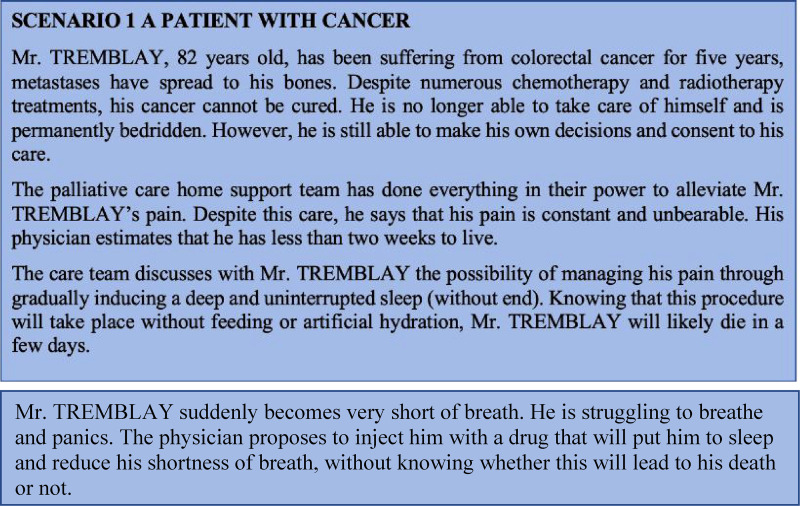
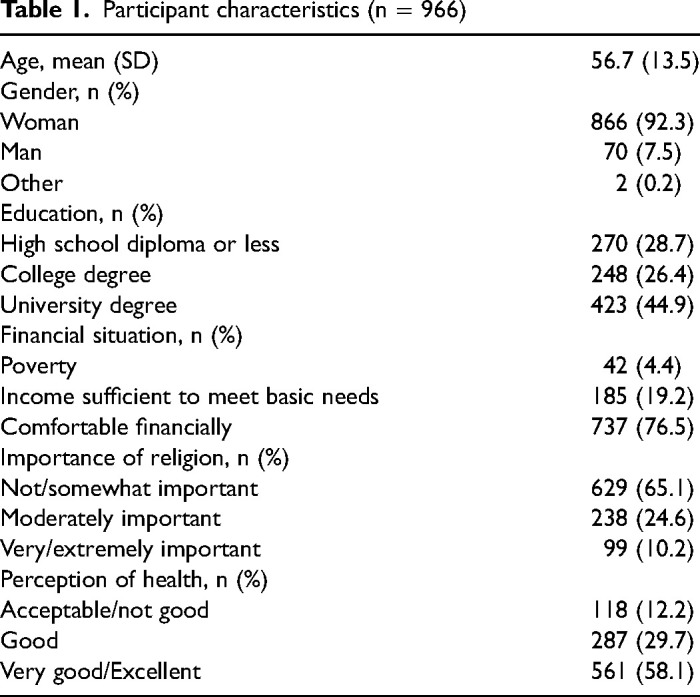
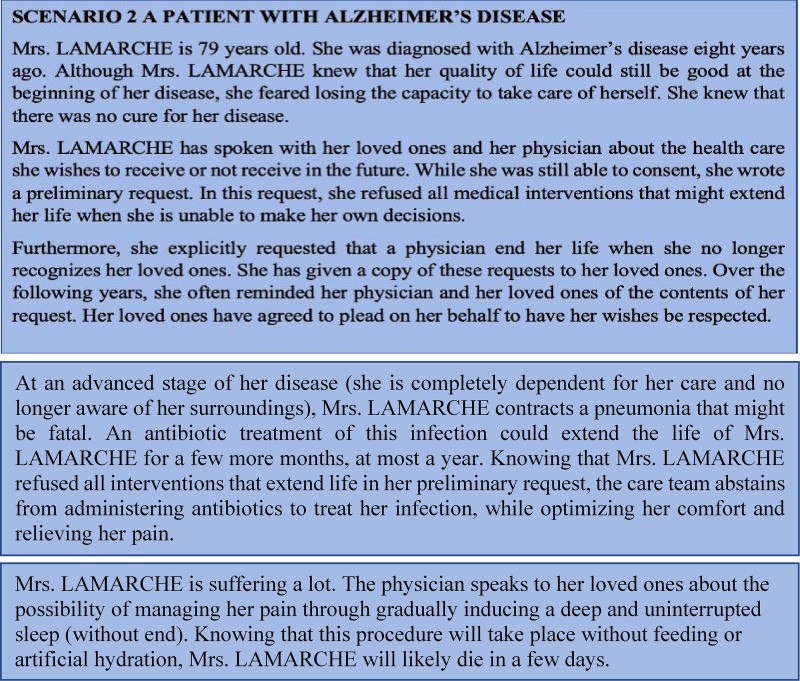
ObjectiveAccess to palliative and end-of-life (EOL) care might be influenced by knowledge, attitudes, and representations of these practices. Socioeconomic factors might then affect what people know about EOL care practices, and how they perceive them. This study aims to compare knowledge, attitudes, and representations regarding EOL practices including assisted suicide, medical assistance in dying, and continuous palliative sedation of adults, according to socioeconomic variables.MethodsA cross-sectional community-based questionnaire study featuring two evolving vignettes and five end-of-life practices was conducted in Quebec, Canada. Three sample subgroups were created according to the participants' perceived financial situation and three according to educational attainment. Descriptive analysis was used to compare levels of knowledge, attitudes, and representations between the subgroups.ResultsNine hundred sixty-six (966) people completed the questionnaire. Two hundred and seventy participants (28.7%) had a high school diploma or less, and 42 participants (4.4%) were facing financial hardship. The majority of respondents supported all end-of-life options and the loosening of eligibility requirements for medical assistance in dying. Differences between subgroups were minor. While respondents in socioeconomically disadvantaged subgroups had less knowledge about EOL practices, those with lower educational attainment were more likely to be in favor of medical assistance in dying, and less likely to favor continuous palliative sedation.ConclusionsPeople living with situational social and economic vulnerabilities face multiple barriers in accessing health care. While they may have poorer knowledge about EOL practices, they have a positive attitude towards medical assistance in dying and assisted suicide, and a negative attitude towards continuous palliative sedation. This highlights the need for future research and interventions aimed at empowering this population and enhancing their access to EOL care.
期刊介绍:
Accounts of Chemical Research presents short, concise and critical articles offering easy-to-read overviews of basic research and applications in all areas of chemistry and biochemistry. These short reviews focus on research from the author’s own laboratory and are designed to teach the reader about a research project. In addition, Accounts of Chemical Research publishes commentaries that give an informed opinion on a current research problem. Special Issues online are devoted to a single topic of unusual activity and significance.
Accounts of Chemical Research replaces the traditional article abstract with an article "Conspectus." These entries synopsize the research affording the reader a closer look at the content and significance of an article. Through this provision of a more detailed description of the article contents, the Conspectus enhances the article's discoverability by search engines and the exposure for the research.




 京公网安备 11010802042870号
京ICP备2023020795号-1
京公网安备 11010802042870号
京ICP备2023020795号-1

 分享
分享
 求助内容:
求助内容: 应助结果提醒方式:
 扫码关注我们
