Eva Paddenberg, Adrian Dees, Peter Proff, Christian Kirschneck
{"title":"Individual dental and skeletal age assessment according to Demirjian and Baccetti: Updated norm values for Central-European patients.","authors":"Eva Paddenberg, Adrian Dees, Peter Proff, Christian Kirschneck","doi":"10.1007/s00056-022-00431-5","DOIUrl":null,"url":null,"abstract":"<p><strong>Purpose: </strong>Chronological age often differs from dental and skeletal age. With orthopantomograms and lateral cephalograms, dental and skeletal development can be determined according to the methods published by Demirjian et al. and Baccetti et al. However, gender and skeletal class as possible confounders were frequently not considered and available norm values are not up-to-date. This retrospective cross-sectional study thus aimed to evaluate effects of skeletal class and gender on dental and skeletal age of growing patients and to generate updated norm values for contemporary Central-European patients.</p><p><strong>Methods: </strong>A total of 551 patients were included in the dental and 733 in the skeletal age assessment, respectively. Dental analysis was based on tooth mineralisation stages in orthopantomograms (Demirjian) and skeletal age was defined by cervical vertebrae maturation stages (CVMS) in lateral cephalograms (Baccetti). Skeletal class was determined by the individualised ANB angle of Panagiotidis/Witt. With nonlinear regression analysis a formula for determining dental age was established. Effects of gender and skeletal class were evaluated and updated norm values generated.</p><p><strong>Results: </strong>Inter- and intrarater reliability tests revealed at least substantial measurement concordance for tooth mineralisation and CVMS. Demirjian stages and CVMS significantly depended on gender with girls developing earlier. Skeletal class significantly affected skeletal age only, but without clinical relevance. Updated norm values for dental age differed significantly from the original values of Demirjian and the values for skeletal age differed from those published by Baccetti.</p><p><strong>Conclusion: </strong>Optimised norms, separated by gender, increase precision in determining individual dental and skeletal age during orthodontic treatment planning. Further studies analysing the effect of skeletal class on dental and skeletal development are needed.</p>","PeriodicalId":1,"journal":{"name":"Accounts of Chemical Research","volume":" ","pages":"199-212"},"PeriodicalIF":17.7000,"publicationDate":"2024-05-01","publicationTypes":"Journal Article","fieldsOfStudy":null,"isOpenAccess":false,"openAccessPdf":"https://www.ncbi.nlm.nih.gov/pmc/articles/PMC11035409/pdf/","citationCount":"0","resultStr":null,"platform":"Semanticscholar","paperid":null,"PeriodicalName":"Accounts of Chemical Research","FirstCategoryId":"3","ListUrlMain":"https://doi.org/10.1007/s00056-022-00431-5","RegionNum":1,"RegionCategory":"化学","ArticlePicture":[],"TitleCN":null,"AbstractTextCN":null,"PMCID":null,"EPubDate":"2022/10/14 0:00:00","PubModel":"Epub","JCR":"Q1","JCRName":"CHEMISTRY, MULTIDISCIPLINARY","Score":null,"Total":0}
引用次数: 0
Abstract
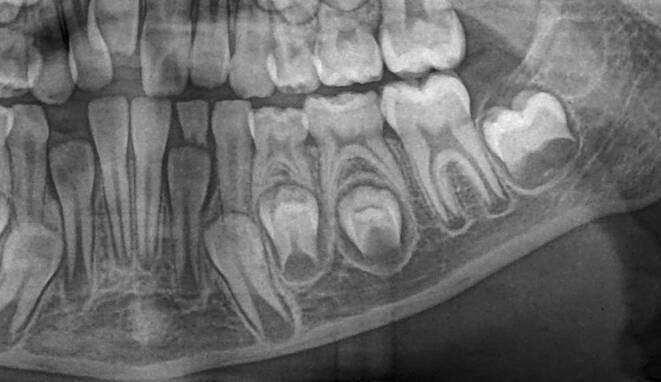
Purpose: Chronological age often differs from dental and skeletal age. With orthopantomograms and lateral cephalograms, dental and skeletal development can be determined according to the methods published by Demirjian et al. and Baccetti et al. However, gender and skeletal class as possible confounders were frequently not considered and available norm values are not up-to-date. This retrospective cross-sectional study thus aimed to evaluate effects of skeletal class and gender on dental and skeletal age of growing patients and to generate updated norm values for contemporary Central-European patients.
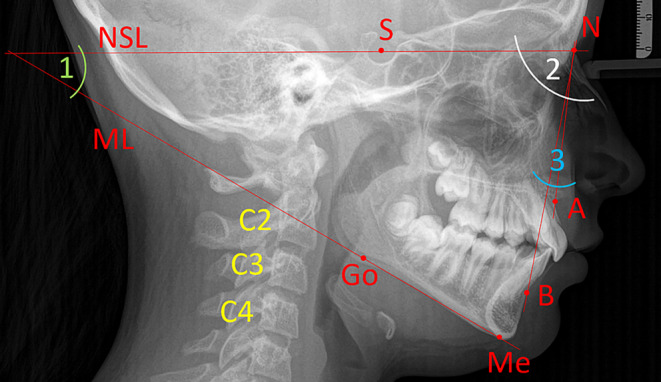
Methods: A total of 551 patients were included in the dental and 733 in the skeletal age assessment, respectively. Dental analysis was based on tooth mineralisation stages in orthopantomograms (Demirjian) and skeletal age was defined by cervical vertebrae maturation stages (CVMS) in lateral cephalograms (Baccetti). Skeletal class was determined by the individualised ANB angle of Panagiotidis/Witt. With nonlinear regression analysis a formula for determining dental age was established. Effects of gender and skeletal class were evaluated and updated norm values generated.
Results: Inter- and intrarater reliability tests revealed at least substantial measurement concordance for tooth mineralisation and CVMS. Demirjian stages and CVMS significantly depended on gender with girls developing earlier. Skeletal class significantly affected skeletal age only, but without clinical relevance. Updated norm values for dental age differed significantly from the original values of Demirjian and the values for skeletal age differed from those published by Baccetti.
Conclusion: Optimised norms, separated by gender, increase precision in determining individual dental and skeletal age during orthodontic treatment planning. Further studies analysing the effect of skeletal class on dental and skeletal development are needed.
期刊介绍:
Accounts of Chemical Research presents short, concise and critical articles offering easy-to-read overviews of basic research and applications in all areas of chemistry and biochemistry. These short reviews focus on research from the author’s own laboratory and are designed to teach the reader about a research project. In addition, Accounts of Chemical Research publishes commentaries that give an informed opinion on a current research problem. Special Issues online are devoted to a single topic of unusual activity and significance.
Accounts of Chemical Research replaces the traditional article abstract with an article "Conspectus." These entries synopsize the research affording the reader a closer look at the content and significance of an article. Through this provision of a more detailed description of the article contents, the Conspectus enhances the article's discoverability by search engines and the exposure for the research.





 京公网安备 11010802042870号
京ICP备2023020795号-1
京公网安备 11010802042870号
京ICP备2023020795号-1

 分享
分享
 求助内容:
求助内容: 应助结果提醒方式:
 扫码关注我们
