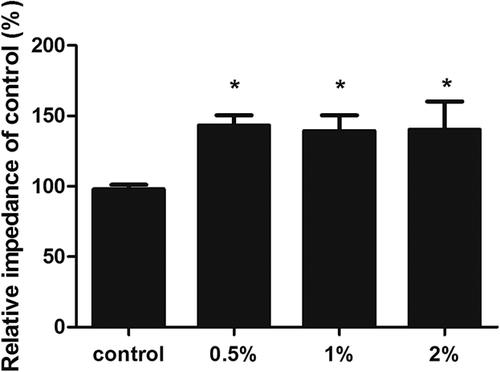
Platelet rich plasma (PRP) contains various cytokines and growth factors which may be beneficial to the healing process of injured muscle. The aim of this study was to investigate the effect and molecular mechanism of PRP on migration of skeletal muscle cells. Skeletal muscle cells intrinsic to Sprague–Dawley rats were treated with PRP. The cell migration was evaluated by transwell filter migration assay and electric cell-substrate impedance sensing. The spreading of cells was evaluated microscopically. The formation of filamentous actin (F-actin) cytoskeleton was assessed by immunofluorescence staining. The protein expressions of paxillin and focal adhesion kinase (FAK) were assessed by Western blot analysis. Transfection of paxillin small-interfering RNA (siRNAs) to muscle cells was performed to validate the role of paxillin in PRP-mediated promotion of cell migration. Dose-dependently PRP promotes migration of and spreading and muscle cells. Protein expressions of paxillin and FAK were up-regulated dose-dependently. F-actin formation was also enhanced by PRP treatment. Furthermore, the knockdown of paxillin expression impaired the effect of PRP to promote cell migration. It was concluded that PRP promoting migration of muscle cells is associated with up-regulation of proteins expression of paxillin and FAK as well as increasing F-actin formation. © 2017 Orthopaedic Research Society. Published by Wiley Periodicals, Inc. J Orthop Res 35:2506–2512, 2017.



 京公网安备 11010802042870号
京ICP备2023020795号-1
京公网安备 11010802042870号
京ICP备2023020795号-1

 分享
分享
 求助内容:
求助内容: 应助结果提醒方式:
 扫码关注我们
