{"title":"Adverse hematological effects of hexavalent chromium: an overview.","authors":"Rina Rani Ray","doi":"10.1515/intox-2016-0007","DOIUrl":null,"url":null,"abstract":"<p><p>Workers of tanneries, welding industries, factories manufacturing chromate containing paints are exposed to hexavalent chromium that increases the risk of developing serious adverse health effects. This review elucidates the mode of action of hexavalent chromium on blood and its adverse effects. Both leukocyte and erythrocyte counts of blood sharply decreased in Swiss mice after two weeks of intraperitoneal treatment with Cr (VI), with the erythrocytes transforming into echinocytes. The hexavalent chromium in the blood is readily reduced to trivalent form and the reductive capacity of erythrocytes is much greater than that of plasma. Excess Cr (VI), not reduced in plasma, may enter erythrocytes and lymphocytes and in rodents it induces microcytic anemia. The toxic effects of chromium (VI) include mitochondrial injury and DNA damage of blood cells that leads to carcinogenicity. Excess Cr (VI) increases cytosolic Ca<sup>2+</sup> activity and ATP depletion thereby inducing eryptosis. Se, vitamin C, and quercetin are assumed to have some protective effect against hexavalent chromium induced hematological disorders.</p>","PeriodicalId":13715,"journal":{"name":"Interdisciplinary Toxicology","volume":"9 2","pages":"55-65"},"PeriodicalIF":0.0000,"publicationDate":"2016-06-01","publicationTypes":"Journal Article","fieldsOfStudy":null,"isOpenAccess":false,"openAccessPdf":"https://sci-hub-pdf.com/10.1515/intox-2016-0007","citationCount":"105","resultStr":null,"platform":"Semanticscholar","paperid":null,"PeriodicalName":"Interdisciplinary Toxicology","FirstCategoryId":"1085","ListUrlMain":"https://doi.org/10.1515/intox-2016-0007","RegionNum":0,"RegionCategory":null,"ArticlePicture":[],"TitleCN":null,"AbstractTextCN":null,"PMCID":null,"EPubDate":"2017/5/17 0:00:00","PubModel":"Epub","JCR":"Q3","JCRName":"Environmental Science","Score":null,"Total":0}
引用次数: 105
Abstract
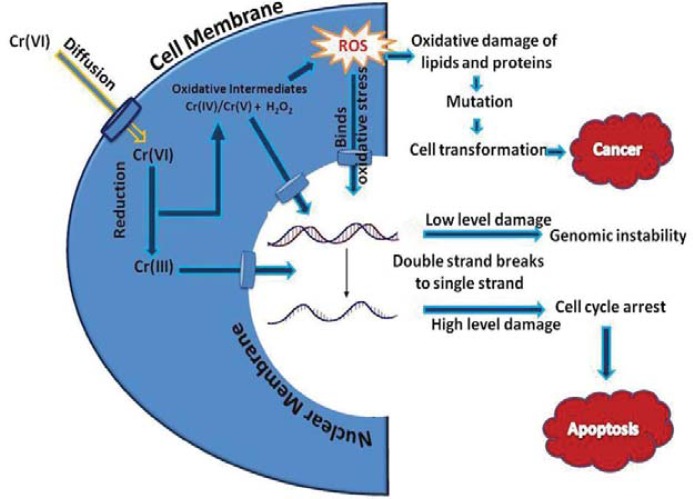
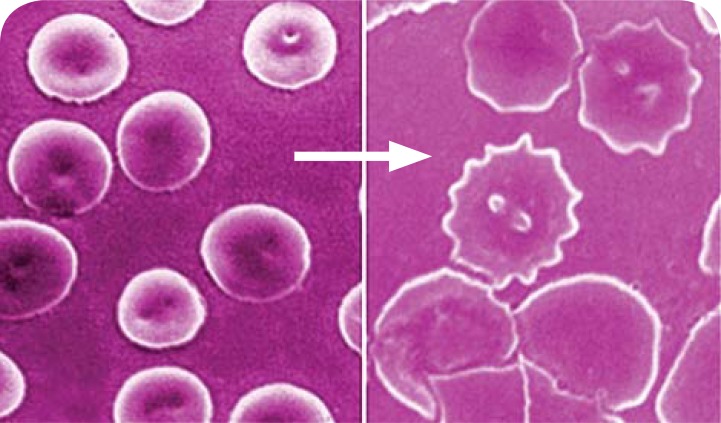
Workers of tanneries, welding industries, factories manufacturing chromate containing paints are exposed to hexavalent chromium that increases the risk of developing serious adverse health effects. This review elucidates the mode of action of hexavalent chromium on blood and its adverse effects. Both leukocyte and erythrocyte counts of blood sharply decreased in Swiss mice after two weeks of intraperitoneal treatment with Cr (VI), with the erythrocytes transforming into echinocytes. The hexavalent chromium in the blood is readily reduced to trivalent form and the reductive capacity of erythrocytes is much greater than that of plasma. Excess Cr (VI), not reduced in plasma, may enter erythrocytes and lymphocytes and in rodents it induces microcytic anemia. The toxic effects of chromium (VI) include mitochondrial injury and DNA damage of blood cells that leads to carcinogenicity. Excess Cr (VI) increases cytosolic Ca2+ activity and ATP depletion thereby inducing eryptosis. Se, vitamin C, and quercetin are assumed to have some protective effect against hexavalent chromium induced hematological disorders.




 京公网安备 11010802042870号
京ICP备2023020795号-1
京公网安备 11010802042870号
京ICP备2023020795号-1

 分享
分享
 求助内容:
求助内容: 应助结果提醒方式:
 扫码关注我们
