Soňa Jantová, Dominika Topoľská, Michaela Janošková, Miroslav Pánik, Viktor Milata
{"title":"Study of the cytotoxic/toxic potential of the novel anticancer selenodiazoloquinolone on fibroblast cells and 3D skin model.","authors":"Soňa Jantová, Dominika Topoľská, Michaela Janošková, Miroslav Pánik, Viktor Milata","doi":"10.1515/intox-2016-0014","DOIUrl":null,"url":null,"abstract":"<p><p>The new synthetically prepared quinolone derivative 7-ethyl 9-ethyl-6-oxo-6,9-dihydro[1,2,5]selenadiazolo [3,4-<i>h</i>]quinoline-7-carboxylate (E2<i>h</i>) showed in our previous study cytotoxic effects towards tumor cells and immunomodulatory activities on RAW 264.7 cell line murine macrophages. E2<i>h</i> may have a potential use as a novel chemotherapeutic agent with immunomodulatory properties and the ability to induce apoptotic death of cancer cells. The aim of the present study was to examine the antiproliferative/cytotoxic activities of E2<i>h</i> on human non-cancer fibroblast BHNF-1 cells and reconstructed human epidermis EpiDerm™. Further the effects of E2<i>h</i> on tissue structure and morphology were examined. Cytotoxic/toxic studies showed that selenadiazoloquinolone is not toxic on normal human fibroblast cells BHNF-1 and dimensional skin constructs EpiDerm™. Evaluation of morphological changes in EpiDerm™ showed no change in the construction and morphology of skin tissue treated by E2h compared to control.</p>","PeriodicalId":13715,"journal":{"name":"Interdisciplinary Toxicology","volume":"9 3-4","pages":"106-112"},"PeriodicalIF":0.0000,"publicationDate":"2016-12-01","publicationTypes":"Journal Article","fieldsOfStudy":null,"isOpenAccess":false,"openAccessPdf":"https://sci-hub-pdf.com/10.1515/intox-2016-0014","citationCount":"7","resultStr":null,"platform":"Semanticscholar","paperid":null,"PeriodicalName":"Interdisciplinary Toxicology","FirstCategoryId":"1085","ListUrlMain":"https://doi.org/10.1515/intox-2016-0014","RegionNum":0,"RegionCategory":null,"ArticlePicture":[],"TitleCN":null,"AbstractTextCN":null,"PMCID":null,"EPubDate":"2017/5/17 0:00:00","PubModel":"Epub","JCR":"Q3","JCRName":"Environmental Science","Score":null,"Total":0}
引用次数: 7
Abstract
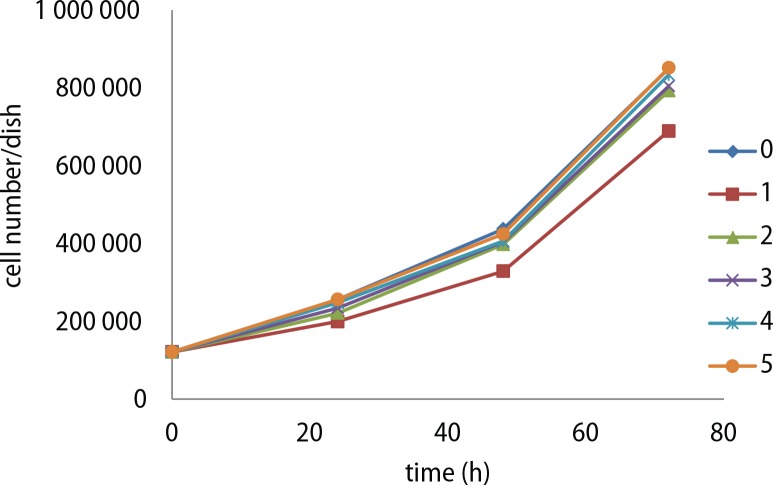
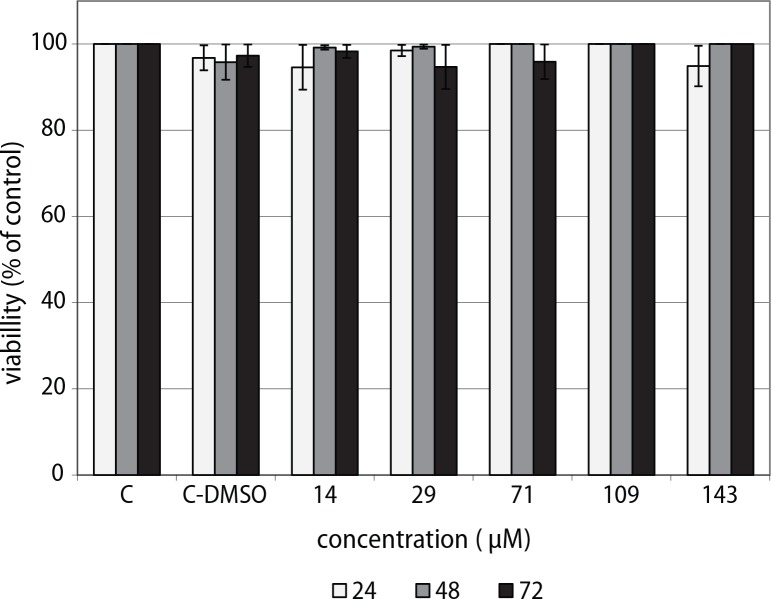
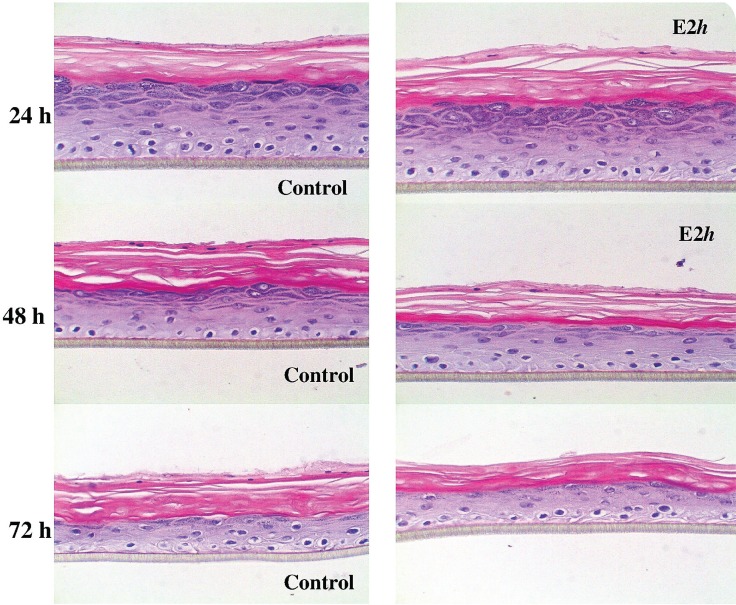
The new synthetically prepared quinolone derivative 7-ethyl 9-ethyl-6-oxo-6,9-dihydro[1,2,5]selenadiazolo [3,4-h]quinoline-7-carboxylate (E2h) showed in our previous study cytotoxic effects towards tumor cells and immunomodulatory activities on RAW 264.7 cell line murine macrophages. E2h may have a potential use as a novel chemotherapeutic agent with immunomodulatory properties and the ability to induce apoptotic death of cancer cells. The aim of the present study was to examine the antiproliferative/cytotoxic activities of E2h on human non-cancer fibroblast BHNF-1 cells and reconstructed human epidermis EpiDerm™. Further the effects of E2h on tissue structure and morphology were examined. Cytotoxic/toxic studies showed that selenadiazoloquinolone is not toxic on normal human fibroblast cells BHNF-1 and dimensional skin constructs EpiDerm™. Evaluation of morphological changes in EpiDerm™ showed no change in the construction and morphology of skin tissue treated by E2h compared to control.




 京公网安备 11010802042870号
京ICP备2023020795号-1
京公网安备 11010802042870号
京ICP备2023020795号-1

 分享
分享
 求助内容:
求助内容: 应助结果提醒方式:
 扫码关注我们
