{"title":"Nitrogen Addition Exacerbates the Negative Effects of Low Temperature Stress on Carbon and Nitrogen Metabolism in Moss.","authors":"Bin-Yang Liu, Chun-Yi Lei, Wei-Qiu Liu","doi":"10.3389/fpls.2017.01328","DOIUrl":null,"url":null,"abstract":"<p><p>Global environmental changes are leading to an increase in localized abnormally low temperatures and increasing nitrogen (N) deposition is a phenomenon recognized worldwide. Both low temperature stress (LTS) and excess N induce oxidative stress in plants, and excess N also reduces their resistance to LTS. Mosses are primitive plants that are generally more sensitive to alterations in environmental factors than vascular species. To study the combined effects of N deposition and LTS on carbon (C) and N metabolism in moss, two moss species, <i>Pogonatum cirratum</i> subsp. <i>fuscatum</i>, and <i>Hypnum plumaeforme</i>, exposed to various concentrations of nitrate (KNO<sub>3</sub>) or ammonium (NH<sub>4</sub>Cl), were treated with or without LTS. C/N metabolism indices were then monitored, both immediately after the stress and after a short recovery period (10 days). LTS decreased the photosystem II (PSII) performance index and inhibited non-cyclic photophosphorylation, ribulose-1,5-bisphosphate carboxylase, and glutamine synthetase activities, indicating damage to PSII and reductions in C/N assimilation in these mosses. LTS did not affect cyclic photophosphorylation, sucrose synthase, sucrose-phosphate synthase, and NADP-isocitrate dehydrogenase activities, suggesting a certain level of energy and C skeleton generation were maintained in the mosses to combat LTS; however, LTS inhibited the activity of glycolate oxidase. As predicted, N supply increased the sensitivity of the mosses to LTS, resulting in greater damage to PSII and a sharper decrease in C/N assimilation. After the recovery period, the performance of PSII and C/N metabolism, which were inhibited by LTS increased significantly, and were generally higher than those of control samples not exposed to LTS, suggesting overcompensation effects; however, N application reduced the extent of compensation effects. Both C and N metabolism exhibited stronger compensation effects in <i>H. plumaeforme</i> than in <i>P. cirratum</i> subsp. <i>fuscatum</i>. The difference was especially pronounced after addition of N, indicating that <i>H. plumaeforme</i> may be more resilient to temperature and N variation, which could explain its wider distribution in the natural environment.</p>","PeriodicalId":4,"journal":{"name":"ACS Applied Energy Materials","volume":" ","pages":"1328"},"PeriodicalIF":5.5000,"publicationDate":"2017-08-02","publicationTypes":"Journal Article","fieldsOfStudy":null,"isOpenAccess":false,"openAccessPdf":"https://www.ncbi.nlm.nih.gov/pmc/articles/PMC5539086/pdf/","citationCount":"0","resultStr":null,"platform":"Semanticscholar","paperid":null,"PeriodicalName":"ACS Applied Energy Materials","FirstCategoryId":"99","ListUrlMain":"https://doi.org/10.3389/fpls.2017.01328","RegionNum":3,"RegionCategory":"材料科学","ArticlePicture":[],"TitleCN":null,"AbstractTextCN":null,"PMCID":null,"EPubDate":"2017/1/1 0:00:00","PubModel":"eCollection","JCR":"Q2","JCRName":"CHEMISTRY, PHYSICAL","Score":null,"Total":0}
引用次数: 0
Abstract
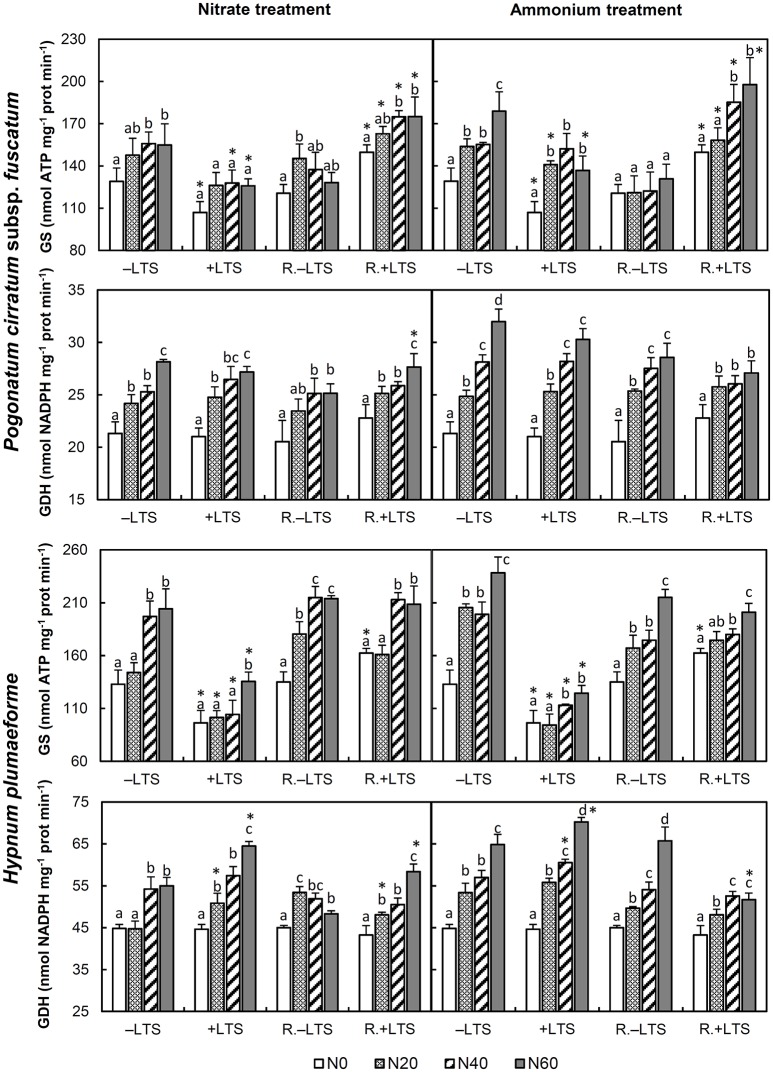
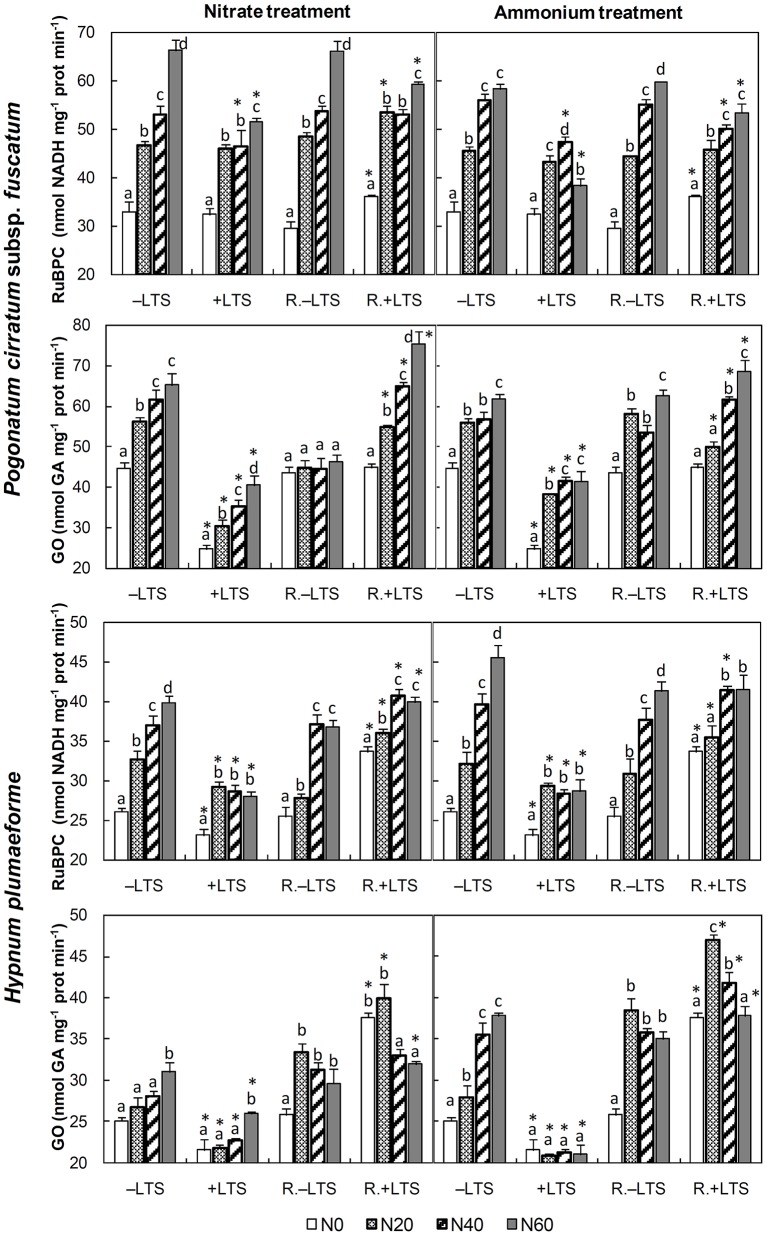
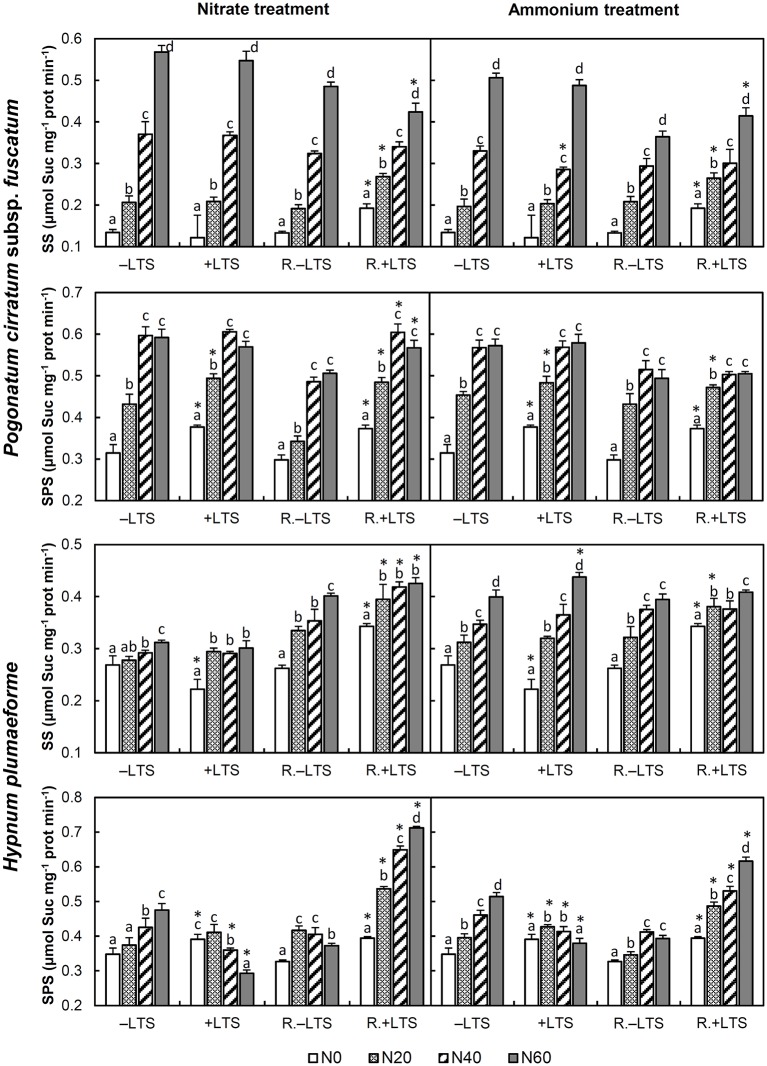
Global environmental changes are leading to an increase in localized abnormally low temperatures and increasing nitrogen (N) deposition is a phenomenon recognized worldwide. Both low temperature stress (LTS) and excess N induce oxidative stress in plants, and excess N also reduces their resistance to LTS. Mosses are primitive plants that are generally more sensitive to alterations in environmental factors than vascular species. To study the combined effects of N deposition and LTS on carbon (C) and N metabolism in moss, two moss species, Pogonatum cirratum subsp. fuscatum, and Hypnum plumaeforme, exposed to various concentrations of nitrate (KNO3) or ammonium (NH4Cl), were treated with or without LTS. C/N metabolism indices were then monitored, both immediately after the stress and after a short recovery period (10 days). LTS decreased the photosystem II (PSII) performance index and inhibited non-cyclic photophosphorylation, ribulose-1,5-bisphosphate carboxylase, and glutamine synthetase activities, indicating damage to PSII and reductions in C/N assimilation in these mosses. LTS did not affect cyclic photophosphorylation, sucrose synthase, sucrose-phosphate synthase, and NADP-isocitrate dehydrogenase activities, suggesting a certain level of energy and C skeleton generation were maintained in the mosses to combat LTS; however, LTS inhibited the activity of glycolate oxidase. As predicted, N supply increased the sensitivity of the mosses to LTS, resulting in greater damage to PSII and a sharper decrease in C/N assimilation. After the recovery period, the performance of PSII and C/N metabolism, which were inhibited by LTS increased significantly, and were generally higher than those of control samples not exposed to LTS, suggesting overcompensation effects; however, N application reduced the extent of compensation effects. Both C and N metabolism exhibited stronger compensation effects in H. plumaeforme than in P. cirratum subsp. fuscatum. The difference was especially pronounced after addition of N, indicating that H. plumaeforme may be more resilient to temperature and N variation, which could explain its wider distribution in the natural environment.
期刊介绍:
ACS Applied Energy Materials is an interdisciplinary journal publishing original research covering all aspects of materials, engineering, chemistry, physics and biology relevant to energy conversion and storage. The journal is devoted to reports of new and original experimental and theoretical research of an applied nature that integrate knowledge in the areas of materials, engineering, physics, bioscience, and chemistry into important energy applications.



 京公网安备 11010802042870号
京ICP备2023020795号-1
京公网安备 11010802042870号
京ICP备2023020795号-1

 分享
分享
 求助内容:
求助内容: 应助结果提醒方式:
 扫码关注我们
