The 33.1 kDa Excretory/secretory Protein Produced by Toxocara canis Larvae Serves as a Potential Common Biomarker for Serodiagnosis of Toxocariasis in Paratenic Animals and Human.
Huu-Hung Nguyen, Doan-Trung Vo, Thi-Tuyet-Trinh Thai, Thi-Thanh-Thao LE, Thanh-Dong LE, Nghia-Son Hoang
{"title":"The 33.1 kDa Excretory/secretory Protein Produced by <i>Toxocara canis</i> Larvae Serves as a Potential Common Biomarker for Serodiagnosis of Toxocariasis in Paratenic Animals and Human.","authors":"Huu-Hung Nguyen, Doan-Trung Vo, Thi-Tuyet-Trinh Thai, Thi-Thanh-Thao LE, Thanh-Dong LE, Nghia-Son Hoang","doi":"","DOIUrl":null,"url":null,"abstract":"<p><strong>Background: </strong>Toxocariasis is a prevalent zoonosis disease caused by the closely related nematode species <i>Toxocara canis</i> and <i>Toxocara cati</i> which parasitise Canidae and Felidae respectively. In paratenic hosts, larvae of these worms cause multiple organ damage. However, how these paratenic hosts response to these worms and whether any common biomarker can be applied for diagnosis are still unclear.</p><p><strong>Methods: </strong>Excreted/secreted (E/S) antigens were prepared by culture of <i>T. canis</i> larvae in vitro. Using a western blot (WB) assay the humoral IgG responses, induced by <i>Toxocara</i> spp. larvae to the worm's E/S antigens in different infected hosts including mice, rabbits and human, were examined.</p><p><strong>Results: </strong>In a mouse model of toxocariasis, intraperitoneal injection of <i>T. canis</i> larvae induces inflammatory leukocyte accumulation in the liver and the lungs but not in the brain, although a remarkable number of larvae were detected in this organ. Mice and rabbits responded differently to <i>Toxocara</i> spp. resulting in distinct heterogenous WB band patterns. Mice and rabbits both responded to a 33.1 kDa E/S constituent that turned out to be the most sensitive protein for serodiagnosis. Sera from human toxocariasis patients showed heterogenous WB band patterns similar to those observed in rabbits and all responded to the 33.1 kDa band.</p><p><strong>Conclusion: </strong>33.1 kDa E/S protein can be considered as a critical common biomarker for toxocariasis immuno-diagnosis in both paratenic animals and human and its specificity requires further investigation.</p>","PeriodicalId":14669,"journal":{"name":"Iranian Journal of Parasitology","volume":"12 1","pages":"69-82"},"PeriodicalIF":0.9000,"publicationDate":"2017-01-01","publicationTypes":"Journal Article","fieldsOfStudy":null,"isOpenAccess":false,"openAccessPdf":"https://www.ncbi.nlm.nih.gov/pmc/articles/PMC5522701/pdf/","citationCount":"0","resultStr":null,"platform":"Semanticscholar","paperid":null,"PeriodicalName":"Iranian Journal of Parasitology","FirstCategoryId":"3","ListUrlMain":"","RegionNum":4,"RegionCategory":"医学","ArticlePicture":[],"TitleCN":null,"AbstractTextCN":null,"PMCID":null,"EPubDate":"","PubModel":"","JCR":"Q4","JCRName":"PARASITOLOGY","Score":null,"Total":0}
引用次数: 0
Abstract
Background: Toxocariasis is a prevalent zoonosis disease caused by the closely related nematode species Toxocara canis and Toxocara cati which parasitise Canidae and Felidae respectively. In paratenic hosts, larvae of these worms cause multiple organ damage. However, how these paratenic hosts response to these worms and whether any common biomarker can be applied for diagnosis are still unclear.
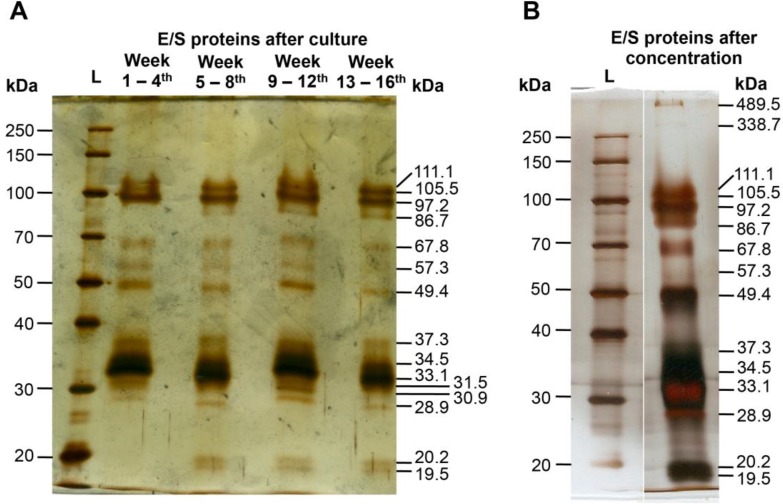
Methods: Excreted/secreted (E/S) antigens were prepared by culture of T. canis larvae in vitro. Using a western blot (WB) assay the humoral IgG responses, induced by Toxocara spp. larvae to the worm's E/S antigens in different infected hosts including mice, rabbits and human, were examined.
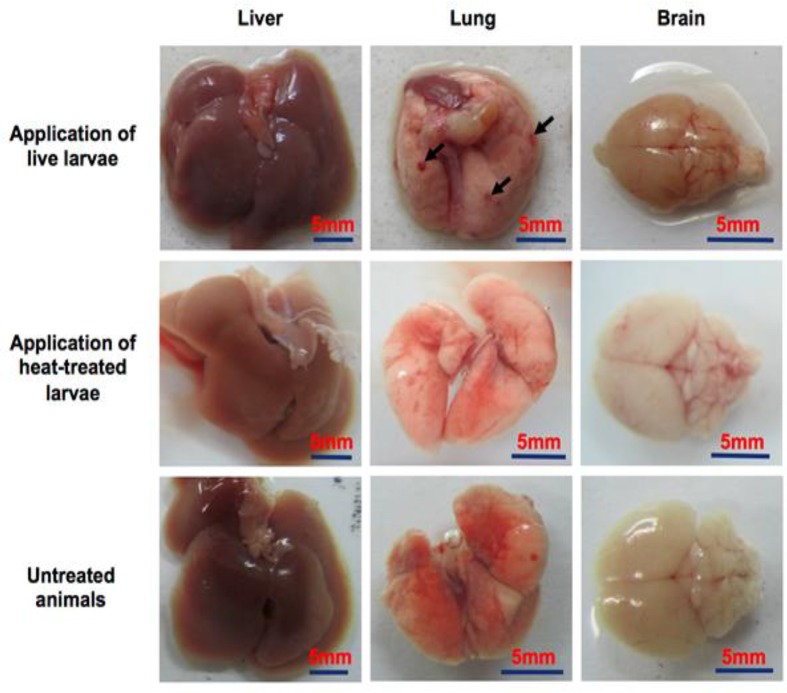
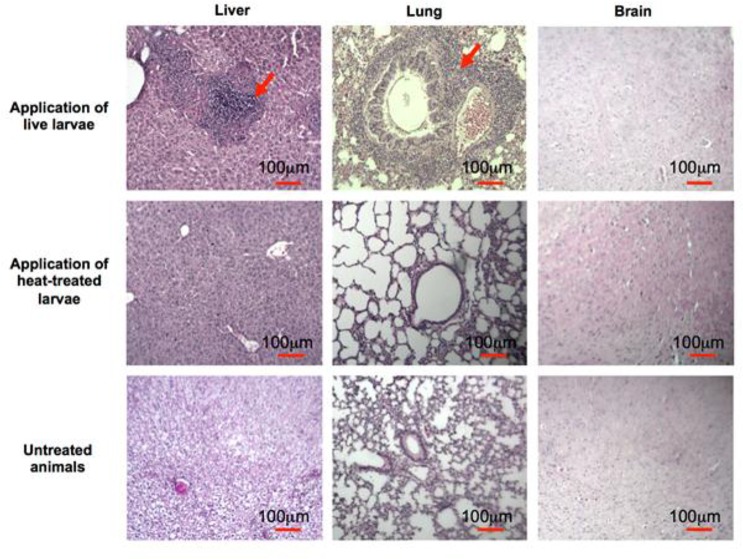
Results: In a mouse model of toxocariasis, intraperitoneal injection of T. canis larvae induces inflammatory leukocyte accumulation in the liver and the lungs but not in the brain, although a remarkable number of larvae were detected in this organ. Mice and rabbits responded differently to Toxocara spp. resulting in distinct heterogenous WB band patterns. Mice and rabbits both responded to a 33.1 kDa E/S constituent that turned out to be the most sensitive protein for serodiagnosis. Sera from human toxocariasis patients showed heterogenous WB band patterns similar to those observed in rabbits and all responded to the 33.1 kDa band.
Conclusion: 33.1 kDa E/S protein can be considered as a critical common biomarker for toxocariasis immuno-diagnosis in both paratenic animals and human and its specificity requires further investigation.
期刊介绍:
Iranian Journal of Parasitology (IJP) is the official publication of Iranian Society of Parasitology (ISP) launched in 2006. The society was inaugurated in 1994 and pursues the improvement of the knowledge on the parasites and parasitic diseases, exchange of scientific knowledge with foreign societies, publicity activities, and consultation on the parasitic diseases, and intimate relationship among society members.
The main aims of the Journal are: contribution to the field of Parasitology, including all aspects of parasites and parasitic diseases (medical and veterinary) and related fields such as Entomology which may be submitted by scientists from Iran and all over the world.
 分享
分享




 京公网安备 11010802042870号
京ICP备2023020795号-1
京公网安备 11010802042870号
京ICP备2023020795号-1

 求助内容:
求助内容: 应助结果提醒方式:
 扫码关注我们
