Daniela S Schuh, Ângela B Piccoli, Raquel L Paiani, Cristiane R Maciel, Lucia C Pellanda, Manuel Ap Vilela
{"title":"Ocular Signs Related to Overweight and Arterial Hypertension in Children: A Systematic Review.","authors":"Daniela S Schuh, Ângela B Piccoli, Raquel L Paiani, Cristiane R Maciel, Lucia C Pellanda, Manuel Ap Vilela","doi":"10.2174/1874364101711010273","DOIUrl":null,"url":null,"abstract":"<p><strong>Background: </strong>The ocular effects of obesity and hypertension need to be established and can be used as prognostic markers.</p><p><strong>Objective: </strong>To estimate the prevalence of ophthalmological alterations in children and adolescents who are overweight and/or have SAH.</p><p><strong>Methods: </strong>The database for this study included all observational studies (CS, cohort, case-control and \"baseline\" description of randomized clinical trials) with children and/or adolescents who were overweight, obese or had SAH and that measured ophthalmological alterations.</p><p><strong>Results: </strong>Comparative studies with healthy children demonstrated positive association between body adiposity with retinal venular dilation, and SAH with retinal arteriolar narrowing. Different retinal fundus cameras and computer-assisted programs to evaluate the retinal vessels, variations in the methods of analysis, adjustments, populations, were the main arguments against formal meta-analysis. The heterogeneity was too high (I<sup>2</sup> >90%, in fixed or randomized effects), and the lack of linearity, normal distribution and homoscedasticity did not recommend meta-regression.</p><p><strong>Conclusion: </strong>Obesity and SAH show associations with ophthalmological alterations, especially with retinal vessel diameter. Lack of standardization does not allow a quantitative evaluation.</p>","PeriodicalId":512318,"journal":{"name":"The Open Ophthalmology Journal","volume":"11 ","pages":"273-285"},"PeriodicalIF":0.0000,"publicationDate":"2017-08-31","publicationTypes":"Journal Article","fieldsOfStudy":null,"isOpenAccess":false,"openAccessPdf":"https://www.ncbi.nlm.nih.gov/pmc/articles/PMC5633707/pdf/","citationCount":"4","resultStr":null,"platform":"Semanticscholar","paperid":null,"PeriodicalName":"The Open Ophthalmology Journal","FirstCategoryId":"1085","ListUrlMain":"https://doi.org/10.2174/1874364101711010273","RegionNum":0,"RegionCategory":null,"ArticlePicture":[],"TitleCN":null,"AbstractTextCN":null,"PMCID":null,"EPubDate":"2017/1/1 0:00:00","PubModel":"eCollection","JCR":"","JCRName":"","Score":null,"Total":0}
引用次数: 4
Abstract
Background: The ocular effects of obesity and hypertension need to be established and can be used as prognostic markers.
Objective: To estimate the prevalence of ophthalmological alterations in children and adolescents who are overweight and/or have SAH.
Methods: The database for this study included all observational studies (CS, cohort, case-control and "baseline" description of randomized clinical trials) with children and/or adolescents who were overweight, obese or had SAH and that measured ophthalmological alterations.
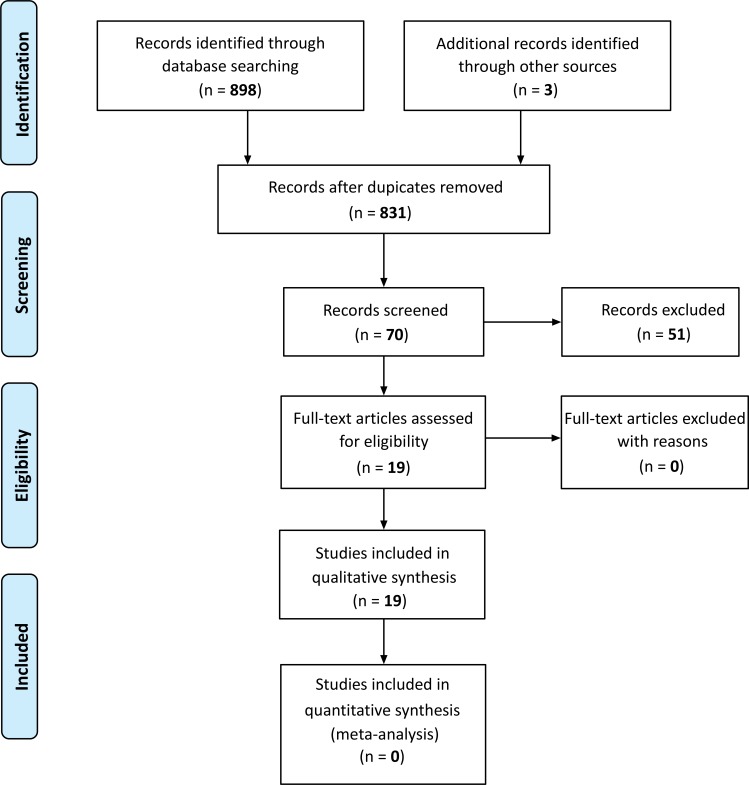
Results: Comparative studies with healthy children demonstrated positive association between body adiposity with retinal venular dilation, and SAH with retinal arteriolar narrowing. Different retinal fundus cameras and computer-assisted programs to evaluate the retinal vessels, variations in the methods of analysis, adjustments, populations, were the main arguments against formal meta-analysis. The heterogeneity was too high (I2 >90%, in fixed or randomized effects), and the lack of linearity, normal distribution and homoscedasticity did not recommend meta-regression.
Conclusion: Obesity and SAH show associations with ophthalmological alterations, especially with retinal vessel diameter. Lack of standardization does not allow a quantitative evaluation.



 京公网安备 11010802042870号
京ICP备2023020795号-1
京公网安备 11010802042870号
京ICP备2023020795号-1

 分享
分享

 求助内容:
求助内容: 应助结果提醒方式:
 扫码关注我们
