Md Habibur Rahman , Anup Bhusal , Won-Ha Lee , In-Kyu Lee , Kyoungho Suk
{"title":"Hypothalamic inflammation and malfunctioning glia in the pathophysiology of obesity and diabetes: Translational significance","authors":"Md Habibur Rahman , Anup Bhusal , Won-Ha Lee , In-Kyu Lee , Kyoungho Suk","doi":"10.1016/j.bcp.2018.01.024","DOIUrl":null,"url":null,"abstract":"<div><p>Preclinical studies<span> have suggested that chronic inflammation<span> in the brain might be associated with multiple metabolic disorders, including obesity and diabetes. In particular, hypothalamic inflammation interferes with the endocrine system and modulates nutritional homeostasis, leading to metabolic alterations and consequent pathologies. With regard to the mechanisms underlying molecular and cellular pathogenesis, neurons, non-neuronal cells, and the crosstalk between them have gained particular attention. Specifically, malfunctioning glia have recently been implicated as an important component of pathological hypothalamic inflammation. Hypothalamic inflammation modulates food intake, energy expenditure, insulin secretion, hepatic glucose production, and glucose and fatty acid metabolism. Moreover, growing evidence suggests that hypothalamic inflammation is intrinsically associated with the pathogenesis of obesity, diabetes, and their dysfunctional consequences. However, the translational significance of hypothalamic inflammation has not yet been fully explored. In this review, we cover recent advances suggesting that hypothalamic inflammation and glia play a central role in the ontology of obesity, diabetes, and their complications. Finally, we explore the possibilities and challenges of targeting hypothalamic inflammation as a potential therapeutic strategy.</span></span></p></div>","PeriodicalId":8806,"journal":{"name":"Biochemical pharmacology","volume":"153 ","pages":"Pages 123-133"},"PeriodicalIF":5.6000,"publicationDate":"2018-07-01","publicationTypes":"Journal Article","fieldsOfStudy":null,"isOpenAccess":false,"openAccessPdf":"https://sci-hub-pdf.com/10.1016/j.bcp.2018.01.024","citationCount":"32","resultStr":null,"platform":"Semanticscholar","paperid":null,"PeriodicalName":"Biochemical pharmacology","FirstCategoryId":"3","ListUrlMain":"https://www.sciencedirect.com/science/article/pii/S0006295218300248","RegionNum":2,"RegionCategory":"医学","ArticlePicture":[],"TitleCN":null,"AbstractTextCN":null,"PMCID":null,"EPubDate":"","PubModel":"","JCR":"Q1","JCRName":"PHARMACOLOGY & PHARMACY","Score":null,"Total":0}
引用次数: 32
Abstract
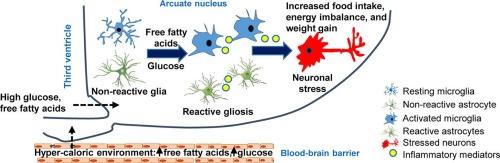
Preclinical studies have suggested that chronic inflammation in the brain might be associated with multiple metabolic disorders, including obesity and diabetes. In particular, hypothalamic inflammation interferes with the endocrine system and modulates nutritional homeostasis, leading to metabolic alterations and consequent pathologies. With regard to the mechanisms underlying molecular and cellular pathogenesis, neurons, non-neuronal cells, and the crosstalk between them have gained particular attention. Specifically, malfunctioning glia have recently been implicated as an important component of pathological hypothalamic inflammation. Hypothalamic inflammation modulates food intake, energy expenditure, insulin secretion, hepatic glucose production, and glucose and fatty acid metabolism. Moreover, growing evidence suggests that hypothalamic inflammation is intrinsically associated with the pathogenesis of obesity, diabetes, and their dysfunctional consequences. However, the translational significance of hypothalamic inflammation has not yet been fully explored. In this review, we cover recent advances suggesting that hypothalamic inflammation and glia play a central role in the ontology of obesity, diabetes, and their complications. Finally, we explore the possibilities and challenges of targeting hypothalamic inflammation as a potential therapeutic strategy.
期刊介绍:
Biochemical Pharmacology publishes original research findings, Commentaries and review articles related to the elucidation of cellular and tissue function(s) at the biochemical and molecular levels, the modification of cellular phenotype(s) by genetic, transcriptional/translational or drug/compound-induced modifications, as well as the pharmacodynamics and pharmacokinetics of xenobiotics and drugs, the latter including both small molecules and biologics.
The journal''s target audience includes scientists engaged in the identification and study of the mechanisms of action of xenobiotics, biologics and drugs and in the drug discovery and development process.
All areas of cellular biology and cellular, tissue/organ and whole animal pharmacology fall within the scope of the journal. Drug classes covered include anti-infectives, anti-inflammatory agents, chemotherapeutics, cardiovascular, endocrinological, immunological, metabolic, neurological and psychiatric drugs, as well as research on drug metabolism and kinetics. While medicinal chemistry is a topic of complimentary interest, manuscripts in this area must contain sufficient biological data to characterize pharmacologically the compounds reported. Submissions describing work focused predominately on chemical synthesis and molecular modeling will not be considered for review.
While particular emphasis is placed on reporting the results of molecular and biochemical studies, research involving the use of tissue and animal models of human pathophysiology and toxicology is of interest to the extent that it helps define drug mechanisms of action, safety and efficacy.



 京公网安备 11010802042870号
京ICP备2023020795号-1
京公网安备 11010802042870号
京ICP备2023020795号-1

 分享
分享
 求助内容:
求助内容: 应助结果提醒方式:
 扫码关注我们
