{"title":"[Peritoneal dialysis-related eosinophilic peritonitis: a case report and literature review].","authors":"S M Tsai, Y Yan, H P Zhao, B Wu, L Zuo, M Wang","doi":"","DOIUrl":null,"url":null,"abstract":"<p><p>Peritoneal dialysis (PD)-related peritonitis is recognized as a common complication of peritoneal dialysis. Eosinophilic peritonitis is a rare type of non-infection PD-related peritonitis. Eosinophilic peritonitis in continuous ambulatory peritoneal dialysis (CAPD) patients was first reported in 1967. The cause of eosinophilic peritonitis is obscure, however it may be related to some etiologies: (1) hypersensitivity to PD materials, including catheter or dialysate; (2) bacteria, fungal or mycobacterium tuberculosis infection. Clinical investigations include asymptomatic cloudy PD effluent, fever, abdominal pain and eosinophil count elevate in PD effluent. Eosinophilic peritonitis is usually mild and self-limited. With the development of PD, more eosinophilic peritonitis cases and researches were reported. Here, we report a patient on CAPD with eosinophilic peritonitis. A 71-year-old female patient developed end-stage renal disease for 4 years and underwent CAPD (2 000 mL of 1.5% dialysis solution with four exchanges daily) for 5 months. With a history of unclean food, she was hospitalized for complaints of diarrhea, fever and cloudy peritoneal effluent for 10 days. Dialysis effluent showed an elevated white blood cell (WBC) count of 1 980 cell/mm<sup>3</sup>, with 60% polymorphonuclear cells. She was diagnosed as PD-related peritonitis, and therapy was initiated with intraperitoneal ceftazidime 1 g once a day and vancomycin 500 mg every other day. She was admitted to the hospital as the symptoms were not relieved. Her peripheral blood cell count showed a total WBC count of 6 940 cells/mm<sup>3</sup>, 36.8% eosinophil. Her PD effluent analysis showed turbidity, total WBC count of 1 480 cells/mm<sup>3</sup>, and 83% polymorphonuclear cells. Her dialysate bacteria culture, fungus culture, polymerase chain reaction for Mycobacterium tuberculosis (TB-PCR), acid-fast stain were all negative. On admission day 4, the treatments were changed to levofloxacin 200 mg once a day and vancomycin 500 mg every other day. After two weeks of antibiotics treatment, patient's symptoms were not completely improved and her dialysis effluent remained cloudy. Her blood eosinophil count elevated to 36.8%,eosinophil proportion in PD effluent>90% and PD effluent pathological findings showed eosinophil>90%. Eosinophilic peritonitis was diagnosed and a decision was made to give loratadine daily dose of 10 mg orally. The possible reasons might be the patient's allergy to some components of PD solution or connection systems in the beginning of PD, and this bacterial peritonitis episode, as well as the application of vancomycin, might lead to the fact that eosinophilic peritonitis acutely developed. For there was no improvement in clinical symptoms, loratadine was stopped, and the patient was discharged 18 days later, and received follow-up closely. Two months later, eosinophil count in blood and PD fluid decreased to normal range with no symptom. This case reminds us that in any PD-related peritonitis patient with prolonged symptoms after appropriate antibiotic therapy, and typical clinical symptoms, the diagnosis of eosinophilic peritonitis should be considered. For the count and percentage of eosinophils are not routinely reported in most laboratories, doctors need to contact the department of laboratory and the department of pathology, to confirm the cell count and proportion of eosinophils in dialysis effluent, so as to make the definite diagnosis, which can not only avoid antibiotics overuse, but also avoid antibiotics-induced eosinophilic peritonitis (such as vancomycin).</p>","PeriodicalId":8790,"journal":{"name":"北京大学学报(医学版)","volume":"50 4","pages":"747-751"},"PeriodicalIF":0.0000,"publicationDate":"2018-08-18","publicationTypes":"Journal Article","fieldsOfStudy":null,"isOpenAccess":false,"openAccessPdf":"","citationCount":"0","resultStr":null,"platform":"Semanticscholar","paperid":null,"PeriodicalName":"北京大学学报(医学版)","FirstCategoryId":"3","ListUrlMain":"","RegionNum":0,"RegionCategory":null,"ArticlePicture":[],"TitleCN":null,"AbstractTextCN":null,"PMCID":null,"EPubDate":"","PubModel":"","JCR":"Q3","JCRName":"Medicine","Score":null,"Total":0}
引用次数: 0
Abstract
Peritoneal dialysis (PD)-related peritonitis is recognized as a common complication of peritoneal dialysis. Eosinophilic peritonitis is a rare type of non-infection PD-related peritonitis. Eosinophilic peritonitis in continuous ambulatory peritoneal dialysis (CAPD) patients was first reported in 1967. The cause of eosinophilic peritonitis is obscure, however it may be related to some etiologies: (1) hypersensitivity to PD materials, including catheter or dialysate; (2) bacteria, fungal or mycobacterium tuberculosis infection. Clinical investigations include asymptomatic cloudy PD effluent, fever, abdominal pain and eosinophil count elevate in PD effluent. Eosinophilic peritonitis is usually mild and self-limited. With the development of PD, more eosinophilic peritonitis cases and researches were reported. Here, we report a patient on CAPD with eosinophilic peritonitis. A 71-year-old female patient developed end-stage renal disease for 4 years and underwent CAPD (2 000 mL of 1.5% dialysis solution with four exchanges daily) for 5 months. With a history of unclean food, she was hospitalized for complaints of diarrhea, fever and cloudy peritoneal effluent for 10 days. Dialysis effluent showed an elevated white blood cell (WBC) count of 1 980 cell/mm3, with 60% polymorphonuclear cells. She was diagnosed as PD-related peritonitis, and therapy was initiated with intraperitoneal ceftazidime 1 g once a day and vancomycin 500 mg every other day. She was admitted to the hospital as the symptoms were not relieved. Her peripheral blood cell count showed a total WBC count of 6 940 cells/mm3, 36.8% eosinophil. Her PD effluent analysis showed turbidity, total WBC count of 1 480 cells/mm3, and 83% polymorphonuclear cells. Her dialysate bacteria culture, fungus culture, polymerase chain reaction for Mycobacterium tuberculosis (TB-PCR), acid-fast stain were all negative. On admission day 4, the treatments were changed to levofloxacin 200 mg once a day and vancomycin 500 mg every other day. After two weeks of antibiotics treatment, patient's symptoms were not completely improved and her dialysis effluent remained cloudy. Her blood eosinophil count elevated to 36.8%,eosinophil proportion in PD effluent>90% and PD effluent pathological findings showed eosinophil>90%. Eosinophilic peritonitis was diagnosed and a decision was made to give loratadine daily dose of 10 mg orally. The possible reasons might be the patient's allergy to some components of PD solution or connection systems in the beginning of PD, and this bacterial peritonitis episode, as well as the application of vancomycin, might lead to the fact that eosinophilic peritonitis acutely developed. For there was no improvement in clinical symptoms, loratadine was stopped, and the patient was discharged 18 days later, and received follow-up closely. Two months later, eosinophil count in blood and PD fluid decreased to normal range with no symptom. This case reminds us that in any PD-related peritonitis patient with prolonged symptoms after appropriate antibiotic therapy, and typical clinical symptoms, the diagnosis of eosinophilic peritonitis should be considered. For the count and percentage of eosinophils are not routinely reported in most laboratories, doctors need to contact the department of laboratory and the department of pathology, to confirm the cell count and proportion of eosinophils in dialysis effluent, so as to make the definite diagnosis, which can not only avoid antibiotics overuse, but also avoid antibiotics-induced eosinophilic peritonitis (such as vancomycin).
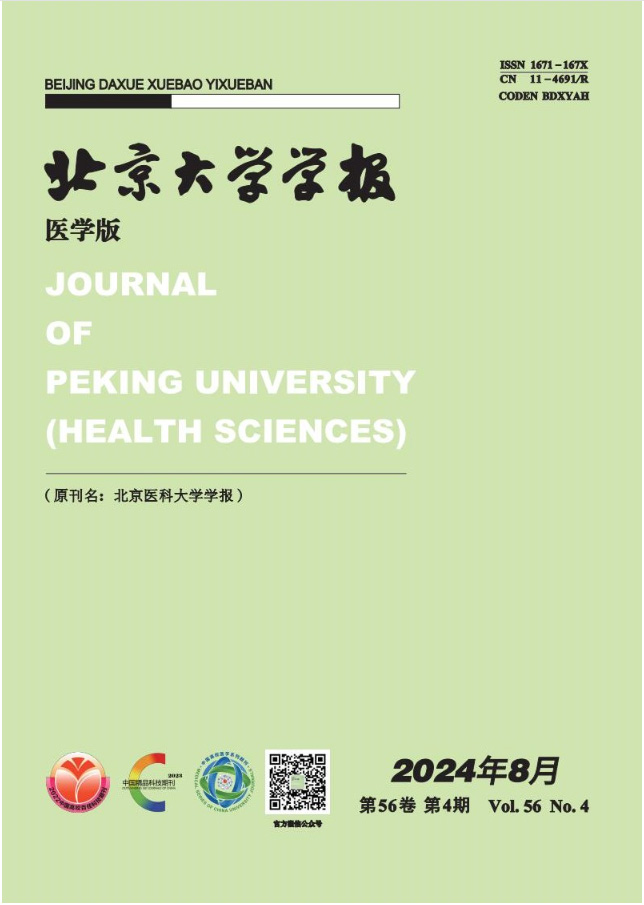
期刊介绍:
Beijing Da Xue Xue Bao Yi Xue Ban / Journal of Peking University (Health Sciences), established in 1959, is a national academic journal sponsored by Peking University, and its former name is Journal of Beijing Medical University. The coverage of the Journal includes basic medical sciences, clinical medicine, oral medicine, surgery, public health and epidemiology, pharmacology and pharmacy. Over the last few years, the Journal has published articles and reports covering major topics in the different special issues (e.g. research on disease genome, theory of drug withdrawal, mechanism and prevention of cardiovascular and cerebrovascular diseases, stomatology, orthopaedic, public health, urology and reproductive medicine). All the topics involve latest advances in medical sciences, hot topics in specific specialties, and prevention and treatment of major diseases.
The Journal has been indexed and abstracted by PubMed Central (PMC), MEDLINE/PubMed, EBSCO, Embase, Scopus, Chemical Abstracts (CA), Western Pacific Region Index Medicus (WPR), JSTChina, and almost all the Chinese sciences and technical index systems, including Chinese Science and Technology Paper Citation Database (CSTPCD), Chinese Science Citation Database (CSCD), China BioMedical Bibliographic Database (CBM), CMCI, Chinese Biological Abstracts, China National Academic Magazine Data-Base (CNKI), Wanfang Data (ChinaInfo), etc.
 分享
分享



 京公网安备 11010802042870号
京ICP备2023020795号-1
京公网安备 11010802042870号
京ICP备2023020795号-1

 求助内容:
求助内容: 应助结果提醒方式:
 扫码关注我们
