{"title":"Effect of 60 and 90 days of isotretinoin treatment on the structure of the small intestine mucosa in young male Wistar rats.","authors":"Bruna Fontana Thomazini, Mary Anne Heidi Dolder","doi":"10.1515/intox-2017-0007","DOIUrl":null,"url":null,"abstract":"<p><p>Isotretinoin is a substance used in cases of severe acne and acne resistant to other treatments. This skin disease affects patients of all ages and can interfere with social life, especially in adolescents. The drug acts by suppressing sebaceous gland activity and creating an inhospitable environment for <i>Propionibacterium acne</i>. The integrity of the small intestine is important for correct nutrition and patient treatment. We intended to assess the small intestine structure after treatment with 5 mg/kg isotretinoin solution and after a period without the drug, which could be considered a rest period. Young male Wistar rats (n=24) were separated into 4 groups (n=6): C: water; D0: soybean oil; D5a: 5 mg/kg; D5b: 5 mg/kg for 60 days followed by 30 days of rest period. Soybean oil was used to dilute the drug and it was offered daily by gavage. The animals were euthanized and the duodenum, jejunum and ileum were collected for analysis with light and scanning electron microscopy. The treatment stimulated tissue proliferation in the jejunum and ileum but had no significant effect in the duodenum. The results also showed a modification in goblet cell frequency in the duodenum and ileum. A further finding was that some modifications disappeared during the rest period. The protocol showed that the small intestine was somewhat altered by the treatment yet no lasting damage was caused.</p>","PeriodicalId":13715,"journal":{"name":"Interdisciplinary Toxicology","volume":"10 2","pages":"45-51"},"PeriodicalIF":0.0000,"publicationDate":"2017-10-01","publicationTypes":"Journal Article","fieldsOfStudy":null,"isOpenAccess":false,"openAccessPdf":"https://sci-hub-pdf.com/10.1515/intox-2017-0007","citationCount":"1","resultStr":null,"platform":"Semanticscholar","paperid":null,"PeriodicalName":"Interdisciplinary Toxicology","FirstCategoryId":"1085","ListUrlMain":"https://doi.org/10.1515/intox-2017-0007","RegionNum":0,"RegionCategory":null,"ArticlePicture":[],"TitleCN":null,"AbstractTextCN":null,"PMCID":null,"EPubDate":"","PubModel":"","JCR":"Q3","JCRName":"Environmental Science","Score":null,"Total":0}
引用次数: 1
Abstract
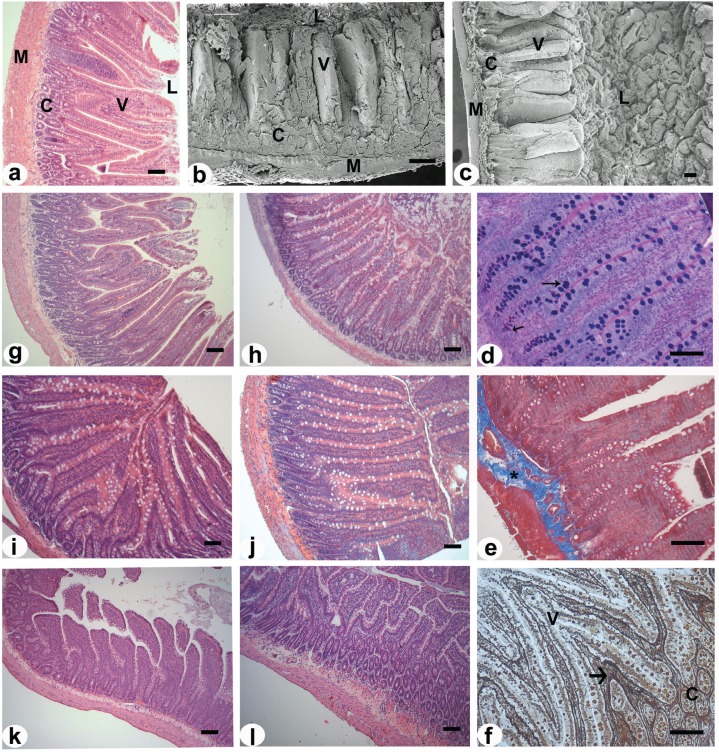
Isotretinoin is a substance used in cases of severe acne and acne resistant to other treatments. This skin disease affects patients of all ages and can interfere with social life, especially in adolescents. The drug acts by suppressing sebaceous gland activity and creating an inhospitable environment for Propionibacterium acne. The integrity of the small intestine is important for correct nutrition and patient treatment. We intended to assess the small intestine structure after treatment with 5 mg/kg isotretinoin solution and after a period without the drug, which could be considered a rest period. Young male Wistar rats (n=24) were separated into 4 groups (n=6): C: water; D0: soybean oil; D5a: 5 mg/kg; D5b: 5 mg/kg for 60 days followed by 30 days of rest period. Soybean oil was used to dilute the drug and it was offered daily by gavage. The animals were euthanized and the duodenum, jejunum and ileum were collected for analysis with light and scanning electron microscopy. The treatment stimulated tissue proliferation in the jejunum and ileum but had no significant effect in the duodenum. The results also showed a modification in goblet cell frequency in the duodenum and ileum. A further finding was that some modifications disappeared during the rest period. The protocol showed that the small intestine was somewhat altered by the treatment yet no lasting damage was caused.




 京公网安备 11010802042870号
京ICP备2023020795号-1
京公网安备 11010802042870号
京ICP备2023020795号-1

 分享
分享
 求助内容:
求助内容: 应助结果提醒方式:
 扫码关注我们
