Péter Török, Károly Penksza, Edina Tóth, András Kelemen, Judit Sonkoly, Béla Tóthmérész
{"title":"Vegetation type and grazing intensity jointly shape grazing effects on grassland biodiversity","authors":"Péter Török, Károly Penksza, Edina Tóth, András Kelemen, Judit Sonkoly, Béla Tóthmérész","doi":"10.1002/ece3.4508","DOIUrl":null,"url":null,"abstract":"<p>In the Palaearctic steppe zone, overgrazing was identified as one of the key drivers of declining grassland biodiversity, which underlines the necessity of the functional evaluation of increased grazing pressure on grassland vegetation. We tested the following hypotheses: (a) The effect of grazing intensity on species and functional diversity is strongly dependent on grassland type. (b) The magnitude of diet selectivity of grazers decreases with increasing grazing intensity. (c) Increasing grazing intensity increases evenness and functional evenness of the subjected grasslands. We analyzed vegetation patterns in four types of grasslands (Dry alkali short-grass steppes, Dry loess steppes, Non-alkali wet and Alkali wet grasslands) along an intensity gradient of beef cattle grazing at 73 sites in Hungary. Species richness, Shannon diversity, evenness, and four leaf traits were analyzed. We calculated community-weighted means for each single trait, and multi-trait functional richness, functional evenness, and divergence for all leaf traits. All species and functional diversity metrics were significantly affected by the grassland type, except leaf dry matter content. The effect of interaction between grazing intensity and grassland type was also significant for functional richness, functional evenness, community-weighted means of leaf area, and for species richness and evenness. An upward trend of specific leaf area was detected in all grasslands with the highest scores for the overgrazed sites, but the change was also grassland type dependent. The detected trend suggests that with increased intensity the overall selectivity of grazing decreased. We found that evenness was affected but functional evenness was not affected by grazing intensity. Functional evenness scores were more related to the grassland type than to changes in grazing intensity, and displayed a high variability. We stress that one-size-fits-all strategies cannot be recommended and actions should be fine-tuned at least at the level of grassland type.</p>","PeriodicalId":11467,"journal":{"name":"Ecology and Evolution","volume":"8 20","pages":"10326-10335"},"PeriodicalIF":2.3000,"publicationDate":"2018-10-03","publicationTypes":"Journal Article","fieldsOfStudy":null,"isOpenAccess":false,"openAccessPdf":"https://sci-hub-pdf.com/10.1002/ece3.4508","citationCount":"38","resultStr":null,"platform":"Semanticscholar","paperid":null,"PeriodicalName":"Ecology and Evolution","FirstCategoryId":"99","ListUrlMain":"https://onlinelibrary.wiley.com/doi/10.1002/ece3.4508","RegionNum":2,"RegionCategory":"生物学","ArticlePicture":[],"TitleCN":null,"AbstractTextCN":null,"PMCID":null,"EPubDate":"","PubModel":"","JCR":"Q2","JCRName":"ECOLOGY","Score":null,"Total":0}
引用次数: 38
Abstract
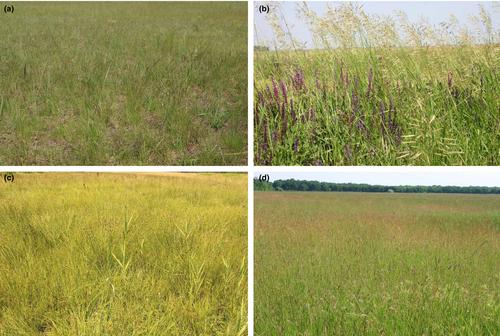
In the Palaearctic steppe zone, overgrazing was identified as one of the key drivers of declining grassland biodiversity, which underlines the necessity of the functional evaluation of increased grazing pressure on grassland vegetation. We tested the following hypotheses: (a) The effect of grazing intensity on species and functional diversity is strongly dependent on grassland type. (b) The magnitude of diet selectivity of grazers decreases with increasing grazing intensity. (c) Increasing grazing intensity increases evenness and functional evenness of the subjected grasslands. We analyzed vegetation patterns in four types of grasslands (Dry alkali short-grass steppes, Dry loess steppes, Non-alkali wet and Alkali wet grasslands) along an intensity gradient of beef cattle grazing at 73 sites in Hungary. Species richness, Shannon diversity, evenness, and four leaf traits were analyzed. We calculated community-weighted means for each single trait, and multi-trait functional richness, functional evenness, and divergence for all leaf traits. All species and functional diversity metrics were significantly affected by the grassland type, except leaf dry matter content. The effect of interaction between grazing intensity and grassland type was also significant for functional richness, functional evenness, community-weighted means of leaf area, and for species richness and evenness. An upward trend of specific leaf area was detected in all grasslands with the highest scores for the overgrazed sites, but the change was also grassland type dependent. The detected trend suggests that with increased intensity the overall selectivity of grazing decreased. We found that evenness was affected but functional evenness was not affected by grazing intensity. Functional evenness scores were more related to the grassland type than to changes in grazing intensity, and displayed a high variability. We stress that one-size-fits-all strategies cannot be recommended and actions should be fine-tuned at least at the level of grassland type.
期刊介绍:
Ecology and Evolution is the peer reviewed journal for rapid dissemination of research in all areas of ecology, evolution and conservation science. The journal gives priority to quality research reports, theoretical or empirical, that develop our understanding of organisms and their diversity, interactions between them, and the natural environment.
Ecology and Evolution gives prompt and equal consideration to papers reporting theoretical, experimental, applied and descriptive work in terrestrial and aquatic environments. The journal will consider submissions across taxa in areas including but not limited to micro and macro ecological and evolutionary processes, characteristics of and interactions between individuals, populations, communities and the environment, physiological responses to environmental change, population genetics and phylogenetics, relatedness and kin selection, life histories, systematics and taxonomy, conservation genetics, extinction, speciation, adaption, behaviour, biodiversity, species abundance, macroecology, population and ecosystem dynamics, and conservation policy.




 京公网安备 11010802042870号
京ICP备2023020795号-1
京公网安备 11010802042870号
京ICP备2023020795号-1

 分享
分享
 求助内容:
求助内容: 应助结果提醒方式:
 扫码关注我们
