Natalia Filippova, Xiuhua Yang, Zixiao An, Louis B Nabors, Larisa Pereboeva
{"title":"Blocking PD1/PDL1 Interactions Together with MLN4924 Therapy is a Potential Strategy for Glioma Treatment.","authors":"Natalia Filippova, Xiuhua Yang, Zixiao An, Louis B Nabors, Larisa Pereboeva","doi":"10.4172/1948-5956.1000543","DOIUrl":null,"url":null,"abstract":"<p><strong>Objective: </strong>MLN4924, a pharmacological inhibitor of cullin neddylation, resulted in glioma cell apoptosis, deregulation of the S-phase of DNA synthesis and thus, offers great potential for the treatment of brain tumours. However, targeting the neddylation pathway with an MLN4924 treatment stabilized the hypoxia-inducible factor 1A (HIF1A), which is one of the main transcriptional enhancers of the immune checkpoint molecule PDL1 (programmid death ligand-1) in cancer cells. The influence of immune checkpoint molecules on glioma progression has recently been discovered; PDL1 overexpression in gliomas corresponds to a significant shortening of patient survival and a decrease of the anti-tumour immune response. We hypothesize that i) PDL1 is up-regulated in gliomas after treatment with MLN4924 and induces T-cell energy; ii) co-utilization of the PD1/PDL1 blockage with MLN4924 therapy may reduce T-cell energy and may engage MLN4924-induced tumour disruption with the immune response.</p><p><strong>Methods: </strong>PDL1 expression and its immunosuppressive role in gliomas, glioma microenvironments, and after treatments with MLN4924 were assessed by utilizing methods of immunohistochemistry, molecular biology, and biochemistry.</p><p><strong>Results: </strong>We confirmed PDL1 overexpression in clinical brain tumour samples, PDGx and established glioma cell lines, extracellular media from glioma cells, and CSF (cerebrospinal fluid) samples from tumour-bearing mice. Our primary T-cell based assays verified that the up-regulation of PDL1 in tumour cells protects gliomas from T-cell treatment and reduces T-cell activation. We found that a pharmacological inhibitor of cullin neddylation, MLN4924, exhibited strong cytotoxicity towards PDGx and established glioma cell lines, <i>in vitro</i>, with an IC50's range from 0.2 to 3 uM. However, we observed a significant increase of HIF1A and PDL1 in mRNA and protein levels in all glioma cell lines after treatment with MLN4924. The MLN4924-dependent induction of PDL1 in gliomas resulted in T-cell energy, which was blocked by a blockage of the PD1/PDL1 interaction.</p><p><strong>Conclusion: </strong>We conclude that i) PDL1 up-regulation in gliomas and the glioma microenvironment is an important chemotherapeutic target; ii) MLN4924 therapy, combined with a blockage of the PD1/PDL1 pathway, should be considered as a potential strategy for glioma treatment.</p>","PeriodicalId":15170,"journal":{"name":"Journal of Cancer Science & Therapy","volume":"10 8","pages":"190-197"},"PeriodicalIF":0.0000,"publicationDate":"2018-01-01","publicationTypes":"Journal Article","fieldsOfStudy":null,"isOpenAccess":false,"openAccessPdf":"https://sci-hub-pdf.com/10.4172/1948-5956.1000543","citationCount":"22","resultStr":null,"platform":"Semanticscholar","paperid":null,"PeriodicalName":"Journal of Cancer Science & Therapy","FirstCategoryId":"1085","ListUrlMain":"https://doi.org/10.4172/1948-5956.1000543","RegionNum":0,"RegionCategory":null,"ArticlePicture":[],"TitleCN":null,"AbstractTextCN":null,"PMCID":null,"EPubDate":"2018/8/6 0:00:00","PubModel":"Epub","JCR":"","JCRName":"","Score":null,"Total":0}
引用次数: 22
Abstract
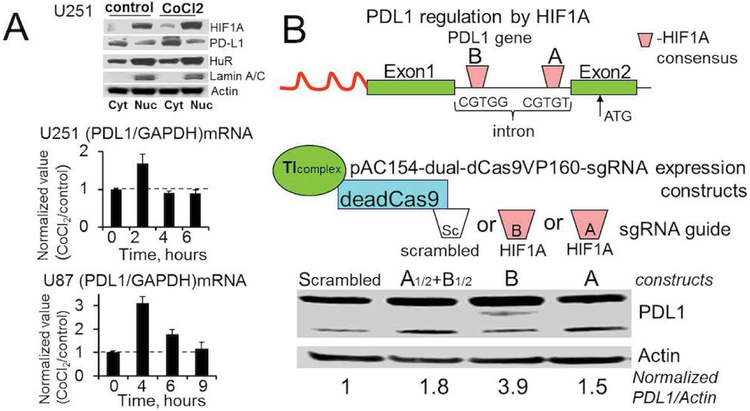
Objective: MLN4924, a pharmacological inhibitor of cullin neddylation, resulted in glioma cell apoptosis, deregulation of the S-phase of DNA synthesis and thus, offers great potential for the treatment of brain tumours. However, targeting the neddylation pathway with an MLN4924 treatment stabilized the hypoxia-inducible factor 1A (HIF1A), which is one of the main transcriptional enhancers of the immune checkpoint molecule PDL1 (programmid death ligand-1) in cancer cells. The influence of immune checkpoint molecules on glioma progression has recently been discovered; PDL1 overexpression in gliomas corresponds to a significant shortening of patient survival and a decrease of the anti-tumour immune response. We hypothesize that i) PDL1 is up-regulated in gliomas after treatment with MLN4924 and induces T-cell energy; ii) co-utilization of the PD1/PDL1 blockage with MLN4924 therapy may reduce T-cell energy and may engage MLN4924-induced tumour disruption with the immune response.
Methods: PDL1 expression and its immunosuppressive role in gliomas, glioma microenvironments, and after treatments with MLN4924 were assessed by utilizing methods of immunohistochemistry, molecular biology, and biochemistry.
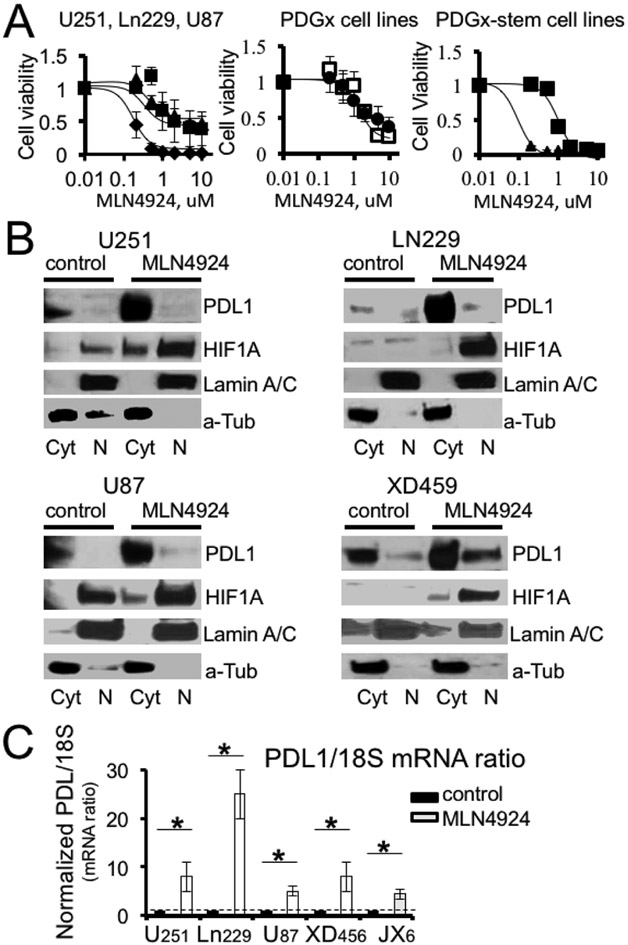
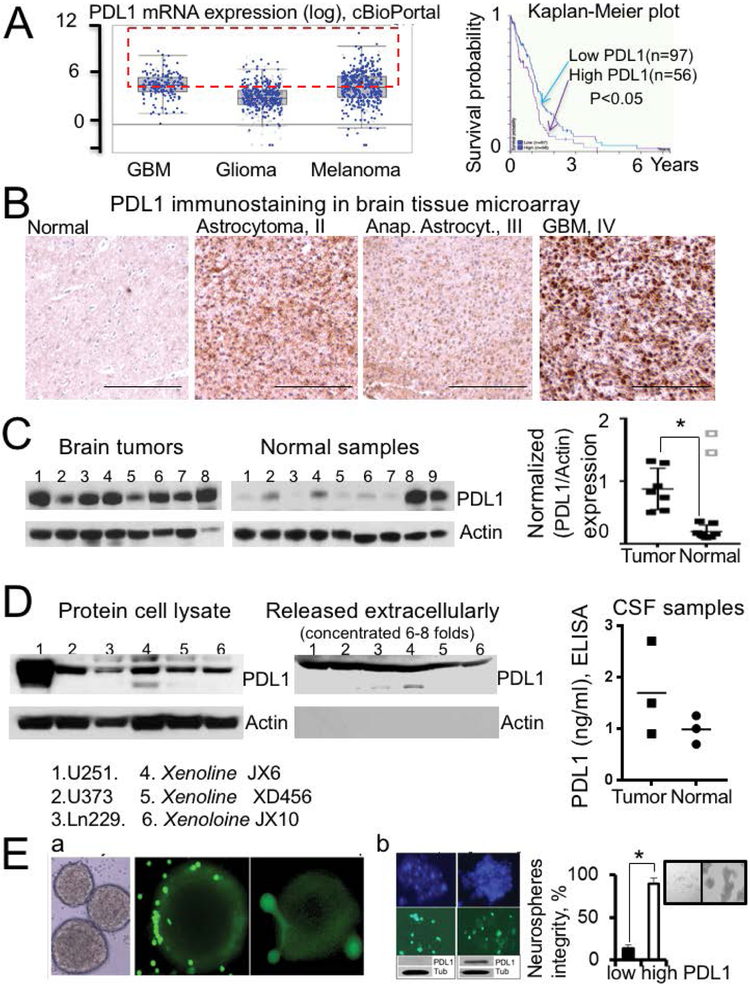
Results: We confirmed PDL1 overexpression in clinical brain tumour samples, PDGx and established glioma cell lines, extracellular media from glioma cells, and CSF (cerebrospinal fluid) samples from tumour-bearing mice. Our primary T-cell based assays verified that the up-regulation of PDL1 in tumour cells protects gliomas from T-cell treatment and reduces T-cell activation. We found that a pharmacological inhibitor of cullin neddylation, MLN4924, exhibited strong cytotoxicity towards PDGx and established glioma cell lines, in vitro, with an IC50's range from 0.2 to 3 uM. However, we observed a significant increase of HIF1A and PDL1 in mRNA and protein levels in all glioma cell lines after treatment with MLN4924. The MLN4924-dependent induction of PDL1 in gliomas resulted in T-cell energy, which was blocked by a blockage of the PD1/PDL1 interaction.
Conclusion: We conclude that i) PDL1 up-regulation in gliomas and the glioma microenvironment is an important chemotherapeutic target; ii) MLN4924 therapy, combined with a blockage of the PD1/PDL1 pathway, should be considered as a potential strategy for glioma treatment.



 京公网安备 11010802042870号
京ICP备2023020795号-1
京公网安备 11010802042870号
京ICP备2023020795号-1

 分享
分享

 求助内容:
求助内容: 应助结果提醒方式:
 扫码关注我们
