Sarah B. Floyd PhD , Cole G. Chapman PhD , Charles A. Thigpen PhD, PT, ATC , John M. Brooks PhD , Richard J. Hawkins MD , John M. Tokish MD
{"title":"Shoulder arthroplasty in the US Medicare population: a 1-year evaluation of surgical complications, hospital admissions, and revision surgery","authors":"Sarah B. Floyd PhD , Cole G. Chapman PhD , Charles A. Thigpen PhD, PT, ATC , John M. Brooks PhD , Richard J. Hawkins MD , John M. Tokish MD","doi":"10.1016/j.jses.2017.10.002","DOIUrl":null,"url":null,"abstract":"<div><h3>Background</h3><p>The objective of this study was to describe patients receiving each shoulder arthroplasty procedure and to assess surgical complications, hospital admissions for surgical complications, and surgical revisions among Medicare beneficiaries undergoing shoulder arthroplasty.</p></div><div><h3>Methods</h3><p>Medicare patients receiving shoulder arthroplasty in the United States in 2011 were identified from Medicare administrative data and classified by surgery type: shoulder hemiarthroplasty (HA), anatomic total shoulder arthroplasty (TSA), or reverse shoulder arthroplasty (RSA). Surgical complications, hospital admissions, and revisions were identified during the year after the index arthroplasty procedure.</p></div><div><h3>Results</h3><p>There were 24,441 patients who met all inclusion criteria, and of those, 20.0% received HA, 42.5% received TSA, and 37.4% received RSA. Compared with RSA and TSA recipients, HA recipients tended to be older and sicker and were more likely to be Medicaid eligible. The rate of new surgical complications and related hospital admissions was greatest during the first 50 days after surgery but remained significant and stable throughout the remainder of the year. Rates of complications and related hospital admissions were greatest for HA recipients (17.4% and 6.6%, respectively), followed by RSA (14.2% and 5.1%) and TSA (9.4% and 4.0%).</p></div><div><h3>Conclusions</h3><p>The rate of adverse surgical outcomes after shoulder arthroplasty differed across populations that received HA, TSA, and RSA and across patients within each group by comorbidity burden. The finding that the rate of surgical complications and related hospital admissions remained meaningful during the entire year after surgery suggests that a postoperative follow-up period longer than the traditional 90 days may be warranted.</p></div>","PeriodicalId":92554,"journal":{"name":"JSES open access","volume":"2 1","pages":"Pages 40-47"},"PeriodicalIF":0.0000,"publicationDate":"2018-03-01","publicationTypes":"Journal Article","fieldsOfStudy":null,"isOpenAccess":false,"openAccessPdf":"https://sci-hub-pdf.com/10.1016/j.jses.2017.10.002","citationCount":"16","resultStr":null,"platform":"Semanticscholar","paperid":null,"PeriodicalName":"JSES open access","FirstCategoryId":"1085","ListUrlMain":"https://www.sciencedirect.com/science/article/pii/S2468602617300542","RegionNum":0,"RegionCategory":null,"ArticlePicture":[],"TitleCN":null,"AbstractTextCN":null,"PMCID":null,"EPubDate":"","PubModel":"","JCR":"","JCRName":"","Score":null,"Total":0}
引用次数: 16
Abstract
Background
The objective of this study was to describe patients receiving each shoulder arthroplasty procedure and to assess surgical complications, hospital admissions for surgical complications, and surgical revisions among Medicare beneficiaries undergoing shoulder arthroplasty.
Methods
Medicare patients receiving shoulder arthroplasty in the United States in 2011 were identified from Medicare administrative data and classified by surgery type: shoulder hemiarthroplasty (HA), anatomic total shoulder arthroplasty (TSA), or reverse shoulder arthroplasty (RSA). Surgical complications, hospital admissions, and revisions were identified during the year after the index arthroplasty procedure.
Results
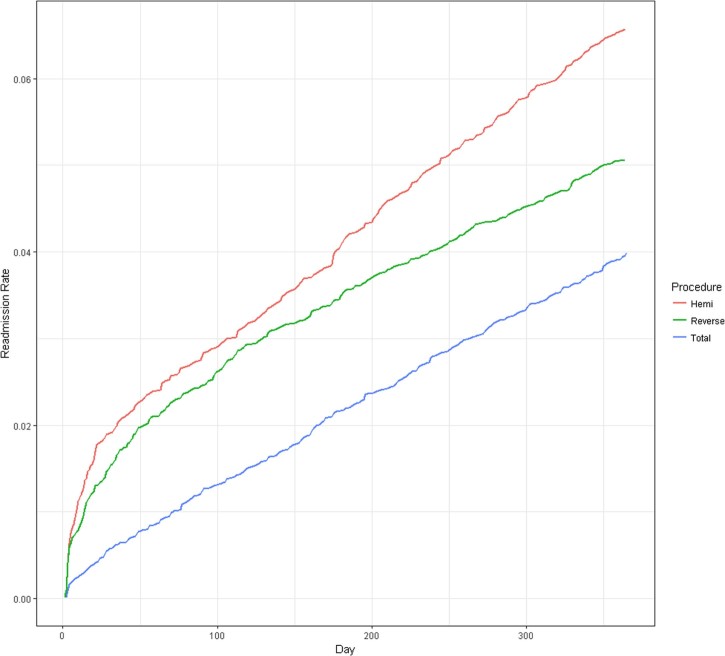
There were 24,441 patients who met all inclusion criteria, and of those, 20.0% received HA, 42.5% received TSA, and 37.4% received RSA. Compared with RSA and TSA recipients, HA recipients tended to be older and sicker and were more likely to be Medicaid eligible. The rate of new surgical complications and related hospital admissions was greatest during the first 50 days after surgery but remained significant and stable throughout the remainder of the year. Rates of complications and related hospital admissions were greatest for HA recipients (17.4% and 6.6%, respectively), followed by RSA (14.2% and 5.1%) and TSA (9.4% and 4.0%).
Conclusions
The rate of adverse surgical outcomes after shoulder arthroplasty differed across populations that received HA, TSA, and RSA and across patients within each group by comorbidity burden. The finding that the rate of surgical complications and related hospital admissions remained meaningful during the entire year after surgery suggests that a postoperative follow-up period longer than the traditional 90 days may be warranted.





 京公网安备 11010802042870号
京ICP备2023020795号-1
京公网安备 11010802042870号
京ICP备2023020795号-1

 分享
分享

 求助内容:
求助内容: 应助结果提醒方式:
 扫码关注我们
