X-Chromosome Dosage Modulates Multiple Molecular and Cellular Properties of Mouse Pluripotent Stem Cells Independently of Global DNA Methylation Levels.
Juan Song, Adrian Janiszewski, Natalie De Geest, Lotte Vanheer, Irene Talon, Mouna El Bakkali, Taeho Oh, Vincent Pasque
{"title":"X-Chromosome Dosage Modulates Multiple Molecular and Cellular Properties of Mouse Pluripotent Stem Cells Independently of Global DNA Methylation Levels.","authors":"Juan Song, Adrian Janiszewski, Natalie De Geest, Lotte Vanheer, Irene Talon, Mouna El Bakkali, Taeho Oh, Vincent Pasque","doi":"10.1016/j.stemcr.2018.12.004","DOIUrl":null,"url":null,"abstract":"<p><p>Reprogramming female mouse somatic cells into induced pluripotent stem cells (iPSCs) leads to X-chromosome reactivation. The extent to which increased X-chromosome dosage (X-dosage) in female iPSCs compared with male iPSCs leads to differences in the properties of iPSCs is still unclear. We show that chromatin accessibility in mouse iPSCs is modulated by X-dosage. Specific sets of transcriptional regulator motifs are enriched in chromatin with increased accessibility in XX or XY iPSCs. The transcriptome, growth and pluripotency exit are also modulated by X-dosage in iPSCs. To understand how increased X-dosage modulates the properties of mouse pluripotent stem cells, we used heterozygous deletions of the X-linked gene Dusp9. We show that X-dosage regulates the transcriptome, open chromatin landscape, growth, and pluripotency exit largely independently of global DNA methylation. Our results provide insights into how gene dosage modulates the epigenetic and genetic mechanisms that regulate cell identity.</p>","PeriodicalId":21885,"journal":{"name":"Stem Cell Reports","volume":" ","pages":"333-350"},"PeriodicalIF":5.1000,"publicationDate":"2019-02-12","publicationTypes":"Journal Article","fieldsOfStudy":null,"isOpenAccess":false,"openAccessPdf":"https://sci-hub-pdf.com/10.1016/j.stemcr.2018.12.004","citationCount":"27","resultStr":null,"platform":"Semanticscholar","paperid":null,"PeriodicalName":"Stem Cell Reports","FirstCategoryId":"3","ListUrlMain":"https://doi.org/10.1016/j.stemcr.2018.12.004","RegionNum":2,"RegionCategory":"医学","ArticlePicture":[],"TitleCN":null,"AbstractTextCN":null,"PMCID":null,"EPubDate":"2019/1/10 0:00:00","PubModel":"Epub","JCR":"Q1","JCRName":"CELL & TISSUE ENGINEERING","Score":null,"Total":0}
引用次数: 27
Abstract
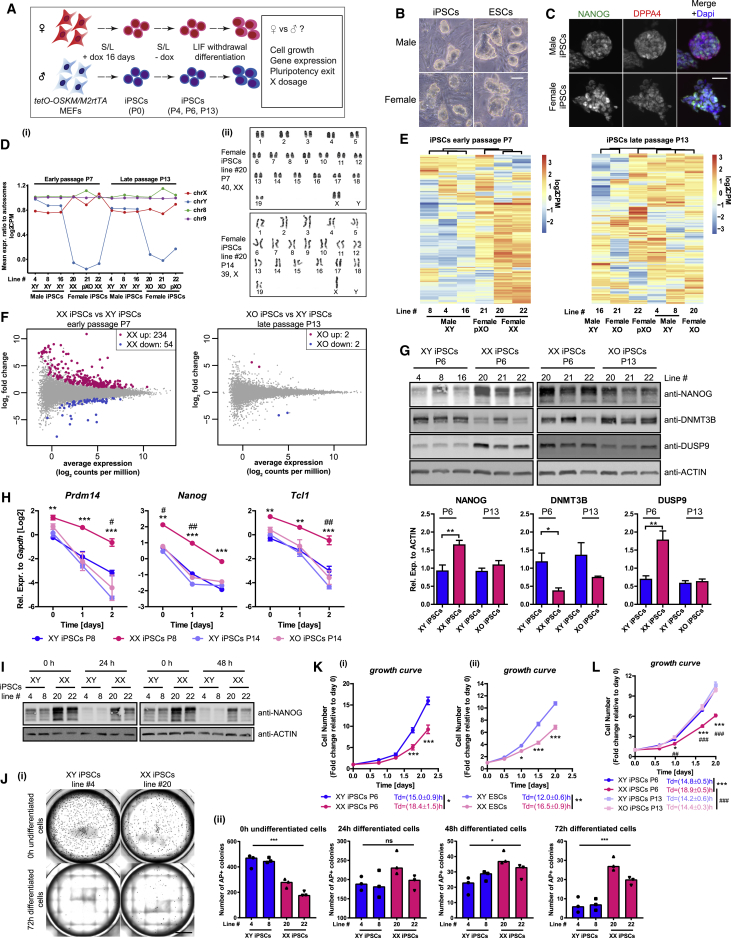
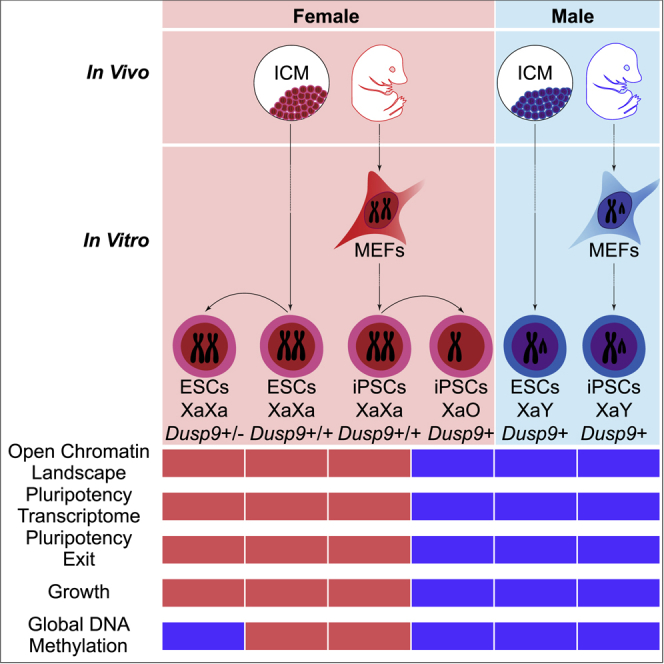
Reprogramming female mouse somatic cells into induced pluripotent stem cells (iPSCs) leads to X-chromosome reactivation. The extent to which increased X-chromosome dosage (X-dosage) in female iPSCs compared with male iPSCs leads to differences in the properties of iPSCs is still unclear. We show that chromatin accessibility in mouse iPSCs is modulated by X-dosage. Specific sets of transcriptional regulator motifs are enriched in chromatin with increased accessibility in XX or XY iPSCs. The transcriptome, growth and pluripotency exit are also modulated by X-dosage in iPSCs. To understand how increased X-dosage modulates the properties of mouse pluripotent stem cells, we used heterozygous deletions of the X-linked gene Dusp9. We show that X-dosage regulates the transcriptome, open chromatin landscape, growth, and pluripotency exit largely independently of global DNA methylation. Our results provide insights into how gene dosage modulates the epigenetic and genetic mechanisms that regulate cell identity.
期刊介绍:
Stem Cell Reports publishes high-quality, peer-reviewed research presenting conceptual or practical advances across the breadth of stem cell research and its applications to medicine. Our particular focus on shorter, single-point articles, timely publication, strong editorial decision-making and scientific input by leaders in the field and a "scoop protection" mechanism are reasons to submit your best papers.




 京公网安备 11010802042870号
京ICP备2023020795号-1
京公网安备 11010802042870号
京ICP备2023020795号-1

 分享
分享
 求助内容:
求助内容: 应助结果提醒方式:
 扫码关注我们
