{"title":"HIV-associated cavernous sinus disease.","authors":"Cait-Lynn D Wells, Anand A Moodley","doi":"10.4102/sajhivmed.v20i1.862","DOIUrl":null,"url":null,"abstract":"<p><strong>Introduction: </strong>The underlying diagnosis of cavernous sinus disease is difficult to confirm in HIV-coinfected patients owing to the lack of histological confirmation. In this retrospective case series, we highlight the challenges in confirming the diagnosis and managing these patients.</p><p><strong>Results: </strong>The clinical, laboratory and radiological data of 23 HIV-infected patients with cavernous sinus disease were analysed. The mean age of patients was 38 years. The mean CD4+ count was 390 cells/μL. Clinically, patients presented with unilateral disease (65%), headache (48%), diplopia (30%) and blurred vision (30%). Third (65%) and sixth (57%) nerve palsies in isolation and combination (39%) were most common. Isolated fourth nerve palsy did not occur. Tuberculosis (17%) was the most commonly identified disorder followed by high-grade B-cell lymphoma (13%), meningioma (13%), metastatic carcinoma (13%) and neurosyphilis (7%). In 22% of the patients, there was no confirmatory evidence for a diagnosis. The patients were either treated empirically for tuberculosis or improved spontaneously when antiretroviral therapy was started. Cerebrospinal fluid was helpful in 4/13 (31%) of patients where it was not contraindicated. Only 3/23 (13%) of the patients had a biopsy of the cavernous sinus mass. The outcomes varied, and follow-up was lacking in the majority of patients.</p><p><strong>Conclusion: </strong>In HIV-infected patients, histological confirmation of cavernous sinus pathology is not readily available for various reasons. In resource-limited settings, one should first actively search for extracranial evidence of tuberculosis, lymphoma, syphilis and primary malignancy and manage appropriately. Only if such evidence is lacking should a referral for biopsy be considered.</p>","PeriodicalId":49489,"journal":{"name":"Southern African Journal of Hiv Medicine","volume":"20 1","pages":"862"},"PeriodicalIF":2.3000,"publicationDate":"2019-03-20","publicationTypes":"Journal Article","fieldsOfStudy":null,"isOpenAccess":false,"openAccessPdf":"https://www.ncbi.nlm.nih.gov/pmc/articles/PMC6494947/pdf/","citationCount":"4","resultStr":null,"platform":"Semanticscholar","paperid":null,"PeriodicalName":"Southern African Journal of Hiv Medicine","FirstCategoryId":"3","ListUrlMain":"https://doi.org/10.4102/sajhivmed.v20i1.862","RegionNum":4,"RegionCategory":"医学","ArticlePicture":[],"TitleCN":null,"AbstractTextCN":null,"PMCID":null,"EPubDate":"2019/1/1 0:00:00","PubModel":"eCollection","JCR":"Q4","JCRName":"INFECTIOUS DISEASES","Score":null,"Total":0}
引用次数: 4
Abstract
Introduction: The underlying diagnosis of cavernous sinus disease is difficult to confirm in HIV-coinfected patients owing to the lack of histological confirmation. In this retrospective case series, we highlight the challenges in confirming the diagnosis and managing these patients.
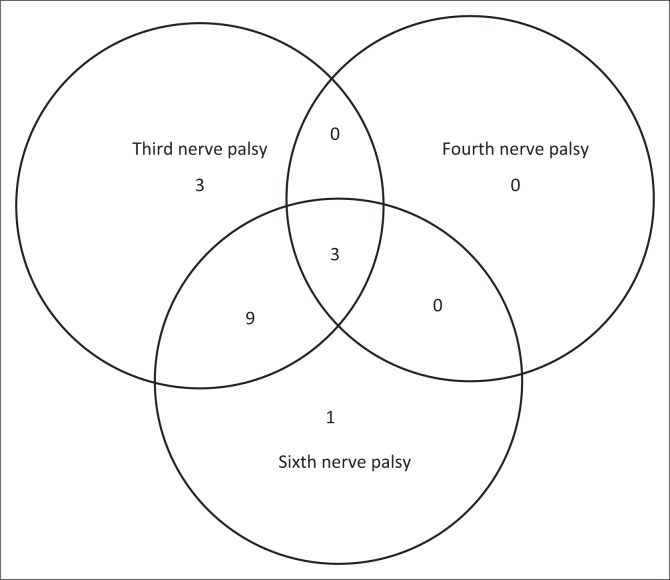
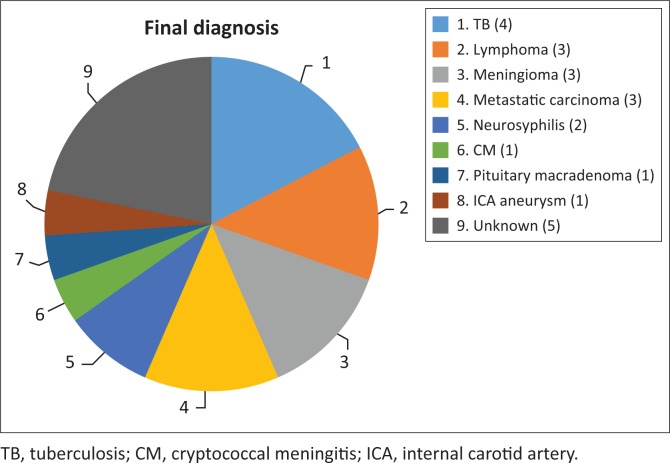
Results: The clinical, laboratory and radiological data of 23 HIV-infected patients with cavernous sinus disease were analysed. The mean age of patients was 38 years. The mean CD4+ count was 390 cells/μL. Clinically, patients presented with unilateral disease (65%), headache (48%), diplopia (30%) and blurred vision (30%). Third (65%) and sixth (57%) nerve palsies in isolation and combination (39%) were most common. Isolated fourth nerve palsy did not occur. Tuberculosis (17%) was the most commonly identified disorder followed by high-grade B-cell lymphoma (13%), meningioma (13%), metastatic carcinoma (13%) and neurosyphilis (7%). In 22% of the patients, there was no confirmatory evidence for a diagnosis. The patients were either treated empirically for tuberculosis or improved spontaneously when antiretroviral therapy was started. Cerebrospinal fluid was helpful in 4/13 (31%) of patients where it was not contraindicated. Only 3/23 (13%) of the patients had a biopsy of the cavernous sinus mass. The outcomes varied, and follow-up was lacking in the majority of patients.
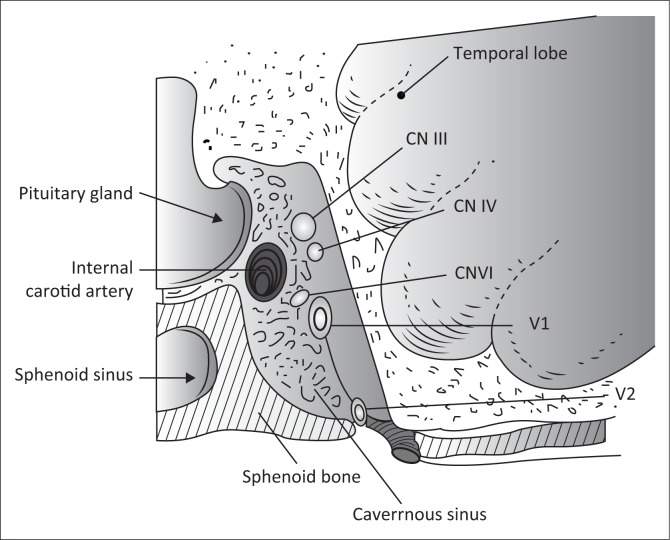
Conclusion: In HIV-infected patients, histological confirmation of cavernous sinus pathology is not readily available for various reasons. In resource-limited settings, one should first actively search for extracranial evidence of tuberculosis, lymphoma, syphilis and primary malignancy and manage appropriately. Only if such evidence is lacking should a referral for biopsy be considered.
期刊介绍:
The Southern African Journal of HIV Medicine is focused on HIV/AIDS treatment, prevention and related topics relevant to clinical and public health practice. The purpose of the journal is to disseminate original research results and to support high-level learning related to HIV Medicine. It publishes original research articles, editorials, case reports/case series, reviews of state-of-the-art clinical practice, and correspondence.



 京公网安备 11010802042870号
京ICP备2023020795号-1
京公网安备 11010802042870号
京ICP备2023020795号-1

 分享
分享
 求助内容:
求助内容: 应助结果提醒方式:
 扫码关注我们
