Lei Wu, Lifen Wang, Xiangguo Tian, Junyong Zhang, Hua Feng
{"title":"Germacrone exerts anti-cancer effects on gastric cancer through induction of cell cycle arrest and promotion of apoptosis.","authors":"Lei Wu, Lifen Wang, Xiangguo Tian, Junyong Zhang, Hua Feng","doi":"10.1186/s12906-019-2810-3","DOIUrl":null,"url":null,"abstract":"<p><strong>Background: </strong>Germacrone is one of the natural bioactive compounds found in Rhizoma curcuma essential oils. In this study, the potential anti-cancer effect of germacrone in gastric cancer cell line BGC823 was investigated.</p><p><strong>Methods: </strong>The cell viability and proliferative activity were assessed, and cell cycle analysis was also performed. Hoechst 33258 and Annexin V/PI double staining was used for detection of cell apoptosis. Protein profiles of cell cycle-related and apoptosis-related proteins were assessed.</p><p><strong>Results: </strong>MTT assay revealed that germacrone had marked cytotoxicity on BGC823 cells. Germacrone induced cell cycle arrest in the G2/M phase via remarkably decreased expression levels of cyclin B1, cdc 2 and cdc 25c. In addition, the treatment with germacrone induced caspase-3 activity and PARP cleavage. These findings demonstrated the effects of germacrone on inhibiting cell proliferation through induction of G2/M phase cell cycle arrest and promotion of cell apoptosis. It also indicated that germacrone functioned through modulations of cell cycle-associated protein expression and mitochondria-mediated apoptosis.</p><p><strong>Conclusion: </strong>These findings will be valuable as the molecular basis for the germacrone-mediated anti-cancer effect against gastric cancer.</p>","PeriodicalId":9128,"journal":{"name":"BMC Complementary Medicine and Therapies","volume":" ","pages":"21"},"PeriodicalIF":3.4000,"publicationDate":"2020-01-23","publicationTypes":"Journal Article","fieldsOfStudy":null,"isOpenAccess":false,"openAccessPdf":"https://sci-hub-pdf.com/10.1186/s12906-019-2810-3","citationCount":"10","resultStr":null,"platform":"Semanticscholar","paperid":null,"PeriodicalName":"BMC Complementary Medicine and Therapies","FirstCategoryId":"3","ListUrlMain":"https://doi.org/10.1186/s12906-019-2810-3","RegionNum":2,"RegionCategory":"医学","ArticlePicture":[],"TitleCN":null,"AbstractTextCN":null,"PMCID":null,"EPubDate":"","PubModel":"","JCR":"Q1","JCRName":"INTEGRATIVE & COMPLEMENTARY MEDICINE","Score":null,"Total":0}
引用次数: 10
Abstract
Background: Germacrone is one of the natural bioactive compounds found in Rhizoma curcuma essential oils. In this study, the potential anti-cancer effect of germacrone in gastric cancer cell line BGC823 was investigated.
Methods: The cell viability and proliferative activity were assessed, and cell cycle analysis was also performed. Hoechst 33258 and Annexin V/PI double staining was used for detection of cell apoptosis. Protein profiles of cell cycle-related and apoptosis-related proteins were assessed.
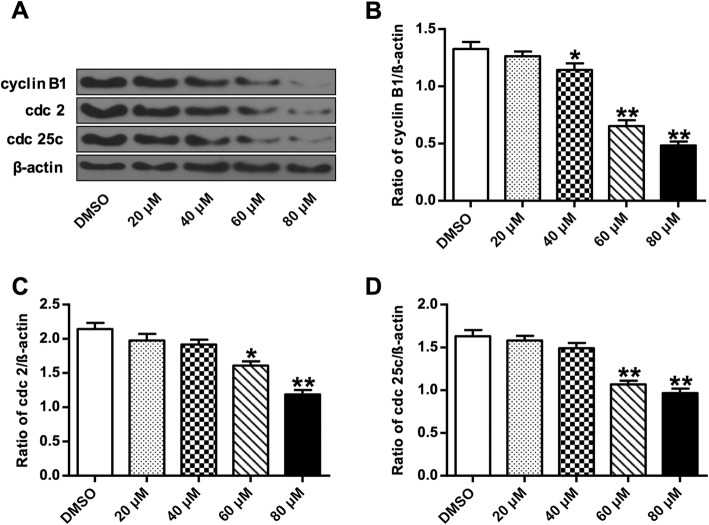
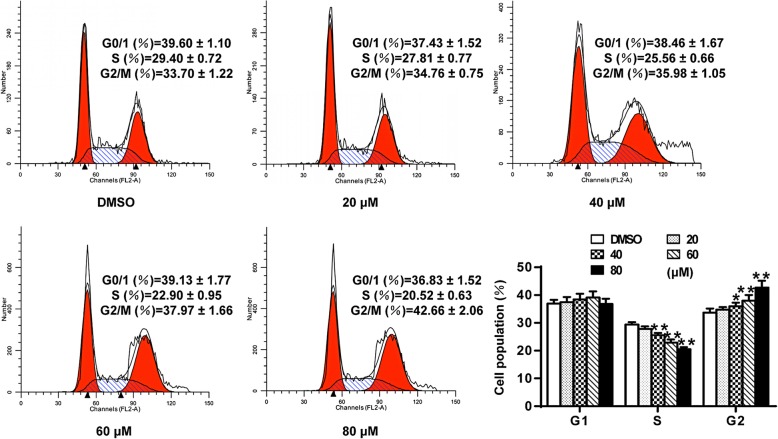
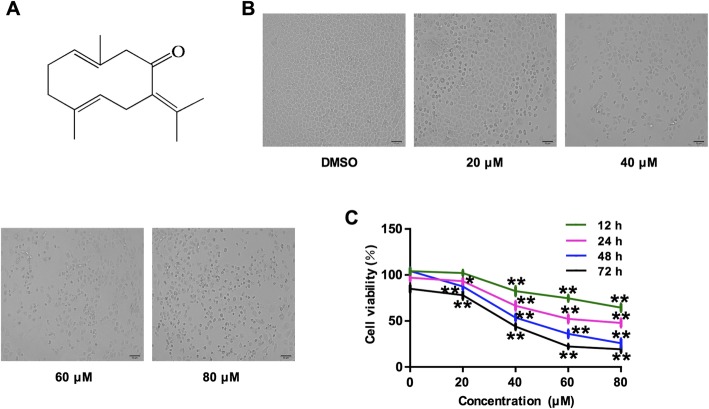
Results: MTT assay revealed that germacrone had marked cytotoxicity on BGC823 cells. Germacrone induced cell cycle arrest in the G2/M phase via remarkably decreased expression levels of cyclin B1, cdc 2 and cdc 25c. In addition, the treatment with germacrone induced caspase-3 activity and PARP cleavage. These findings demonstrated the effects of germacrone on inhibiting cell proliferation through induction of G2/M phase cell cycle arrest and promotion of cell apoptosis. It also indicated that germacrone functioned through modulations of cell cycle-associated protein expression and mitochondria-mediated apoptosis.
Conclusion: These findings will be valuable as the molecular basis for the germacrone-mediated anti-cancer effect against gastric cancer.



 京公网安备 11010802042870号
京ICP备2023020795号-1
京公网安备 11010802042870号
京ICP备2023020795号-1

 分享
分享
 求助内容:
求助内容: 应助结果提醒方式:
 扫码关注我们
