Navitha Jayakumar, Michael Chaiton, Bo Zhang, Peter Selby, Robert Schwartz
{"title":"Sex Differences in Use of Smoking Cessation Services and Resources: A Real-World Study.","authors":"Navitha Jayakumar, Michael Chaiton, Bo Zhang, Peter Selby, Robert Schwartz","doi":"10.1177/1179173X20901500","DOIUrl":null,"url":null,"abstract":"<p><strong>Objectives: </strong>Smoking cessation interventions with sex considerations have been found to effectively increase cessation rates. However, evidence is limited and weak. This study examined sex differences in the use of smoking cessation services or resources among Ontario adults.</p><p><strong>Methods: </strong>Data are from the Smokers' Panel, an ongoing online survey of Ontario adult smokers and recent quitters. The analysis included 1009 male and 1765 female participants. Bivariate analysis was used to examine differences in sociodemographic characteristics and smoking-related variables by use of cessation services/resources. Logistic regression was then used to identify sociodemographic characteristics and smoking-related variables associated with the use of cessation services/resources.</p><p><strong>Results: </strong>The analysis shows that there were significant sex differences in the use of individual interventions. Female participants were more likely to use nicotine patch (63% vs 58%; adjusted odds ratio, AOR: 1.39, 95% confidence interval [CI]: 1.16-1.67), varenicline (29% vs 24%; AOR: 1.37, 95% CI: 1.13-1.66), Smokers' Helpline phone (14% vs 10%; AOR: 1.39, 95% CI: 1.07-1.79), Smokers' Helpline online (27% vs 21%; AOR 1.43, 95% CI: 1.18-1.74), self-help materials (23% vs 16%; AOR: 1.81 95% CI: 1.46-2.26), and alternative methods (23% vs 19%; AOR: 1.40, 95% CI: 1.14-1.73) compared with male participants, after adjusting for covariates.</p><p><strong>Conclusion: </strong>Consistent with other findings, the study shows sex differences in the use of smoking cessation services or resources among adult smokers. Women are more likely to use recommended cessation resources such as nicotine patch, varenicline, and Smokers' Helpline than men. Health professionals should use this increased willingness to help female smokers quit. However, men may be underserved and more men-specific interventions need to be developed and evaluated.</p>","PeriodicalId":43361,"journal":{"name":"Tobacco Use Insights","volume":"13 ","pages":"1179173X20901500"},"PeriodicalIF":2.1000,"publicationDate":"2020-01-22","publicationTypes":"Journal Article","fieldsOfStudy":null,"isOpenAccess":false,"openAccessPdf":"https://sci-hub-pdf.com/10.1177/1179173X20901500","citationCount":"8","resultStr":null,"platform":"Semanticscholar","paperid":null,"PeriodicalName":"Tobacco Use Insights","FirstCategoryId":"1085","ListUrlMain":"https://doi.org/10.1177/1179173X20901500","RegionNum":0,"RegionCategory":null,"ArticlePicture":[],"TitleCN":null,"AbstractTextCN":null,"PMCID":null,"EPubDate":"2020/1/1 0:00:00","PubModel":"eCollection","JCR":"Q3","JCRName":"PUBLIC, ENVIRONMENTAL & OCCUPATIONAL HEALTH","Score":null,"Total":0}
引用次数: 8
Abstract
Objectives: Smoking cessation interventions with sex considerations have been found to effectively increase cessation rates. However, evidence is limited and weak. This study examined sex differences in the use of smoking cessation services or resources among Ontario adults.
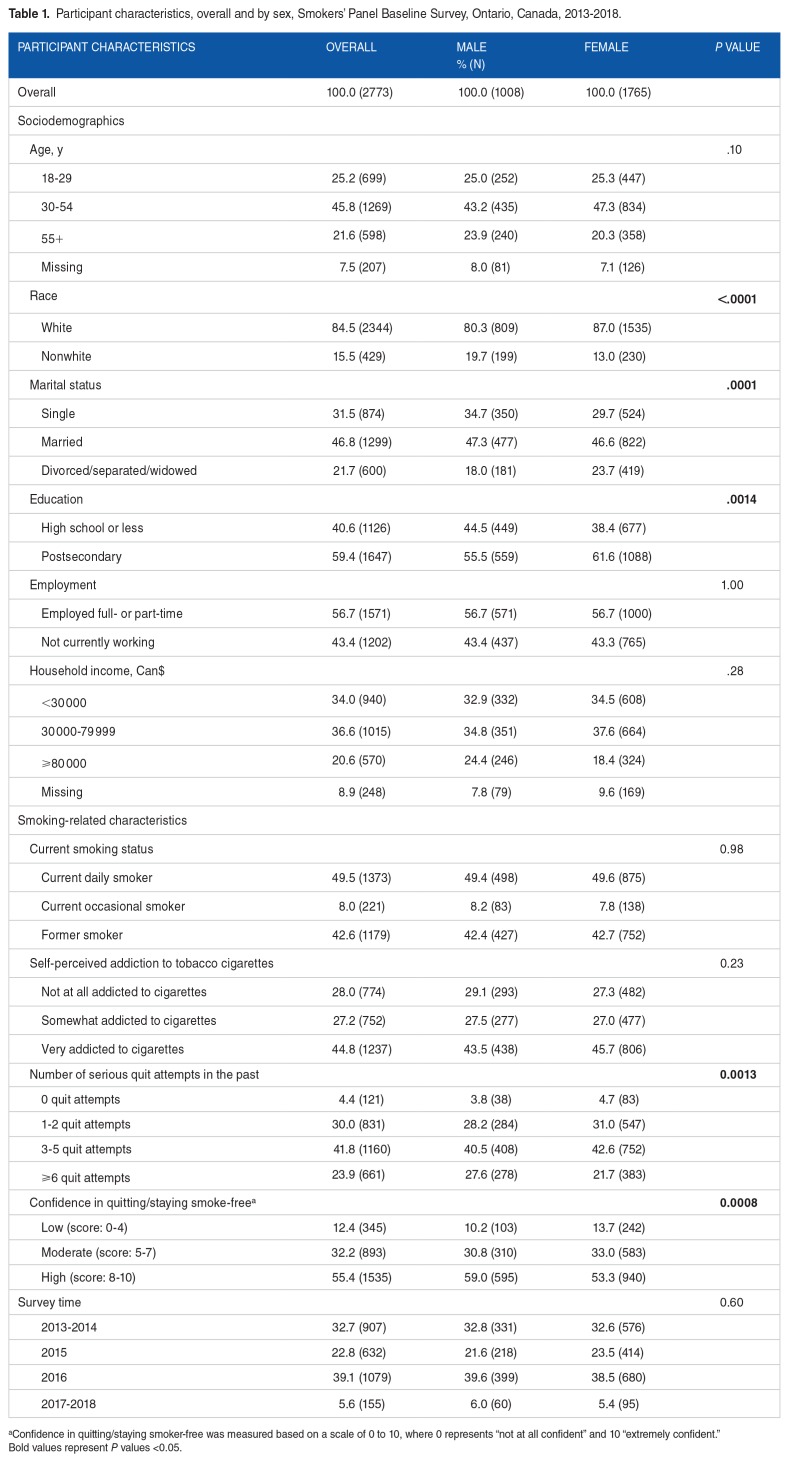
Methods: Data are from the Smokers' Panel, an ongoing online survey of Ontario adult smokers and recent quitters. The analysis included 1009 male and 1765 female participants. Bivariate analysis was used to examine differences in sociodemographic characteristics and smoking-related variables by use of cessation services/resources. Logistic regression was then used to identify sociodemographic characteristics and smoking-related variables associated with the use of cessation services/resources.
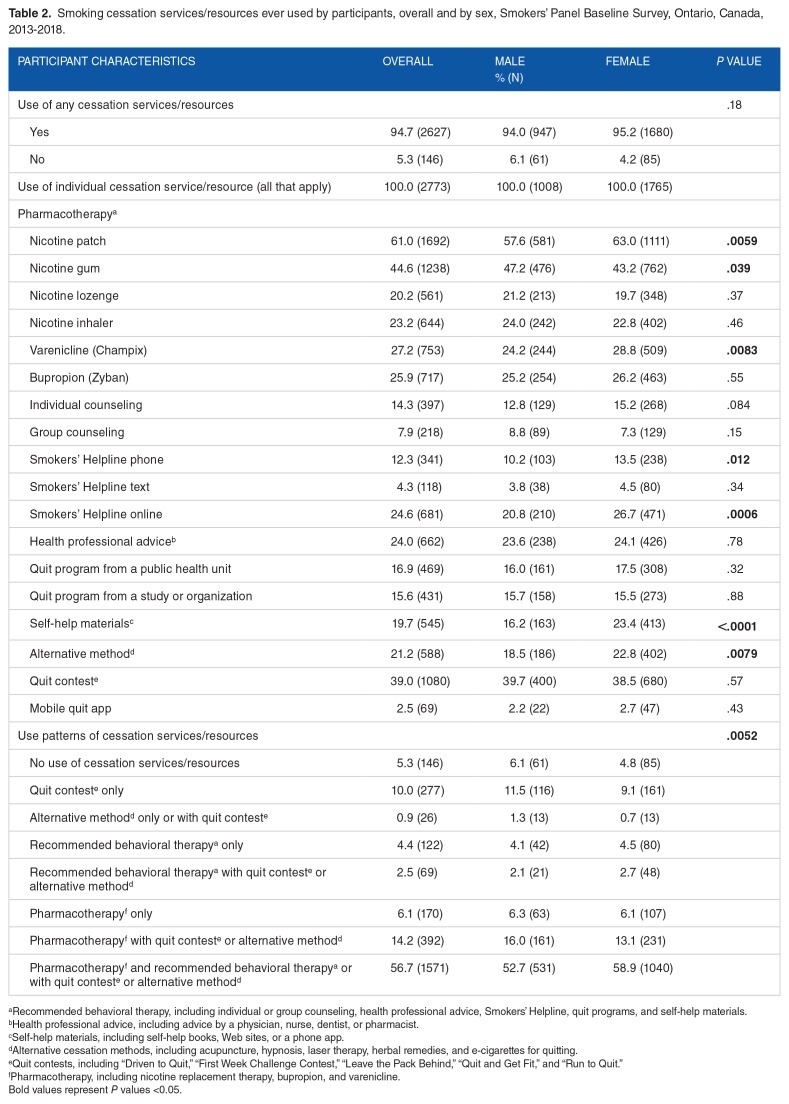
Results: The analysis shows that there were significant sex differences in the use of individual interventions. Female participants were more likely to use nicotine patch (63% vs 58%; adjusted odds ratio, AOR: 1.39, 95% confidence interval [CI]: 1.16-1.67), varenicline (29% vs 24%; AOR: 1.37, 95% CI: 1.13-1.66), Smokers' Helpline phone (14% vs 10%; AOR: 1.39, 95% CI: 1.07-1.79), Smokers' Helpline online (27% vs 21%; AOR 1.43, 95% CI: 1.18-1.74), self-help materials (23% vs 16%; AOR: 1.81 95% CI: 1.46-2.26), and alternative methods (23% vs 19%; AOR: 1.40, 95% CI: 1.14-1.73) compared with male participants, after adjusting for covariates.
Conclusion: Consistent with other findings, the study shows sex differences in the use of smoking cessation services or resources among adult smokers. Women are more likely to use recommended cessation resources such as nicotine patch, varenicline, and Smokers' Helpline than men. Health professionals should use this increased willingness to help female smokers quit. However, men may be underserved and more men-specific interventions need to be developed and evaluated.





 京公网安备 11010802042870号
京ICP备2023020795号-1
京公网安备 11010802042870号
京ICP备2023020795号-1

 分享
分享
 求助内容:
求助内容: 应助结果提醒方式:
 扫码关注我们
