Michiel G H Betjes, Kasia S Sablik, Henny G Otten, Dave L Roelen, Frans H Claas, Annelies de Weerd
{"title":"Pretransplant Donor-Specific Anti-HLA Antibodies and the Risk for Rejection-Related Graft Failure of Kidney Allografts.","authors":"Michiel G H Betjes, Kasia S Sablik, Henny G Otten, Dave L Roelen, Frans H Claas, Annelies de Weerd","doi":"10.1155/2020/5694670","DOIUrl":null,"url":null,"abstract":"<p><strong>Background: </strong>The presence of donor-specific antibodies (DSAs) against HLA before kidney transplantation has been variably associated with decreased long-term graft survival. Data on the relation of pretransplant DSA with rejection and cause of graft failure in recipients of donor kidneys are scarce.</p><p><strong>Methods: </strong>Patients transplanted between 1995 and 2005 were included and followed until 2016. Donor-specific antibodies before transplantation were determined retrospectively. For cause, renal transplant biopsies were reviewed.</p><p><strong>Results: </strong>Pretransplant DSAs were found in 160 cases on a total of 734 transplantations (21.8%). In 80.5% of graft failures, a diagnostic renal biopsy was performed. The presence of pretransplant DSA (DSApos) increased the risk of graft failure within the first 3 months after transplantation (5.2% vs. 9.4%) because of rejection with intragraft thrombosis (<i>p</i> < 0.01). One year after transplantation, DSApos recipients had an increased hazard for antibody-mediated rejection at 10 years (9% DSAneg vs. 15% DSApos, <i>p</i> < 0.01). One year after transplantation, DSApos recipients had an increased hazard for antibody-mediated rejection at 10 years (9% DSAneg vs. 15% DSApos, <i>p</i> < 0.01). One year after transplantation, DSApos recipients had an increased hazard for antibody-mediated rejection at 10 years (9% DSAneg vs. 15% DSApos.</p><p><strong>Conclusions: </strong>Pretransplant DSAs are a risk factor for early graft loss and increase the incidence for humoral rejection and graft loss but do not affect the risk for T cell-mediated rejection.</p>","PeriodicalId":45795,"journal":{"name":"Journal of Transplantation","volume":"2020 ","pages":"5694670"},"PeriodicalIF":2.2000,"publicationDate":"2020-01-29","publicationTypes":"Journal Article","fieldsOfStudy":null,"isOpenAccess":false,"openAccessPdf":"https://sci-hub-pdf.com/10.1155/2020/5694670","citationCount":"21","resultStr":null,"platform":"Semanticscholar","paperid":null,"PeriodicalName":"Journal of Transplantation","FirstCategoryId":"1085","ListUrlMain":"https://doi.org/10.1155/2020/5694670","RegionNum":0,"RegionCategory":null,"ArticlePicture":[],"TitleCN":null,"AbstractTextCN":null,"PMCID":null,"EPubDate":"2020/1/1 0:00:00","PubModel":"eCollection","JCR":"Q3","JCRName":"SURGERY","Score":null,"Total":0}
引用次数: 21
Abstract
Background: The presence of donor-specific antibodies (DSAs) against HLA before kidney transplantation has been variably associated with decreased long-term graft survival. Data on the relation of pretransplant DSA with rejection and cause of graft failure in recipients of donor kidneys are scarce.
Methods: Patients transplanted between 1995 and 2005 were included and followed until 2016. Donor-specific antibodies before transplantation were determined retrospectively. For cause, renal transplant biopsies were reviewed.
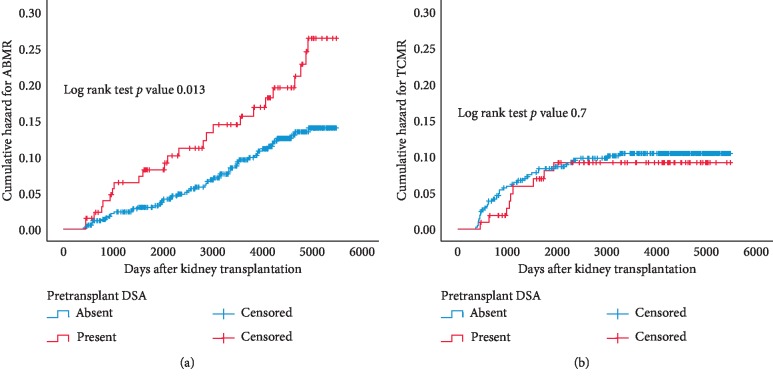
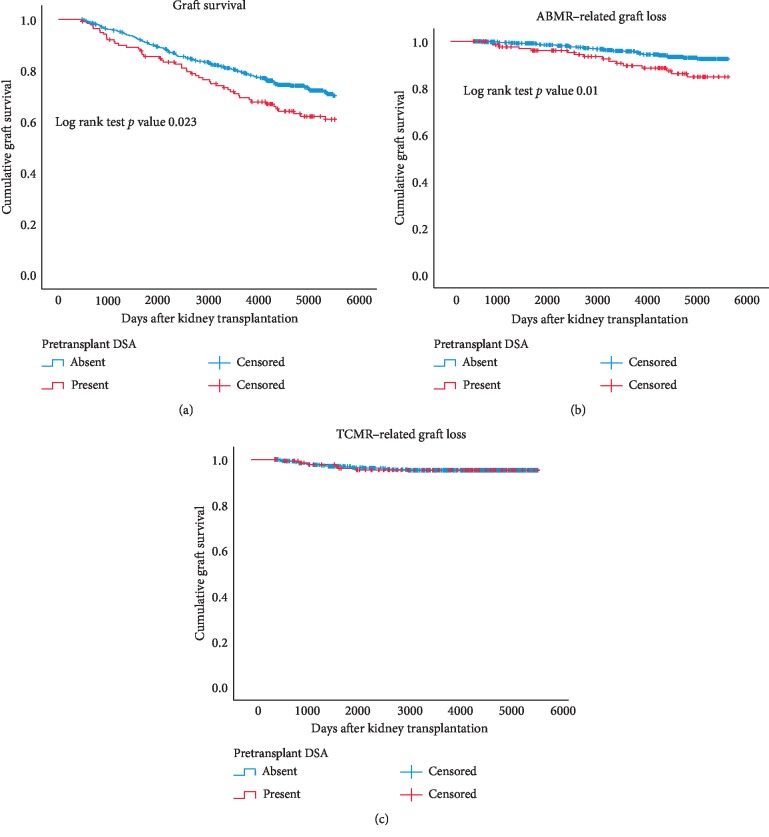
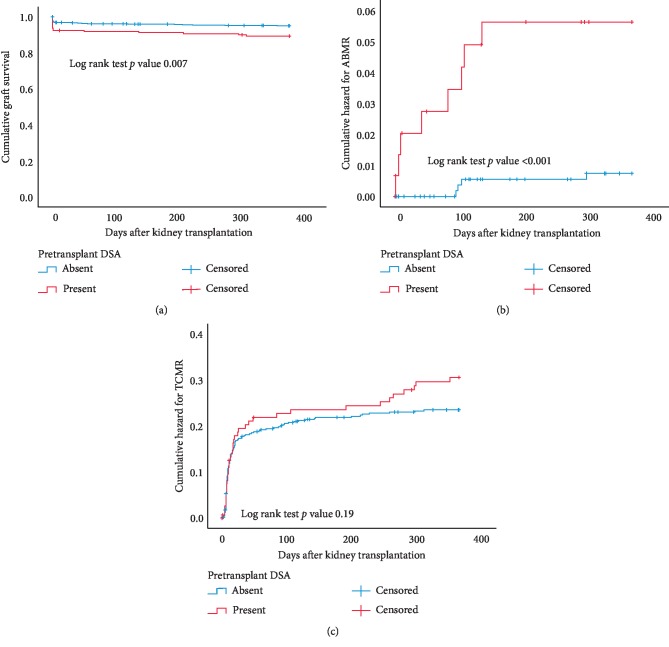
Results: Pretransplant DSAs were found in 160 cases on a total of 734 transplantations (21.8%). In 80.5% of graft failures, a diagnostic renal biopsy was performed. The presence of pretransplant DSA (DSApos) increased the risk of graft failure within the first 3 months after transplantation (5.2% vs. 9.4%) because of rejection with intragraft thrombosis (p < 0.01). One year after transplantation, DSApos recipients had an increased hazard for antibody-mediated rejection at 10 years (9% DSAneg vs. 15% DSApos, p < 0.01). One year after transplantation, DSApos recipients had an increased hazard for antibody-mediated rejection at 10 years (9% DSAneg vs. 15% DSApos, p < 0.01). One year after transplantation, DSApos recipients had an increased hazard for antibody-mediated rejection at 10 years (9% DSAneg vs. 15% DSApos.
Conclusions: Pretransplant DSAs are a risk factor for early graft loss and increase the incidence for humoral rejection and graft loss but do not affect the risk for T cell-mediated rejection.




 京公网安备 11010802042870号
京ICP备2023020795号-1
京公网安备 11010802042870号
京ICP备2023020795号-1

 分享
分享
 求助内容:
求助内容: 应助结果提醒方式:
 扫码关注我们
