Ning Xu, Shixun Liu, Lijie Xu, Jie Zhou, Fengxue Xin, Wenming Zhang, Xiujuan Qian, Min Li, Weiliang Dong, Min Jiang
{"title":"Enhanced rhamnolipids production using a novel bioreactor system based on integrated foam-control and repeated fed-batch fermentation strategy.","authors":"Ning Xu, Shixun Liu, Lijie Xu, Jie Zhou, Fengxue Xin, Wenming Zhang, Xiujuan Qian, Min Li, Weiliang Dong, Min Jiang","doi":"10.1186/s13068-020-01716-w","DOIUrl":null,"url":null,"abstract":"<p><strong>Background: </strong>Rhamnolipids are the best known microbial-derived biosurfactants, which has attracted great interest as potential ''green\" alternative for synthetic surfactants. However, rhamnolipids are the major contributors to severe foam problems, which greatly inhibit the economics of industrial-scale production. In this study, a novel foam-control system was established for ex situ dealing with the massive overflowing foam. Based on the designed facility, foam reduction efficiency, rhamnolipids production by batch and repeated fed-batch fermentation were comprehensively investigated.</p><p><strong>Results: </strong>An ex situ foam-control system was developed to control the massive overflowing foam and improve rhamnolipids production. It was found that the size of individual bubble in the early stage was much larger than that of late fermentation stage. The foam liquefaction efficiency decreased from 54.37% at the beginning to only 9.23% at the end of the fermentation. This difference of bubble stability directly resulted in higher foam reduction efficiency of 67.46% in the early stage, whereas the small uniform bubbles can only be reduced by 57.53% at the later fermentation stage. Moreover, reduction of secondary foam is very important for foam controlling. Two improved designs of the device in this study obtained about 20% improvement of foam reduction efficiency, respectively. The batch fermentation result showed that the average volume of the overflowing foam was reduced from 58-640 to 19-216 mL/min during the fermentation process, presenting a notable reduction efficiency ranging from 51.92 to 73.47%. Meanwhile, rhamnolipids production of batch fermentation reached 45.63 g/L, and the yield 0.76 g/g was significantly better than ever reported. Further, a repeated fed-batch fermentation based on the overall optimization was carried out. Total rhamnolipids concentration reached 48.67 g/L with the yield around of 0.67-0.83 g/g, which presented an improvement of 62% and 49% compared with conventional batch fermentation by using various kinds of defoamers, respectively.</p><p><strong>Conclusions: </strong>The ex situ foam-control system presented a notable reduction efficiency, which helped greatly to easily solve the severe foaming problem without any defoamer addition. Moreover, rhamnolipids production and yield by repeated fed-batch fermentation obtained prominent improvement compared to conventional batch cultivation, which can further facilitate economical rhamnolipids production at large scales.</p>","PeriodicalId":494,"journal":{"name":"Biotechnology for Biofuels","volume":" ","pages":"80"},"PeriodicalIF":6.1000,"publicationDate":"2020-04-24","publicationTypes":"Journal Article","fieldsOfStudy":null,"isOpenAccess":false,"openAccessPdf":"https://sci-hub-pdf.com/10.1186/s13068-020-01716-w","citationCount":"18","resultStr":null,"platform":"Semanticscholar","paperid":null,"PeriodicalName":"Biotechnology for Biofuels","FirstCategoryId":"5","ListUrlMain":"https://doi.org/10.1186/s13068-020-01716-w","RegionNum":1,"RegionCategory":"工程技术","ArticlePicture":[],"TitleCN":null,"AbstractTextCN":null,"PMCID":null,"EPubDate":"2020/1/1 0:00:00","PubModel":"eCollection","JCR":"Q1","JCRName":"BIOTECHNOLOGY & APPLIED MICROBIOLOGY","Score":null,"Total":0}
引用次数: 18
Abstract
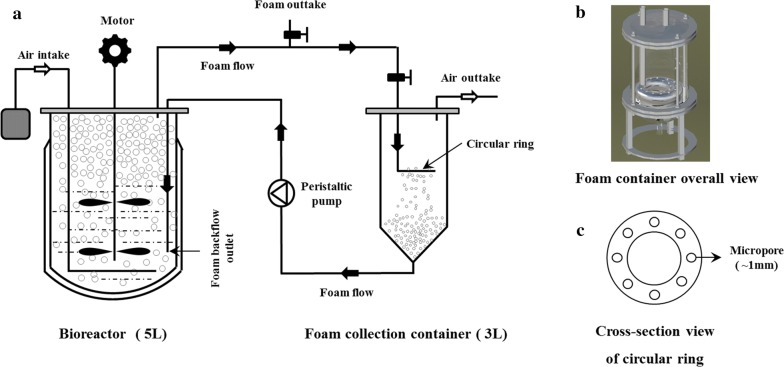
Background: Rhamnolipids are the best known microbial-derived biosurfactants, which has attracted great interest as potential ''green" alternative for synthetic surfactants. However, rhamnolipids are the major contributors to severe foam problems, which greatly inhibit the economics of industrial-scale production. In this study, a novel foam-control system was established for ex situ dealing with the massive overflowing foam. Based on the designed facility, foam reduction efficiency, rhamnolipids production by batch and repeated fed-batch fermentation were comprehensively investigated.
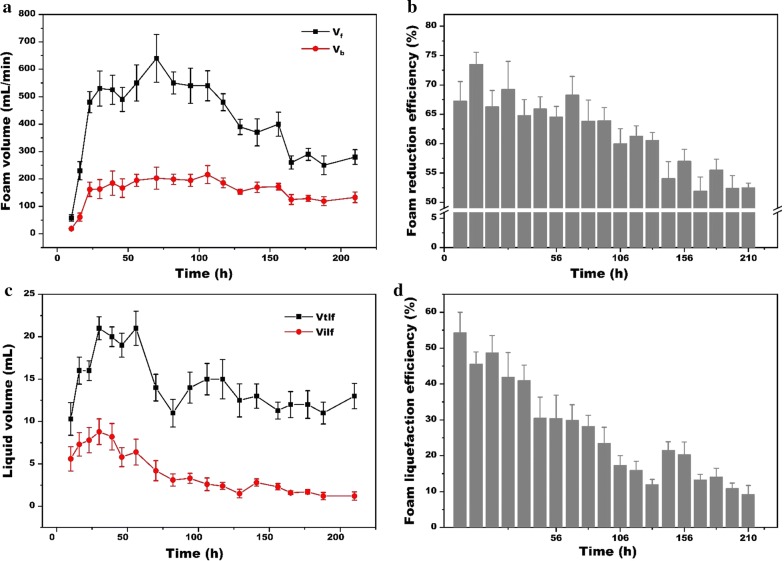
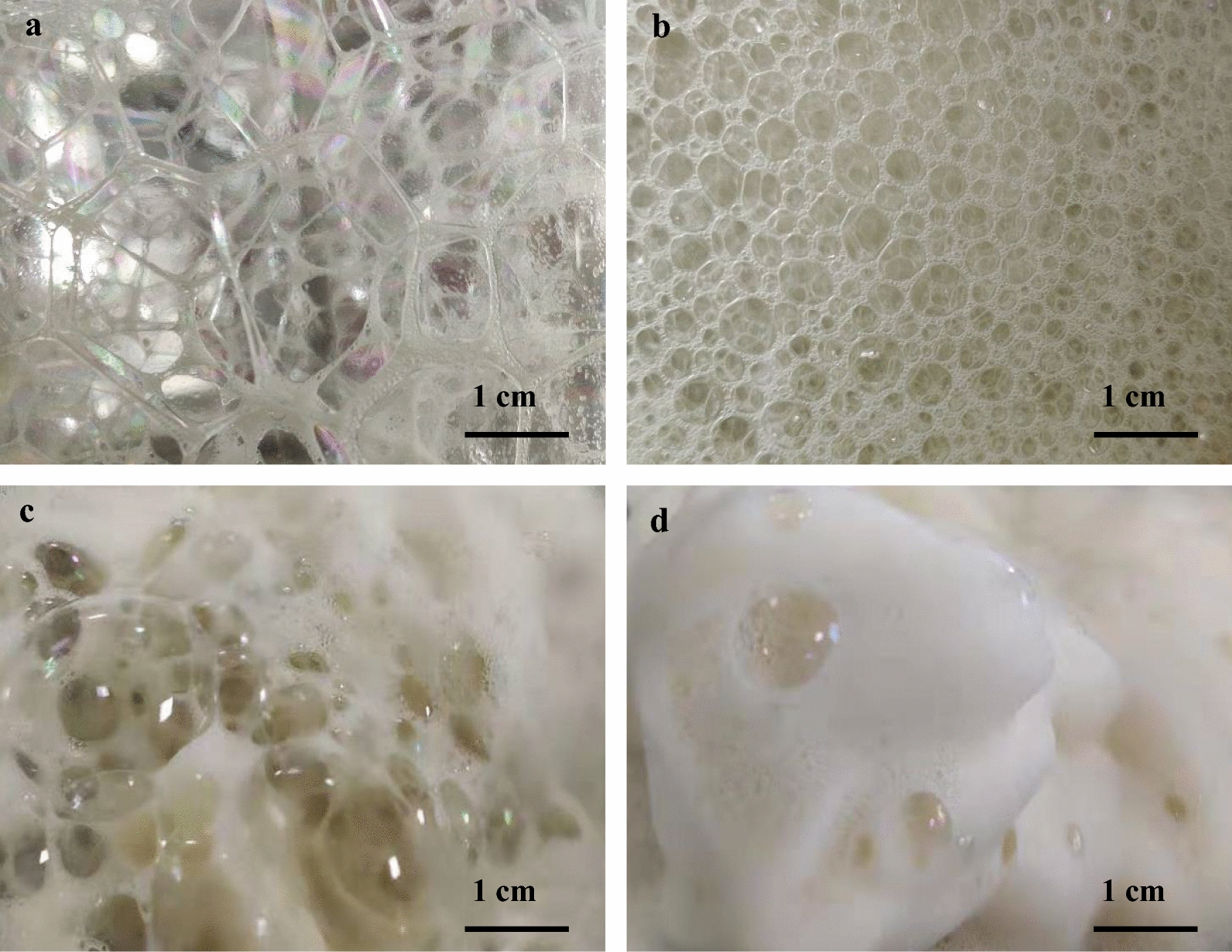
Results: An ex situ foam-control system was developed to control the massive overflowing foam and improve rhamnolipids production. It was found that the size of individual bubble in the early stage was much larger than that of late fermentation stage. The foam liquefaction efficiency decreased from 54.37% at the beginning to only 9.23% at the end of the fermentation. This difference of bubble stability directly resulted in higher foam reduction efficiency of 67.46% in the early stage, whereas the small uniform bubbles can only be reduced by 57.53% at the later fermentation stage. Moreover, reduction of secondary foam is very important for foam controlling. Two improved designs of the device in this study obtained about 20% improvement of foam reduction efficiency, respectively. The batch fermentation result showed that the average volume of the overflowing foam was reduced from 58-640 to 19-216 mL/min during the fermentation process, presenting a notable reduction efficiency ranging from 51.92 to 73.47%. Meanwhile, rhamnolipids production of batch fermentation reached 45.63 g/L, and the yield 0.76 g/g was significantly better than ever reported. Further, a repeated fed-batch fermentation based on the overall optimization was carried out. Total rhamnolipids concentration reached 48.67 g/L with the yield around of 0.67-0.83 g/g, which presented an improvement of 62% and 49% compared with conventional batch fermentation by using various kinds of defoamers, respectively.
Conclusions: The ex situ foam-control system presented a notable reduction efficiency, which helped greatly to easily solve the severe foaming problem without any defoamer addition. Moreover, rhamnolipids production and yield by repeated fed-batch fermentation obtained prominent improvement compared to conventional batch cultivation, which can further facilitate economical rhamnolipids production at large scales.
期刊介绍:
Biotechnology for Biofuels is an open access peer-reviewed journal featuring high-quality studies describing technological and operational advances in the production of biofuels, chemicals and other bioproducts. The journal emphasizes understanding and advancing the application of biotechnology and synergistic operations to improve plants and biological conversion systems for the biological production of these products from biomass, intermediates derived from biomass, or CO2, as well as upstream or downstream operations that are integral to biological conversion of biomass.
Biotechnology for Biofuels focuses on the following areas:
• Development of terrestrial plant feedstocks
• Development of algal feedstocks
• Biomass pretreatment, fractionation and extraction for biological conversion
• Enzyme engineering, production and analysis
• Bacterial genetics, physiology and metabolic engineering
• Fungal/yeast genetics, physiology and metabolic engineering
• Fermentation, biocatalytic conversion and reaction dynamics
• Biological production of chemicals and bioproducts from biomass
• Anaerobic digestion, biohydrogen and bioelectricity
• Bioprocess integration, techno-economic analysis, modelling and policy
• Life cycle assessment and environmental impact analysis




 京公网安备 11010802042870号
京ICP备2023020795号-1
京公网安备 11010802042870号
京ICP备2023020795号-1

 分享
分享
 求助内容:
求助内容: 应助结果提醒方式:
 扫码关注我们
