{"title":"Increased anxiety-related behavior in mice following β-citronellol inhalation.","authors":"Hiroshi Ueno, Atsumi Shimada, Shunsuke Suemitsu, Shinji Murakami, Naoya Kitamura, Kenta Wani, Yu Takahashi, Yosuke Matsumoto, Motoi Okamoto, Takeshi Ishihara","doi":"10.1080/19932820.2020.1767275","DOIUrl":null,"url":null,"abstract":"<p><p>β-Citronellol is a monoterpene alcohol found in essential oils of various aromatic plant species. The physiological effects of β-citronellol inhalation on the central nervous system remain unclear. We investigated the effects of β-citronellol inhalation on mouse behavior. First, we examined whether the odor of β-citronellol was attractive or repellent to mice. Then, following 30 minutes of β-citronellol inhalation, a series of behavioral tests (elevated plus maze, open field, Y-maze, tail suspension, and forced swim tests) were performed. Mice were neither attracted to nor repelled by β-citronellol. Mice that inhaled β-citronellol showed an increase in anxiety-like behavior in the elevated plus maze and open field tests. Performance in the Y-maze and forced swim tests was not affected. These results indicate that β-citronellol acts on the central nervous system of mice following inhalation and increases anxiety. Essential oils and cosmetics containing β-citronellol should be used with caution.</p>","PeriodicalId":49910,"journal":{"name":"Libyan Journal of Medicine","volume":"15 1","pages":"1767275"},"PeriodicalIF":1.7000,"publicationDate":"2020-12-01","publicationTypes":"Journal Article","fieldsOfStudy":null,"isOpenAccess":false,"openAccessPdf":"https://sci-hub-pdf.com/10.1080/19932820.2020.1767275","citationCount":"4","resultStr":null,"platform":"Semanticscholar","paperid":null,"PeriodicalName":"Libyan Journal of Medicine","FirstCategoryId":"3","ListUrlMain":"https://doi.org/10.1080/19932820.2020.1767275","RegionNum":4,"RegionCategory":"医学","ArticlePicture":[],"TitleCN":null,"AbstractTextCN":null,"PMCID":null,"EPubDate":"","PubModel":"","JCR":"Q2","JCRName":"MEDICINE, GENERAL & INTERNAL","Score":null,"Total":0}
引用次数: 4
Abstract
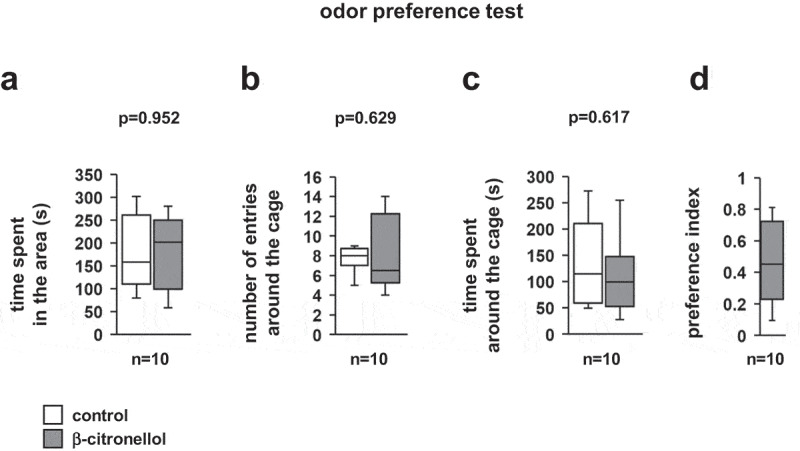
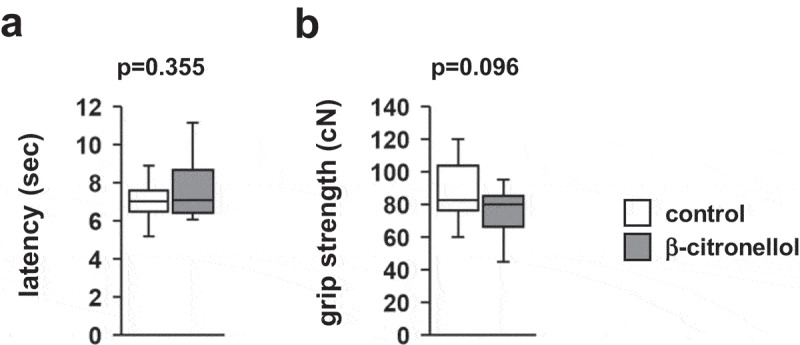
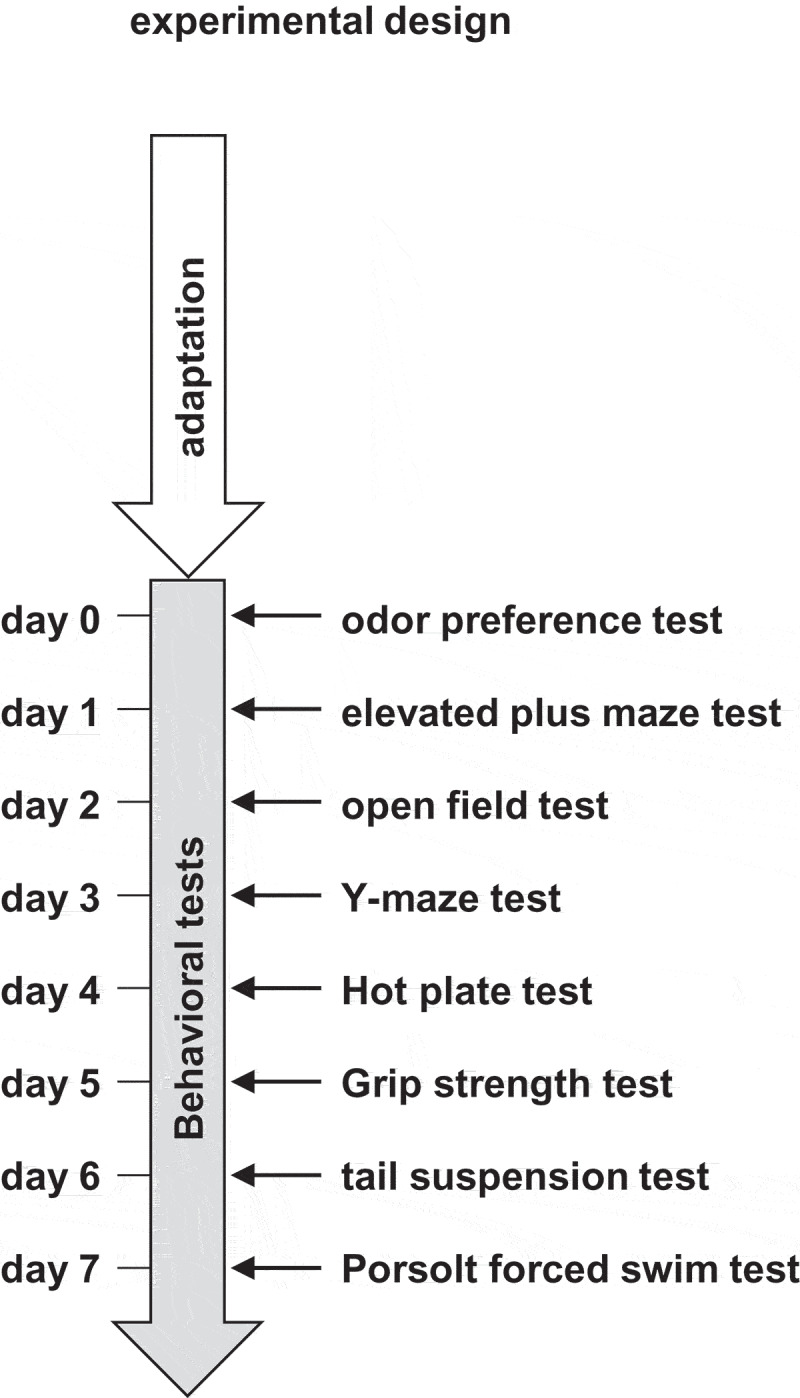
β-Citronellol is a monoterpene alcohol found in essential oils of various aromatic plant species. The physiological effects of β-citronellol inhalation on the central nervous system remain unclear. We investigated the effects of β-citronellol inhalation on mouse behavior. First, we examined whether the odor of β-citronellol was attractive or repellent to mice. Then, following 30 minutes of β-citronellol inhalation, a series of behavioral tests (elevated plus maze, open field, Y-maze, tail suspension, and forced swim tests) were performed. Mice were neither attracted to nor repelled by β-citronellol. Mice that inhaled β-citronellol showed an increase in anxiety-like behavior in the elevated plus maze and open field tests. Performance in the Y-maze and forced swim tests was not affected. These results indicate that β-citronellol acts on the central nervous system of mice following inhalation and increases anxiety. Essential oils and cosmetics containing β-citronellol should be used with caution.
期刊介绍:
Libyan Journal of Medicine (LJM) is a peer-reviewed, Open Access, international medical journal aiming to promote heath and health education by publishing high-quality medical research in the different disciplines of medicine.
LJM was founded in 2006 by a group of enthusiastic Libyan medical scientists who looked at the contribution of Libyan publications to the international medical literature and saw that a publication outlet was missing. To fill this gap they launched LJM as a tool for transferring current medical knowledge to and from colleagues in developing countries, particularly African countries, as well as internationally.The journal is still led by a group of Libyan physicians inside and outside Libya, but it also enjoys support and recognition from the international medical community.




 京公网安备 11010802042870号
京ICP备2023020795号-1
京公网安备 11010802042870号
京ICP备2023020795号-1

 分享
分享
 求助内容:
求助内容: 应助结果提醒方式:
 扫码关注我们
