Ki Hyuk Sung, Kibeom Youn, Chin Youb Chung, Muhammad I Kitta, Hendra C Kumara, Jae Jung Min, Jehee Lee, Moon Seok Park
{"title":"Development and Validation of a Mobile Application for Measuring Femoral Anteversion in Patients With Cerebral Palsy.","authors":"Ki Hyuk Sung, Kibeom Youn, Chin Youb Chung, Muhammad I Kitta, Hendra C Kumara, Jae Jung Min, Jehee Lee, Moon Seok Park","doi":"10.1097/BPO.0000000000001468","DOIUrl":null,"url":null,"abstract":"<p><strong>Background: </strong>Computed tomography (CT) provides benefits for 3-dimensional (3D) visualization of femur deformities. However, the potential adverse effects of radiation exposure have become a concern. Consequently, a biplanar imaging system EOS has been proposed to enable reconstruction of the 3D model of the femur. However, this system requires a calibrated apparatus, the cost of which is high, and the area occupied by it is substantial. The purpose of this study was to develop a mobile application that included a new method of 3D reconstruction of the femur from conventional radiographic images and to evaluate the validity and reliability of mobile the application when measuring femoral anteversion.</p><p><strong>Methods: </strong>The statistical shape model, graph-cut algorithm, and iterative Perspective-n-Point algorithm were utilized to develop the application. The anteroposterior and lateral images of a femur can be input using the embedded camera or by file transfer, and the touch interface aids accurate contouring of the femur. Regarding validation, the CT scans and conventional radiographic images of 36 patients with cerebral palsy were used. To evaluate concurrent validity, the femoral anteversion measurements on the images reconstructed from the mobile application were compared with those from the 3D CT images. Three clinicians assessed interobserver reliability.</p><p><strong>Results: </strong>The mobile application, which reconstructs the 3D image from conventional radiographs, was successfully developed. Regarding concurrent validity, the correlation coefficient between femoral anteversion measured using 3D CT and the mobile application was 0.968 (P<0.001). In terms of interobserver reliability, the intraclass correlation coefficient among the 3 clinicians was 0.953.</p><p><strong>Conclusions: </strong>The measurement of femoral anteversion with the mobile application showed excellent concurrent validity and reliability in patients with cerebral palsy. The proposed mobile application can be used with conventional radiographs and does not require additional apparatus. It can be used as a convenient technique in hospitals that cannot afford a CT machine or an EOS system.</p><p><strong>Level of evidence: </strong>Level III-diagnostic.</p>","PeriodicalId":16945,"journal":{"name":"Journal of Pediatric Orthopaedics","volume":"40 6","pages":"e516-e521"},"PeriodicalIF":1.5000,"publicationDate":"2020-07-01","publicationTypes":"Journal Article","fieldsOfStudy":null,"isOpenAccess":false,"openAccessPdf":"https://sci-hub-pdf.com/10.1097/BPO.0000000000001468","citationCount":"12","resultStr":null,"platform":"Semanticscholar","paperid":null,"PeriodicalName":"Journal of Pediatric Orthopaedics","FirstCategoryId":"3","ListUrlMain":"https://doi.org/10.1097/BPO.0000000000001468","RegionNum":3,"RegionCategory":"医学","ArticlePicture":[],"TitleCN":null,"AbstractTextCN":null,"PMCID":null,"EPubDate":"","PubModel":"","JCR":"Q3","JCRName":"ORTHOPEDICS","Score":null,"Total":0}
引用次数: 12
Abstract
Background: Computed tomography (CT) provides benefits for 3-dimensional (3D) visualization of femur deformities. However, the potential adverse effects of radiation exposure have become a concern. Consequently, a biplanar imaging system EOS has been proposed to enable reconstruction of the 3D model of the femur. However, this system requires a calibrated apparatus, the cost of which is high, and the area occupied by it is substantial. The purpose of this study was to develop a mobile application that included a new method of 3D reconstruction of the femur from conventional radiographic images and to evaluate the validity and reliability of mobile the application when measuring femoral anteversion.
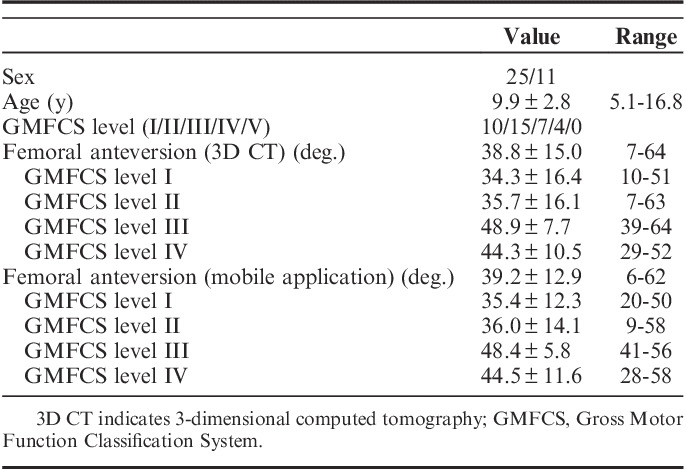
Methods: The statistical shape model, graph-cut algorithm, and iterative Perspective-n-Point algorithm were utilized to develop the application. The anteroposterior and lateral images of a femur can be input using the embedded camera or by file transfer, and the touch interface aids accurate contouring of the femur. Regarding validation, the CT scans and conventional radiographic images of 36 patients with cerebral palsy were used. To evaluate concurrent validity, the femoral anteversion measurements on the images reconstructed from the mobile application were compared with those from the 3D CT images. Three clinicians assessed interobserver reliability.
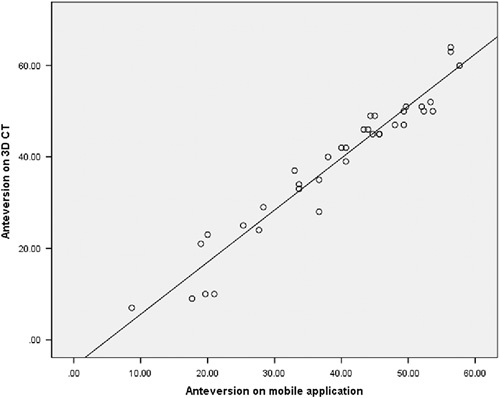
Results: The mobile application, which reconstructs the 3D image from conventional radiographs, was successfully developed. Regarding concurrent validity, the correlation coefficient between femoral anteversion measured using 3D CT and the mobile application was 0.968 (P<0.001). In terms of interobserver reliability, the intraclass correlation coefficient among the 3 clinicians was 0.953.
Conclusions: The measurement of femoral anteversion with the mobile application showed excellent concurrent validity and reliability in patients with cerebral palsy. The proposed mobile application can be used with conventional radiographs and does not require additional apparatus. It can be used as a convenient technique in hospitals that cannot afford a CT machine or an EOS system.
期刊介绍:
Journal of Pediatric Orthopaedics is a leading journal that focuses specifically on traumatic injuries to give you hands-on on coverage of a fast-growing field. You''ll get articles that cover everything from the nature of injury to the effects of new drug therapies; everything from recommendations for more effective surgical approaches to the latest laboratory findings.




 京公网安备 11010802042870号
京ICP备2023020795号-1
京公网安备 11010802042870号
京ICP备2023020795号-1

 分享
分享

 求助内容:
求助内容: 应助结果提醒方式:
 扫码关注我们
