Azathioprine Hypersensitivity Syndrome during Treatment of Severe Interstitial Lung Disease with Anti-Neutrophil Cytoplasmic Antibody-Associated Vasculitis.
Eri Nakano, Tomohiko Asakawa, Mea Asou, Eri Nohara, Tomoyuki Seki, Makoto Araki
{"title":"Azathioprine Hypersensitivity Syndrome during Treatment of Severe Interstitial Lung Disease with Anti-Neutrophil Cytoplasmic Antibody-Associated Vasculitis.","authors":"Eri Nakano, Tomohiko Asakawa, Mea Asou, Eri Nohara, Tomoyuki Seki, Makoto Araki","doi":"10.1155/2020/8852441","DOIUrl":null,"url":null,"abstract":"<p><p>Azathioprine is used to treat anti-neutrophil cytoplasmic antibody- (ANCA-) associated vasculitis. Azathioprine hypersensitivity syndrome is often missed. An 81-year-old man undergoing treatment for interstitial pneumonia developed a high fever and was diagnosed with ANCA-associated vasculitis based on an elevated myeloperoxidase- (MPO-) ANCA titer and renal biopsy findings. After induction therapy, his clinical symptoms improved, but his MPO-ANCA remained elevated (>300 U·L<sup>-1</sup>) and hematuria persisted. Prednisolone plus azathioprine was administered as maintenance therapy. Three exacerbations of the inflammatory response occurred during the subsequent 3 months. In each instance, we suspected opportunistic infection or a flare-up of vasculitis. The first exacerbation was treated with an increased prednisolone dose and antibiotics. At the onset of the second exacerbation, which was accompanied by systemic erythema, we stopped azathioprine and administered antibiotics. The third exacerbation, which occurred the day after restarting azathioprine, involved a fever with chills and an acute inflammatory reaction; we therefore suspected an azathioprine allergy. A drug provocation test was performed, and a hyperinflammatory response was observed. The patient received prednisolone (15 mg·day<sup>-1</sup>) monotherapy; no further fever was observed during the subsequent 2 months. We therefore diagnosed azathioprine hypersensitivity syndrome. Under treatment with prednisolone (5 mg·day<sup>-1</sup>) and mycophenolate mofetil (1 g·day<sup>-1</sup>) (replacing the azathioprine), no signs of relapse or infection have occurred for more than two years. Renal function and the pulmonary lesions are stable, although the high MPO-ANCA titer and hematuria persist. The diagnosis of azathioprine hypersensitivity is often delayed because of the difficulty in identifying the relationship between immunosuppressive agents and hypersensitivity and in distinguishing this from infection or relapse of the primary disease. The misdiagnosis of azathioprine hypersensitivity leads to unnecessary treatment; thus, clinicians should consider allergic reactions specific to azathioprine when switching from induction to maintenance therapy.</p>","PeriodicalId":52364,"journal":{"name":"Case Reports in Pulmonology","volume":"2020 ","pages":"8852441"},"PeriodicalIF":0.0000,"publicationDate":"2020-07-03","publicationTypes":"Journal Article","fieldsOfStudy":null,"isOpenAccess":false,"openAccessPdf":"https://sci-hub-pdf.com/10.1155/2020/8852441","citationCount":"1","resultStr":null,"platform":"Semanticscholar","paperid":null,"PeriodicalName":"Case Reports in Pulmonology","FirstCategoryId":"1085","ListUrlMain":"https://doi.org/10.1155/2020/8852441","RegionNum":0,"RegionCategory":null,"ArticlePicture":[],"TitleCN":null,"AbstractTextCN":null,"PMCID":null,"EPubDate":"2020/1/1 0:00:00","PubModel":"eCollection","JCR":"Q4","JCRName":"Medicine","Score":null,"Total":0}
引用次数: 1
Abstract
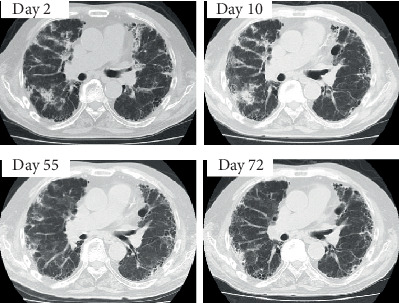
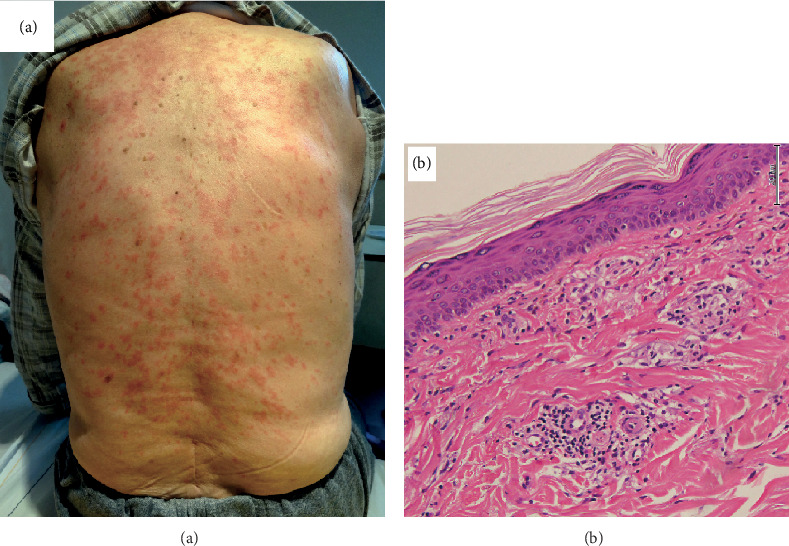
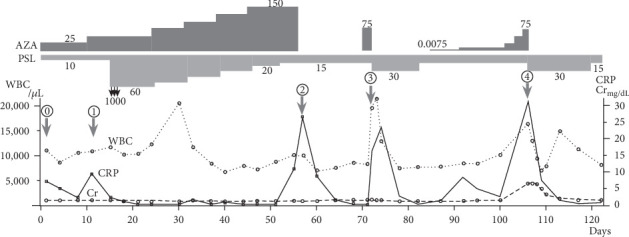
Azathioprine is used to treat anti-neutrophil cytoplasmic antibody- (ANCA-) associated vasculitis. Azathioprine hypersensitivity syndrome is often missed. An 81-year-old man undergoing treatment for interstitial pneumonia developed a high fever and was diagnosed with ANCA-associated vasculitis based on an elevated myeloperoxidase- (MPO-) ANCA titer and renal biopsy findings. After induction therapy, his clinical symptoms improved, but his MPO-ANCA remained elevated (>300 U·L-1) and hematuria persisted. Prednisolone plus azathioprine was administered as maintenance therapy. Three exacerbations of the inflammatory response occurred during the subsequent 3 months. In each instance, we suspected opportunistic infection or a flare-up of vasculitis. The first exacerbation was treated with an increased prednisolone dose and antibiotics. At the onset of the second exacerbation, which was accompanied by systemic erythema, we stopped azathioprine and administered antibiotics. The third exacerbation, which occurred the day after restarting azathioprine, involved a fever with chills and an acute inflammatory reaction; we therefore suspected an azathioprine allergy. A drug provocation test was performed, and a hyperinflammatory response was observed. The patient received prednisolone (15 mg·day-1) monotherapy; no further fever was observed during the subsequent 2 months. We therefore diagnosed azathioprine hypersensitivity syndrome. Under treatment with prednisolone (5 mg·day-1) and mycophenolate mofetil (1 g·day-1) (replacing the azathioprine), no signs of relapse or infection have occurred for more than two years. Renal function and the pulmonary lesions are stable, although the high MPO-ANCA titer and hematuria persist. The diagnosis of azathioprine hypersensitivity is often delayed because of the difficulty in identifying the relationship between immunosuppressive agents and hypersensitivity and in distinguishing this from infection or relapse of the primary disease. The misdiagnosis of azathioprine hypersensitivity leads to unnecessary treatment; thus, clinicians should consider allergic reactions specific to azathioprine when switching from induction to maintenance therapy.




 京公网安备 11010802042870号
京ICP备2023020795号-1
京公网安备 11010802042870号
京ICP备2023020795号-1

 分享
分享
 求助内容:
求助内容: 应助结果提醒方式:
 扫码关注我们
