Arun K Jugran, Sandeep Rawat, Hari P Devkota, Indra D Bhatt, Ranbeer S Rawal
{"title":"Diabetes and plant-derived natural products: From ethnopharmacological approaches to their potential for modern drug discovery and development.","authors":"Arun K Jugran, Sandeep Rawat, Hari P Devkota, Indra D Bhatt, Ranbeer S Rawal","doi":"10.1002/ptr.6821","DOIUrl":null,"url":null,"abstract":"<p><p>Diabetes is a disease of serious concern faced by the health care industry today. Primary diabetes mellitus and its complications are still costly to manage with modern drugs. Extensive research on the screening of anti-diabetic agents in past decades established natural products as one of the major potential sources of drug discovery. However, only a few drugs of plant origin have been scientifically validated. Therefore, the development of new anti-diabetic drugs is of great demand. Hence, natural products could be explored as potential anti-diabetic drugs. Natural plants derived extracts and molecules like berberine, ginsenosides, curcumin, stevioside, gingerols, capsaicin, catechins, simple phenolic compounds, anthocyanins, resveratrol, genistein and hesperidin obtained from different species are used for curing diabetes and found to possess different action mechanisms. In this review, the importance of medicinal plants and their active constituents for anti-diabetic agents are described. The present study also emphasized the importance of diabetes control, reduction in its complications and use of the anti-diabetic agents. The detailed action mechanism of these extracts/compounds for their activities are also described. However, the anti-diabetic drugs from plant origin require scientific validation through animal and clinical studies to exploit in terms of modern commercial medicines.</p>","PeriodicalId":20110,"journal":{"name":"Phytotherapy Research","volume":"35 1","pages":"223-245"},"PeriodicalIF":6.3000,"publicationDate":"2021-01-01","publicationTypes":"Journal Article","fieldsOfStudy":null,"isOpenAccess":false,"openAccessPdf":"https://sci-hub-pdf.com/10.1002/ptr.6821","citationCount":"52","resultStr":null,"platform":"Semanticscholar","paperid":null,"PeriodicalName":"Phytotherapy Research","FirstCategoryId":"3","ListUrlMain":"https://doi.org/10.1002/ptr.6821","RegionNum":2,"RegionCategory":"医学","ArticlePicture":[],"TitleCN":null,"AbstractTextCN":null,"PMCID":null,"EPubDate":"2020/9/9 0:00:00","PubModel":"Epub","JCR":"Q1","JCRName":"CHEMISTRY, MEDICINAL","Score":null,"Total":0}
引用次数: 52
Abstract
Diabetes is a disease of serious concern faced by the health care industry today. Primary diabetes mellitus and its complications are still costly to manage with modern drugs. Extensive research on the screening of anti-diabetic agents in past decades established natural products as one of the major potential sources of drug discovery. However, only a few drugs of plant origin have been scientifically validated. Therefore, the development of new anti-diabetic drugs is of great demand. Hence, natural products could be explored as potential anti-diabetic drugs. Natural plants derived extracts and molecules like berberine, ginsenosides, curcumin, stevioside, gingerols, capsaicin, catechins, simple phenolic compounds, anthocyanins, resveratrol, genistein and hesperidin obtained from different species are used for curing diabetes and found to possess different action mechanisms. In this review, the importance of medicinal plants and their active constituents for anti-diabetic agents are described. The present study also emphasized the importance of diabetes control, reduction in its complications and use of the anti-diabetic agents. The detailed action mechanism of these extracts/compounds for their activities are also described. However, the anti-diabetic drugs from plant origin require scientific validation through animal and clinical studies to exploit in terms of modern commercial medicines.
期刊介绍:
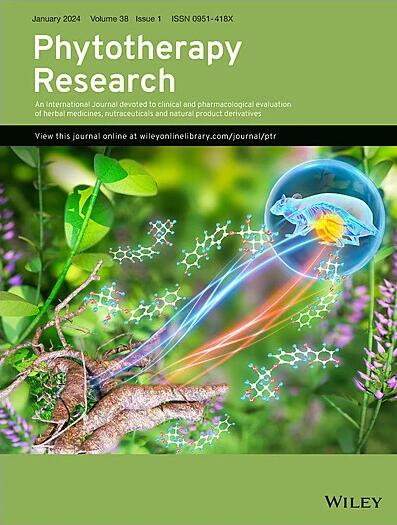
Phytotherapy Research is an internationally recognized pharmacological journal that serves as a trailblazing resource for biochemists, pharmacologists, and toxicologists. We strive to disseminate groundbreaking research on medicinal plants, pushing the boundaries of knowledge and understanding in this field.
Our primary focus areas encompass pharmacology, toxicology, and the clinical applications of herbs and natural products in medicine. We actively encourage submissions on the effects of commonly consumed food ingredients and standardized plant extracts. We welcome a range of contributions including original research papers, review articles, and letters.
By providing a platform for the latest developments and discoveries in phytotherapy, we aim to support the advancement of scientific knowledge and contribute to the improvement of modern medicine.



 京公网安备 11010802042870号
京ICP备2023020795号-1
京公网安备 11010802042870号
京ICP备2023020795号-1

 分享
分享
 求助内容:
求助内容: 应助结果提醒方式:
 扫码关注我们
