Design and Rationale of a Randomized, Double-Blind, Placebo-Controlled, Phase 2/3 Study Evaluating Dociparstat in Acute Lung Injury Associated with Severe COVID-19
Joseph A. Lasky, Jyotsna Fuloria, Marion E. Morrison, Randall Lanier, Odin Naderer, Tom Brundage, Allen Melemed
{"title":"Design and Rationale of a Randomized, Double-Blind, Placebo-Controlled, Phase 2/3 Study Evaluating Dociparstat in Acute Lung Injury Associated with Severe COVID-19","authors":"Joseph A. Lasky, Jyotsna Fuloria, Marion E. Morrison, Randall Lanier, Odin Naderer, Tom Brundage, Allen Melemed","doi":"10.1007/s12325-020-01539-z","DOIUrl":null,"url":null,"abstract":"<div><h3>Introduction</h3><p>The COVID-19 global pandemic caused by the novel coronavirus, SARS-CoV-2, and the consequent morbidity and mortality attributable to progressive hypoxemia and subsequent respiratory failure threaten to overrun hospital critical care units globally. New agents that address the hyperinflammatory “cytokine storm” and hypercoagulable pathology seen in these patients may be a promising approach to treat patients, minimize hospital stays, and ensure hospital wards and critical care units are able to operate effectively. Dociparstat sodium (DSTAT) is a glycosaminoglycan derivative of heparin with robust anti-inflammatory properties, with the potential to address underlying causes of coagulation disorders with substantially reduced risk of bleeding compared to commercially available heparin.</p><h3>Methods</h3><p>This study is a randomized, double-blind, placebo-controlled, phase 2/3 trial to determine the safety and efficacy of DSTAT added to standard of care in hospitalized adults with COVID-19 who require supplemental oxygen. Phase 2 will enroll 12 participants in each of two dose-escalating cohorts to confirm the safety of DSTAT in this population. Following review of the data, an additional 50 participants will be enrolled. Contingent upon positive results, phase 3 will enroll approximately 450 participants randomized to DSTAT or placebo. The primary endpoint is the proportion of participants who survive and do not require mechanical ventilation through day 28.</p><h3>Discussion</h3><p>Advances in standard of care, recent emergency use authorizations, and positive data with dexamethasone have likely contributed to an increasing proportion of patients who are surviving without the need for mechanical ventilation. Therefore, examining the time to improvement in the NIAID score will be essential to provide a measure of drug effect on recovery. Analysis of additional endpoints, including supportive biomarkers (e.g., IL-6, HMGB1, soluble-RAGE, D-dimer), will be performed to further define the effect of DSTAT in patients with COVID-19 infection.</p><h3>Trial Registration</h3><p>ClinicalTrials.gov identifier; NCT04389840, Registered 13 May 2020</p></div>","PeriodicalId":7482,"journal":{"name":"Advances in Therapy","volume":"38 1","pages":"782 - 791"},"PeriodicalIF":4.0000,"publicationDate":"2020-10-27","publicationTypes":"Journal Article","fieldsOfStudy":null,"isOpenAccess":false,"openAccessPdf":"https://sci-hub-pdf.com/10.1007/s12325-020-01539-z","citationCount":"10","resultStr":null,"platform":"Semanticscholar","paperid":null,"PeriodicalName":"Advances in Therapy","FirstCategoryId":"3","ListUrlMain":"https://link.springer.com/article/10.1007/s12325-020-01539-z","RegionNum":3,"RegionCategory":"医学","ArticlePicture":[],"TitleCN":null,"AbstractTextCN":null,"PMCID":null,"EPubDate":"","PubModel":"","JCR":"Q2","JCRName":"MEDICINE, RESEARCH & EXPERIMENTAL","Score":null,"Total":0}
引用次数: 10
Abstract
Introduction
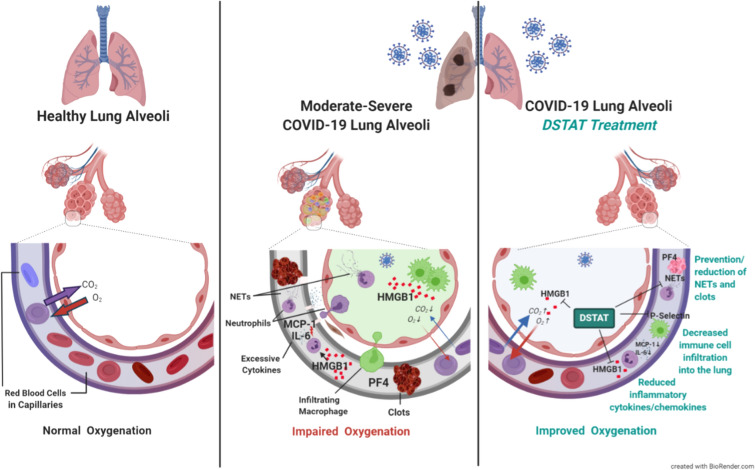
The COVID-19 global pandemic caused by the novel coronavirus, SARS-CoV-2, and the consequent morbidity and mortality attributable to progressive hypoxemia and subsequent respiratory failure threaten to overrun hospital critical care units globally. New agents that address the hyperinflammatory “cytokine storm” and hypercoagulable pathology seen in these patients may be a promising approach to treat patients, minimize hospital stays, and ensure hospital wards and critical care units are able to operate effectively. Dociparstat sodium (DSTAT) is a glycosaminoglycan derivative of heparin with robust anti-inflammatory properties, with the potential to address underlying causes of coagulation disorders with substantially reduced risk of bleeding compared to commercially available heparin.
Methods
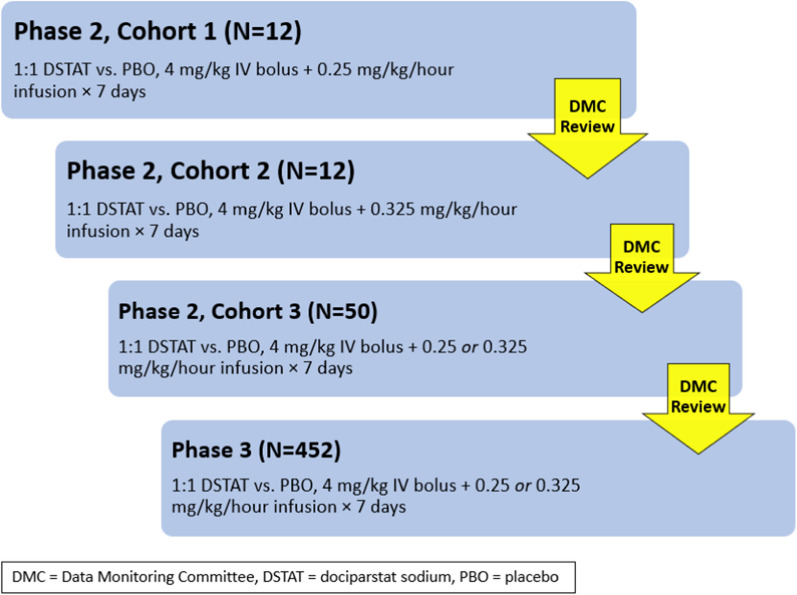
This study is a randomized, double-blind, placebo-controlled, phase 2/3 trial to determine the safety and efficacy of DSTAT added to standard of care in hospitalized adults with COVID-19 who require supplemental oxygen. Phase 2 will enroll 12 participants in each of two dose-escalating cohorts to confirm the safety of DSTAT in this population. Following review of the data, an additional 50 participants will be enrolled. Contingent upon positive results, phase 3 will enroll approximately 450 participants randomized to DSTAT or placebo. The primary endpoint is the proportion of participants who survive and do not require mechanical ventilation through day 28.
Discussion
Advances in standard of care, recent emergency use authorizations, and positive data with dexamethasone have likely contributed to an increasing proportion of patients who are surviving without the need for mechanical ventilation. Therefore, examining the time to improvement in the NIAID score will be essential to provide a measure of drug effect on recovery. Analysis of additional endpoints, including supportive biomarkers (e.g., IL-6, HMGB1, soluble-RAGE, D-dimer), will be performed to further define the effect of DSTAT in patients with COVID-19 infection.
Trial Registration
ClinicalTrials.gov identifier; NCT04389840, Registered 13 May 2020
期刊介绍:
Advances in Therapy is an international, peer reviewed, rapid-publication (peer review in 2 weeks, published 3–4 weeks from acceptance) journal dedicated to the publication of high-quality clinical (all phases), observational, real-world, and health outcomes research around the discovery, development, and use of therapeutics and interventions (including devices) across all therapeutic areas. Studies relating to diagnostics and diagnosis, pharmacoeconomics, public health, epidemiology, quality of life, and patient care, management, and education are also encouraged.
The journal is of interest to a broad audience of healthcare professionals and publishes original research, reviews, communications and letters. The journal is read by a global audience and receives submissions from all over the world. Advances in Therapy will consider all scientifically sound research be it positive, confirmatory or negative data. Submissions are welcomed whether they relate to an international and/or a country-specific audience, something that is crucially important when researchers are trying to target more specific patient populations. This inclusive approach allows the journal to assist in the dissemination of all scientifically and ethically sound research.



 京公网安备 11010802042870号
京ICP备2023020795号-1
京公网安备 11010802042870号
京ICP备2023020795号-1

 分享
分享
 求助内容:
求助内容: 应助结果提醒方式:
 扫码关注我们
