Dong Wang, Xin He, Di Wang, Pandi Peng, Xiaolong Xu, Bo Gao, Chao Zheng, Han Wang, Haoruo Jia, Qiliang Shang, Zhen Sun, Zhuojing Luo, Liu Yang
{"title":"Quercetin Suppresses Apoptosis and Attenuates Intervertebral Disc Degeneration via the SIRT1-Autophagy Pathway.","authors":"Dong Wang, Xin He, Di Wang, Pandi Peng, Xiaolong Xu, Bo Gao, Chao Zheng, Han Wang, Haoruo Jia, Qiliang Shang, Zhen Sun, Zhuojing Luo, Liu Yang","doi":"10.3389/fcell.2020.613006","DOIUrl":null,"url":null,"abstract":"<p><p>Intervertebral disc degeneration (IDD) has been generally accepted as the major cause of low back pain (LBP), which causes an enormous socioeconomic burden. Previous studies demonstrated that the apoptosis of nucleus pulposus (NP) cells and the dyshomeostasis of extracellular matrix (ECM) contributed to the pathogenesis of IDD, and effective therapies were still lacking. Quercetin, a natural flavonoid possessing a specific effect of autophagy stimulation and SIRT1 activation, showed some protective effect on a series of degenerative diseases. Based on previous studies, we hypothesized that quercetin might have therapeutic effects on IDD by inhibiting the apoptosis of NP cells and dyshomeostasis of ECM via the SIRT1-autophagy pathway. In this study, we revealed that quercetin treatment inhibited the apoptosis of NP cells and ECM degeneration induced by oxidative stress. We also found that quercetin promoted the expression of SIRT1 and autophagy in NP cells in a dose-dependent manner. Autophagy inhibitor 3-methyladenine (3-MA) reversed the protective effect of quercetin on apoptosis and ECM degeneration. Moreover, SIRT1 enzymatic activity inhibitor EX-527, suppressed quercetin-induced autophagy and the protective effect on NP cells, indicating that quercetin protected NP cells against apoptosis and prevented ECM degeneration via SIRT1-autophagy pathway. <i>In vivo</i>, quercetin was also demonstrated to alleviate the progression of IDD in rats. Taken together, our results suggest that quercetin prevents IDD by promoting SIRT1-dependent autophagy, indicating one novel and effective therapeutic method for IDD.</p>","PeriodicalId":12448,"journal":{"name":"Frontiers in Cell and Developmental Biology","volume":" ","pages":"613006"},"PeriodicalIF":4.6000,"publicationDate":"2020-12-10","publicationTypes":"Journal Article","fieldsOfStudy":null,"isOpenAccess":false,"openAccessPdf":"https://sci-hub-pdf.com/10.3389/fcell.2020.613006","citationCount":"50","resultStr":null,"platform":"Semanticscholar","paperid":null,"PeriodicalName":"Frontiers in Cell and Developmental Biology","FirstCategoryId":"99","ListUrlMain":"https://doi.org/10.3389/fcell.2020.613006","RegionNum":2,"RegionCategory":"生物学","ArticlePicture":[],"TitleCN":null,"AbstractTextCN":null,"PMCID":null,"EPubDate":"2020/1/1 0:00:00","PubModel":"eCollection","JCR":"Q2","JCRName":"CELL BIOLOGY","Score":null,"Total":0}
引用次数: 50
Abstract
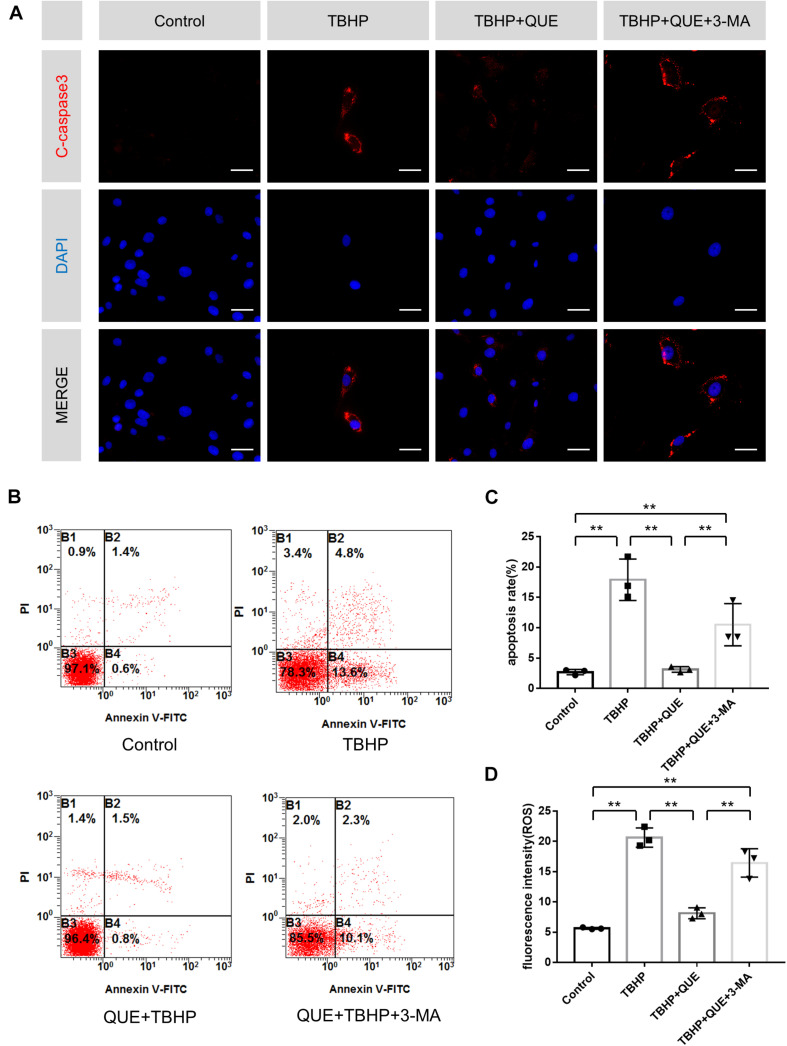
Intervertebral disc degeneration (IDD) has been generally accepted as the major cause of low back pain (LBP), which causes an enormous socioeconomic burden. Previous studies demonstrated that the apoptosis of nucleus pulposus (NP) cells and the dyshomeostasis of extracellular matrix (ECM) contributed to the pathogenesis of IDD, and effective therapies were still lacking. Quercetin, a natural flavonoid possessing a specific effect of autophagy stimulation and SIRT1 activation, showed some protective effect on a series of degenerative diseases. Based on previous studies, we hypothesized that quercetin might have therapeutic effects on IDD by inhibiting the apoptosis of NP cells and dyshomeostasis of ECM via the SIRT1-autophagy pathway. In this study, we revealed that quercetin treatment inhibited the apoptosis of NP cells and ECM degeneration induced by oxidative stress. We also found that quercetin promoted the expression of SIRT1 and autophagy in NP cells in a dose-dependent manner. Autophagy inhibitor 3-methyladenine (3-MA) reversed the protective effect of quercetin on apoptosis and ECM degeneration. Moreover, SIRT1 enzymatic activity inhibitor EX-527, suppressed quercetin-induced autophagy and the protective effect on NP cells, indicating that quercetin protected NP cells against apoptosis and prevented ECM degeneration via SIRT1-autophagy pathway. In vivo, quercetin was also demonstrated to alleviate the progression of IDD in rats. Taken together, our results suggest that quercetin prevents IDD by promoting SIRT1-dependent autophagy, indicating one novel and effective therapeutic method for IDD.
期刊介绍:
Frontiers in Cell and Developmental Biology is a broad-scope, interdisciplinary open-access journal, focusing on the fundamental processes of life, led by Prof Amanda Fisher and supported by a geographically diverse, high-quality editorial board.
The journal welcomes submissions on a wide spectrum of cell and developmental biology, covering intracellular and extracellular dynamics, with sections focusing on signaling, adhesion, migration, cell death and survival and membrane trafficking. Additionally, the journal offers sections dedicated to the cutting edge of fundamental and translational research in molecular medicine and stem cell biology.
With a collaborative, rigorous and transparent peer-review, the journal produces the highest scientific quality in both fundamental and applied research, and advanced article level metrics measure the real-time impact and influence of each publication.





 京公网安备 11010802042870号
京ICP备2023020795号-1
京公网安备 11010802042870号
京ICP备2023020795号-1

 分享
分享
 求助内容:
求助内容: 应助结果提醒方式:
 扫码关注我们
