{"title":"Investigating the neurochemistry of the human visual system using magnetic resonance spectroscopy.","authors":"I Betina Ip, Holly Bridge","doi":"10.1007/s00429-021-02273-0","DOIUrl":null,"url":null,"abstract":"<p><p>Biochemical processes underpin the structure and function of the visual cortex, yet our understanding of the fundamental neurochemistry of the visual brain is incomplete. Proton magnetic resonance spectroscopy (<sup>1</sup>H-MRS) is a non-invasive brain imaging tool that allows chemical quantification of living tissue by detecting minute differences in the resonant frequency of molecules. Application of MRS in the human brain in vivo has advanced our understanding of how the visual brain consumes energy to support neural function, how its neural substrates change as a result of disease or dysfunction, and how neural populations signal during perception and plasticity. The aim of this review is to provide an entry point to researchers interested in investigating the neurochemistry of the visual system using in vivo measurements. We provide a basic overview of MRS principles, and then discuss recent findings in four topics of vision science: (i) visual perception, plasticity in the (ii) healthy and (iii) dysfunctional visual system, and (iv) during visual stimulation. Taken together, evidence suggests that the neurochemistry of the visual system provides important novel insights into how we perceive the world.</p>","PeriodicalId":9145,"journal":{"name":"Brain Structure & Function","volume":" ","pages":"1491-1505"},"PeriodicalIF":2.9000,"publicationDate":"2022-05-01","publicationTypes":"Journal Article","fieldsOfStudy":null,"isOpenAccess":false,"openAccessPdf":"https://www.ncbi.nlm.nih.gov/pmc/articles/PMC9046312/pdf/","citationCount":"0","resultStr":null,"platform":"Semanticscholar","paperid":null,"PeriodicalName":"Brain Structure & Function","FirstCategoryId":"3","ListUrlMain":"https://doi.org/10.1007/s00429-021-02273-0","RegionNum":3,"RegionCategory":"医学","ArticlePicture":[],"TitleCN":null,"AbstractTextCN":null,"PMCID":null,"EPubDate":"2021/4/26 0:00:00","PubModel":"Epub","JCR":"Q1","JCRName":"ANATOMY & MORPHOLOGY","Score":null,"Total":0}
引用次数: 0
Abstract
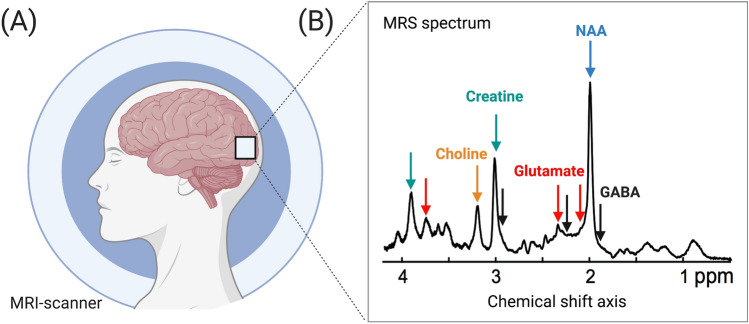
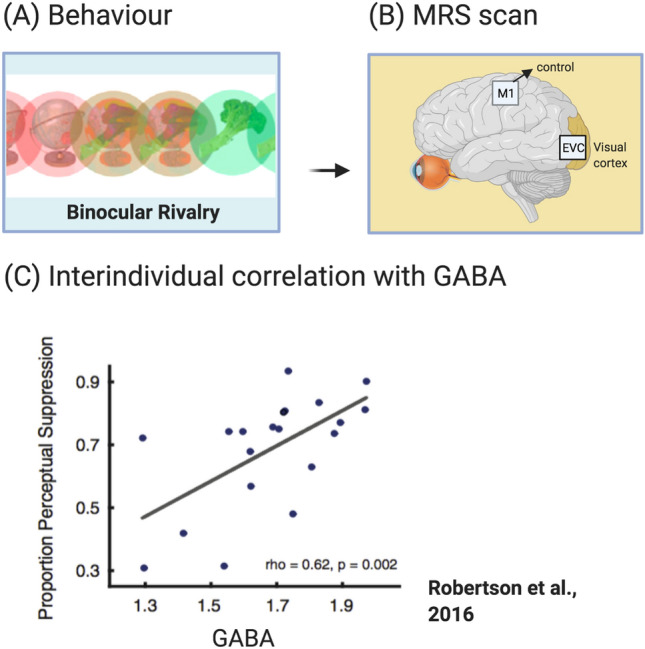
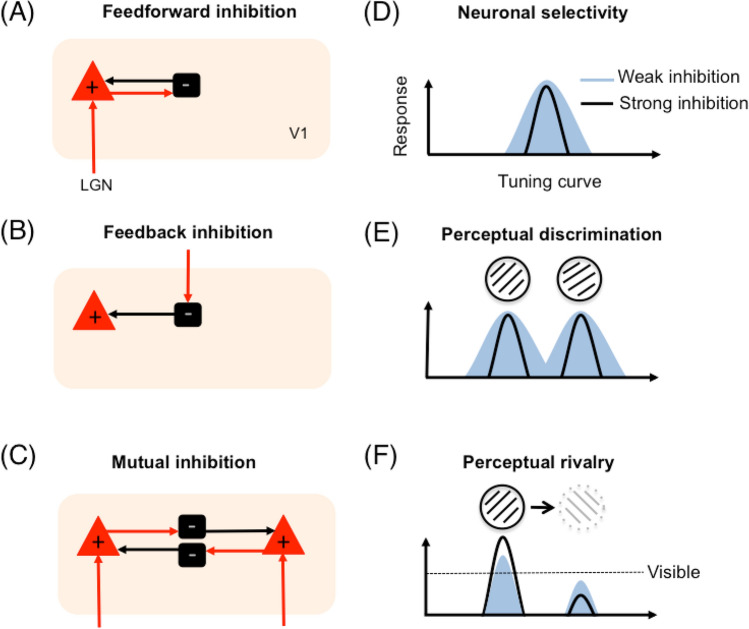
Biochemical processes underpin the structure and function of the visual cortex, yet our understanding of the fundamental neurochemistry of the visual brain is incomplete. Proton magnetic resonance spectroscopy (1H-MRS) is a non-invasive brain imaging tool that allows chemical quantification of living tissue by detecting minute differences in the resonant frequency of molecules. Application of MRS in the human brain in vivo has advanced our understanding of how the visual brain consumes energy to support neural function, how its neural substrates change as a result of disease or dysfunction, and how neural populations signal during perception and plasticity. The aim of this review is to provide an entry point to researchers interested in investigating the neurochemistry of the visual system using in vivo measurements. We provide a basic overview of MRS principles, and then discuss recent findings in four topics of vision science: (i) visual perception, plasticity in the (ii) healthy and (iii) dysfunctional visual system, and (iv) during visual stimulation. Taken together, evidence suggests that the neurochemistry of the visual system provides important novel insights into how we perceive the world.
期刊介绍:
Brain Structure & Function publishes research that provides insight into brain structure−function relationships. Studies published here integrate data spanning from molecular, cellular, developmental, and systems architecture to the neuroanatomy of behavior and cognitive functions. Manuscripts with focus on the spinal cord or the peripheral nervous system are not accepted for publication. Manuscripts with focus on diseases, animal models of diseases, or disease-related mechanisms are only considered for publication, if the findings provide novel insight into the organization and mechanisms of normal brain structure and function.



 京公网安备 11010802042870号
京ICP备2023020795号-1
京公网安备 11010802042870号
京ICP备2023020795号-1

 分享
分享
 求助内容:
求助内容: 应助结果提醒方式:
 扫码关注我们
