Céline Grandvallet, Jean Paul Feugeas, Franck Monnien, Gilles Despouy, Perez Valérie, Guittaut Michaël, Eric Hervouet, Paul Peixoto
{"title":"Autophagy is associated with a robust specific transcriptional signature in breast cancer subtypes.","authors":"Céline Grandvallet, Jean Paul Feugeas, Franck Monnien, Gilles Despouy, Perez Valérie, Guittaut Michaël, Eric Hervouet, Paul Peixoto","doi":"10.18632/genesandcancer.208","DOIUrl":null,"url":null,"abstract":"<p><p>Previous works have described that autophagy could be associated to both pro- and anti-cancer properties according to numerous factors, such as the gene considered, the step of autophagy involved or the cancer model used. These data might be explained by the fact that some autophagy-related genes may be involved in other cellular processes and therefore differently regulated according to the type or the grade of the tumor. Indeed, using different approaches of transcriptome analysis in breast cancers, and further confirmation using digital PCR, we identified a specific signature of autophagy gene expression associated to Luminal A or Triple Negative Breast Cancers (TNBC). Moreover, we confirmed that ATG5, an autophagy gene specifically expressed in TNBC, favored cell migration, whereas <i>BECN1</i>, an autophagy gene specifically associated with ER-positive breast cancers, induced opposite effects. We also showed that overall inhibition of autophagy promoted cell migration suggesting that the role of individual ATG genes in cancer phenotypes was not strictly dependent of their function during autophagy. Finally, our work led to the identification of <i>TXNIP1</i> as a potential biomarker associated to autophagy induction in breast cancers. This gene could become an essential tool to quantify autophagy levels in fixed biopsies, sort tumors according to their autophagy levels and determine the best therapeutic treatment.</p>","PeriodicalId":38987,"journal":{"name":"Genes and Cancer","volume":"11 3-4","pages":"154-168"},"PeriodicalIF":0.0000,"publicationDate":"2020-10-06","publicationTypes":"Journal Article","fieldsOfStudy":null,"isOpenAccess":false,"openAccessPdf":"https://www.ncbi.nlm.nih.gov/pmc/articles/PMC7805539/pdf/","citationCount":"7","resultStr":null,"platform":"Semanticscholar","paperid":null,"PeriodicalName":"Genes and Cancer","FirstCategoryId":"1085","ListUrlMain":"https://doi.org/10.18632/genesandcancer.208","RegionNum":0,"RegionCategory":null,"ArticlePicture":[],"TitleCN":null,"AbstractTextCN":null,"PMCID":null,"EPubDate":"2020/12/31 0:00:00","PubModel":"eCollection","JCR":"Q2","JCRName":"Biochemistry, Genetics and Molecular Biology","Score":null,"Total":0}
引用次数: 7
Abstract
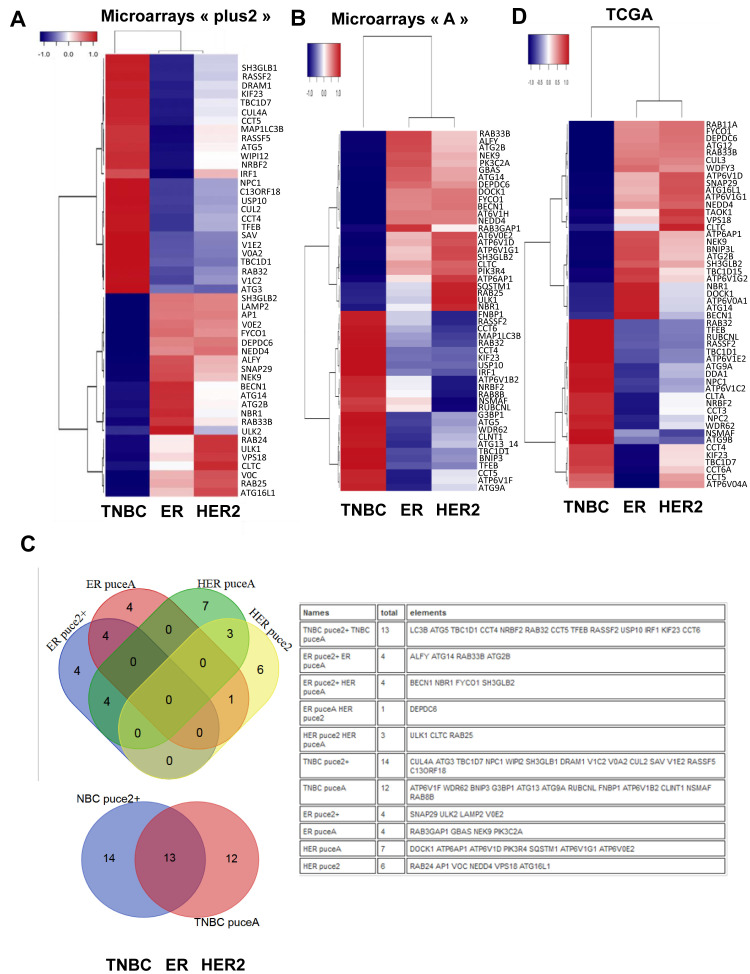
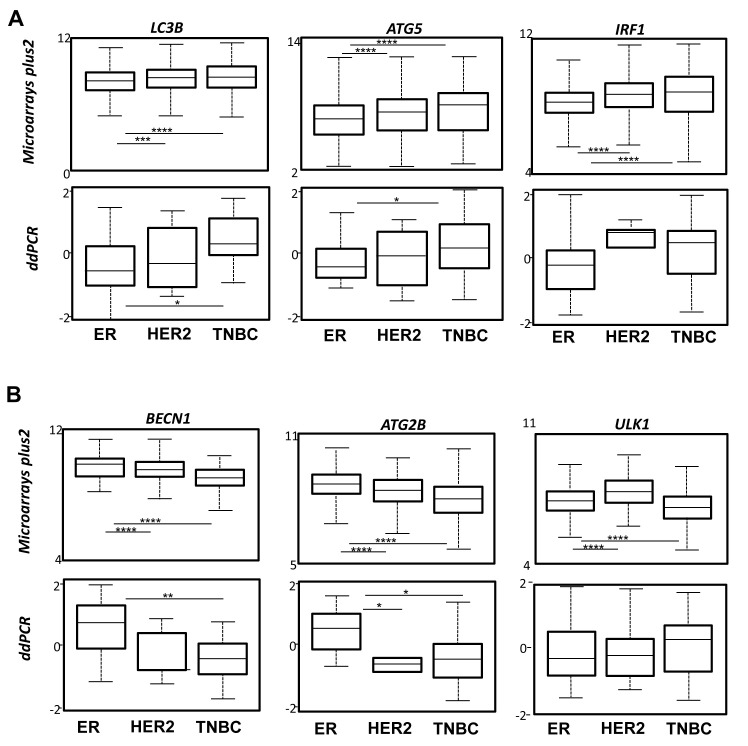
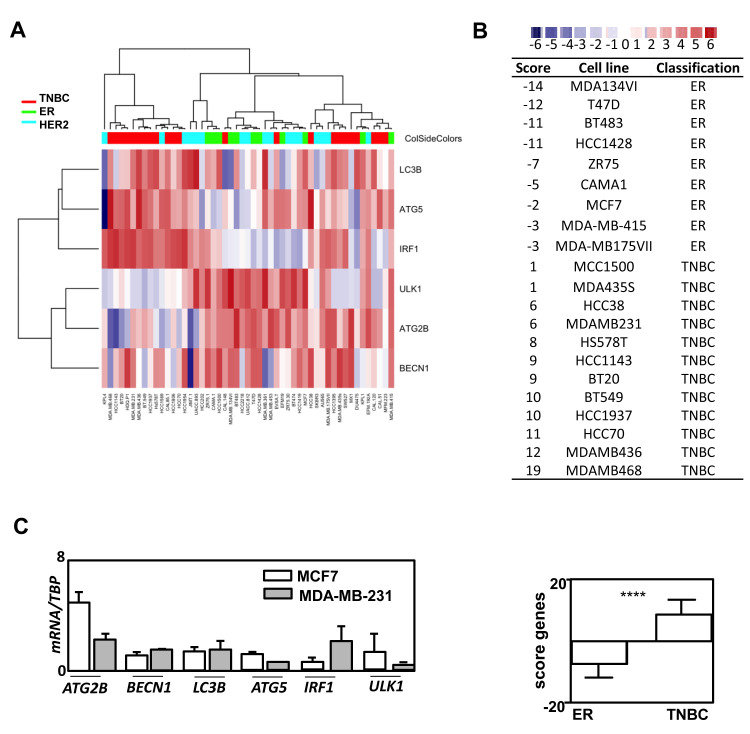
Previous works have described that autophagy could be associated to both pro- and anti-cancer properties according to numerous factors, such as the gene considered, the step of autophagy involved or the cancer model used. These data might be explained by the fact that some autophagy-related genes may be involved in other cellular processes and therefore differently regulated according to the type or the grade of the tumor. Indeed, using different approaches of transcriptome analysis in breast cancers, and further confirmation using digital PCR, we identified a specific signature of autophagy gene expression associated to Luminal A or Triple Negative Breast Cancers (TNBC). Moreover, we confirmed that ATG5, an autophagy gene specifically expressed in TNBC, favored cell migration, whereas BECN1, an autophagy gene specifically associated with ER-positive breast cancers, induced opposite effects. We also showed that overall inhibition of autophagy promoted cell migration suggesting that the role of individual ATG genes in cancer phenotypes was not strictly dependent of their function during autophagy. Finally, our work led to the identification of TXNIP1 as a potential biomarker associated to autophagy induction in breast cancers. This gene could become an essential tool to quantify autophagy levels in fixed biopsies, sort tumors according to their autophagy levels and determine the best therapeutic treatment.




 京公网安备 11010802042870号
京ICP备2023020795号-1
京公网安备 11010802042870号
京ICP备2023020795号-1

 分享
分享
 求助内容:
求助内容: 应助结果提醒方式:
 扫码关注我们
