Michelle Armour, Susan Brady, Kathryn Williamson-Link, Linda McGovern, Kristen Struchil
{"title":"Supported Communication Video Training for the Nursing Department in an Inpatient Rehabilitation Hospital.","authors":"Michelle Armour, Susan Brady, Kathryn Williamson-Link, Linda McGovern, Kristen Struchil","doi":"10.1097/RNJ.0000000000000311","DOIUrl":null,"url":null,"abstract":"<p><strong>Purpose: </strong>The aim of this study was to develop a valid educational intervention to improve knowledge and confidence using communication strategies when interacting with a person with aphasia.</p><p><strong>Design: </strong>A quantitative, nonrandomized pretest/posttest research study was performed.</p><p><strong>Methods: </strong>Pre- and postcourse assessments were completed with learning participants. This educational intervention was developed using the underlying theoretical concepts of the integrated behavioral model.</p><p><strong>Results: </strong>Forty-nine new employees from the nursing department participated in this study, with 61% reporting less than 1 year of experience. Pre- to posttraining assessments on the Test of Knowledge of Aphasia improved from 3.7 to 5.8 (p ≤ .0001) for direct knowledge, from 5.5 to 8.2 (p ≤ .0001) for confidence self-efficacy, and from 5.3 to 7.6 (p ≤ .0001) for knowledge self-efficacy.</p><p><strong>Conclusion: </strong>Results indicated this theory-driven educational training was effective in training employees from the nursing department working in an inpatient rehabilitation environment.</p><p><strong>Clinical relevancy: </strong>Improving communication effectiveness is critical for overall quality of care and patient safety.</p>","PeriodicalId":94188,"journal":{"name":"Rehabilitation nursing : the official journal of the Association of Rehabilitation Nurses","volume":" ","pages":"289-296"},"PeriodicalIF":1.0000,"publicationDate":"2021-09-01","publicationTypes":"Journal Article","fieldsOfStudy":null,"isOpenAccess":false,"openAccessPdf":"https://ftp.ncbi.nlm.nih.gov/pub/pmc/oa_pdf/06/c7/rnj-46-289.PMC8407444.pdf","citationCount":"1","resultStr":null,"platform":"Semanticscholar","paperid":null,"PeriodicalName":"Rehabilitation nursing : the official journal of the Association of Rehabilitation Nurses","FirstCategoryId":"3","ListUrlMain":"https://doi.org/10.1097/RNJ.0000000000000311","RegionNum":0,"RegionCategory":null,"ArticlePicture":[],"TitleCN":null,"AbstractTextCN":null,"PMCID":null,"EPubDate":"","PubModel":"","JCR":"","JCRName":"","Score":null,"Total":0}
引用次数: 1
Abstract
Purpose: The aim of this study was to develop a valid educational intervention to improve knowledge and confidence using communication strategies when interacting with a person with aphasia.
Design: A quantitative, nonrandomized pretest/posttest research study was performed.
Methods: Pre- and postcourse assessments were completed with learning participants. This educational intervention was developed using the underlying theoretical concepts of the integrated behavioral model.
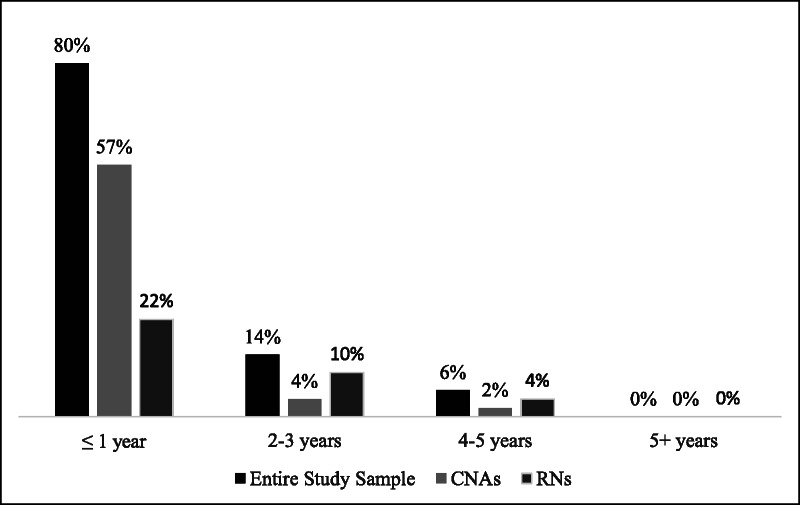
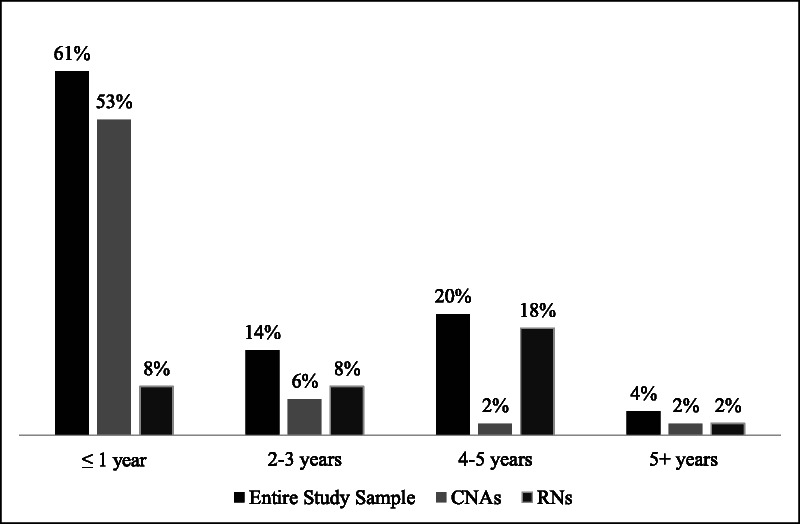
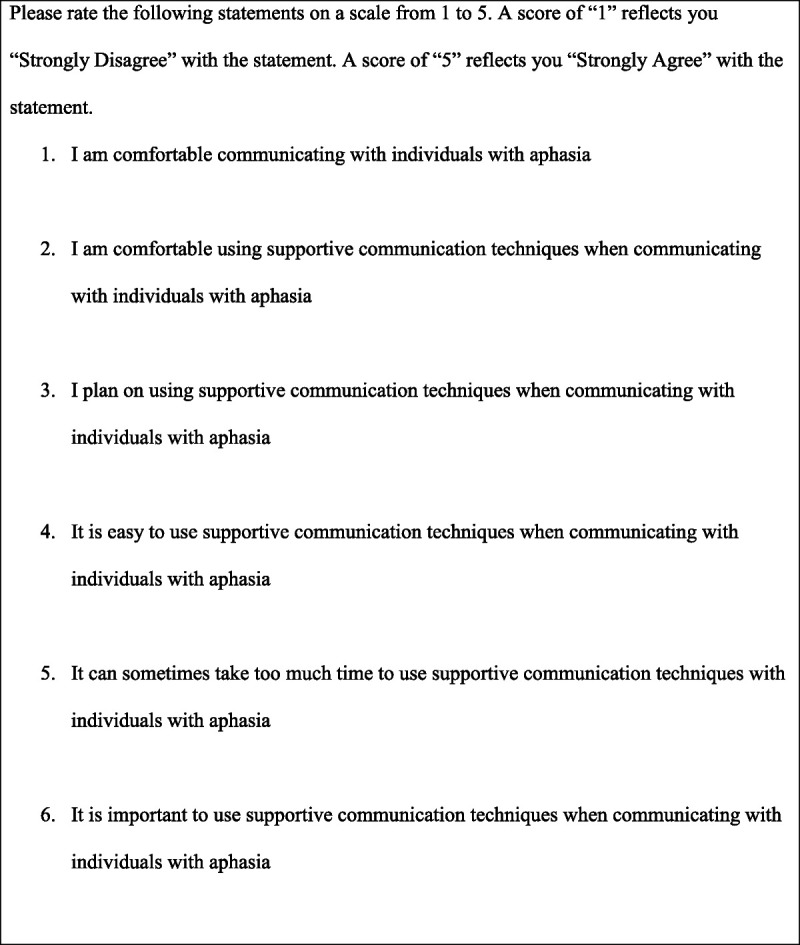
Results: Forty-nine new employees from the nursing department participated in this study, with 61% reporting less than 1 year of experience. Pre- to posttraining assessments on the Test of Knowledge of Aphasia improved from 3.7 to 5.8 (p ≤ .0001) for direct knowledge, from 5.5 to 8.2 (p ≤ .0001) for confidence self-efficacy, and from 5.3 to 7.6 (p ≤ .0001) for knowledge self-efficacy.
Conclusion: Results indicated this theory-driven educational training was effective in training employees from the nursing department working in an inpatient rehabilitation environment.
Clinical relevancy: Improving communication effectiveness is critical for overall quality of care and patient safety.



 京公网安备 11010802042870号
京ICP备2023020795号-1
京公网安备 11010802042870号
京ICP备2023020795号-1

 分享
分享

 求助内容:
求助内容: 应助结果提醒方式:
 扫码关注我们
