Management of particular clinical situations in psoriatic arthritis: an expert's recommendation document based on systematic literature review and extended Delphi process.
Rosario García-Vicuña, Noemí Garrido, Susana Gómez, Beatriz Joven, Rubén Queiro, Julio Ramírez, Francisco Rebollo, Estíbaliz Loza, Agustí Sellas
{"title":"Management of particular clinical situations in psoriatic arthritis: an expert's recommendation document based on systematic literature review and extended Delphi process.","authors":"Rosario García-Vicuña, Noemí Garrido, Susana Gómez, Beatriz Joven, Rubén Queiro, Julio Ramírez, Francisco Rebollo, Estíbaliz Loza, Agustí Sellas","doi":"10.1007/s00296-021-04877-5","DOIUrl":null,"url":null,"abstract":"<p><p>To establish practical recommendations for the management of patients with psoriatic arthritis (PsA) with particular clinical situations that might lead to doubts in the pharmacological decision-making. A group of six expert rheumatologists on PsA identified particular clinical situations in PsA. Then, a systematic literature review (SLR) was performed to analyse the efficacy and safety of csDMARDs, b/tsDMARDs in PsA. In a nominal group meeting, the results of the SLR were discussed and a set of recommendations were proposed for a Delphi process. A total of 65 rheumatologists were invited to participate in the Delphi. Agreement was defined if ≥ 70% of the participants voted ≥ 7 (from 1, totally disagree to 10, totally agree). For each recommendation, the level of evidence and grade of recommendation was established based on the Oxford Evidence-Based Medicine categorisation. Particular clinical situations included monoarthritis, axial disease, or non-musculoskeletal manifestations. The SLR finally comprised 131 articles. A total of 16 recommendations were generated, all but 1 reached consensus. According to them, it is crucial to carefully analyse the impact of individual manifestations on patients (disability, quality of life, etc.), but also to recognise the impact of each drug singularities on selected clinical phenotypes to adopt the most appropriate treatment strategy. Early diagnosis and treatment to target approach, along with a close risk management, is also necessary. These recommendations are intended to complement gaps in national and international guidelines by helping health professionals address and manage particular clinical situations in PsA.</p>","PeriodicalId":21322,"journal":{"name":"Rheumatology International","volume":"41 9","pages":"1549-1565"},"PeriodicalIF":2.9000,"publicationDate":"2021-09-01","publicationTypes":"Journal Article","fieldsOfStudy":null,"isOpenAccess":false,"openAccessPdf":"https://sci-hub-pdf.com/10.1007/s00296-021-04877-5","citationCount":"2","resultStr":null,"platform":"Semanticscholar","paperid":null,"PeriodicalName":"Rheumatology International","FirstCategoryId":"3","ListUrlMain":"https://doi.org/10.1007/s00296-021-04877-5","RegionNum":3,"RegionCategory":"医学","ArticlePicture":[],"TitleCN":null,"AbstractTextCN":null,"PMCID":null,"EPubDate":"2021/5/2 0:00:00","PubModel":"Epub","JCR":"Q2","JCRName":"RHEUMATOLOGY","Score":null,"Total":0}
引用次数: 2
Abstract
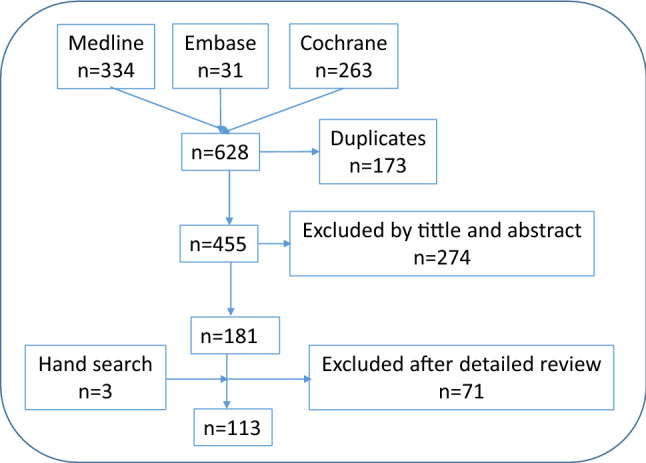
To establish practical recommendations for the management of patients with psoriatic arthritis (PsA) with particular clinical situations that might lead to doubts in the pharmacological decision-making. A group of six expert rheumatologists on PsA identified particular clinical situations in PsA. Then, a systematic literature review (SLR) was performed to analyse the efficacy and safety of csDMARDs, b/tsDMARDs in PsA. In a nominal group meeting, the results of the SLR were discussed and a set of recommendations were proposed for a Delphi process. A total of 65 rheumatologists were invited to participate in the Delphi. Agreement was defined if ≥ 70% of the participants voted ≥ 7 (from 1, totally disagree to 10, totally agree). For each recommendation, the level of evidence and grade of recommendation was established based on the Oxford Evidence-Based Medicine categorisation. Particular clinical situations included monoarthritis, axial disease, or non-musculoskeletal manifestations. The SLR finally comprised 131 articles. A total of 16 recommendations were generated, all but 1 reached consensus. According to them, it is crucial to carefully analyse the impact of individual manifestations on patients (disability, quality of life, etc.), but also to recognise the impact of each drug singularities on selected clinical phenotypes to adopt the most appropriate treatment strategy. Early diagnosis and treatment to target approach, along with a close risk management, is also necessary. These recommendations are intended to complement gaps in national and international guidelines by helping health professionals address and manage particular clinical situations in PsA.
期刊介绍:
RHEUMATOLOGY INTERNATIONAL is an independent journal reflecting world-wide progress in the research, diagnosis and treatment of the various rheumatic diseases. It is designed to serve researchers and clinicians in the field of rheumatology.
RHEUMATOLOGY INTERNATIONAL will cover all modern trends in clinical research as well as in the management of rheumatic diseases. Special emphasis will be given to public health issues related to rheumatic diseases, applying rheumatology research to clinical practice, epidemiology of rheumatic diseases, diagnostic tests for rheumatic diseases, patient reported outcomes (PROs) in rheumatology and evidence on education of rheumatology. Contributions to these topics will appear in the form of original publications, short communications, editorials, and reviews. "Letters to the editor" will be welcome as an enhancement to discussion. Basic science research, including in vitro or animal studies, is discouraged to submit, as we will only review studies on humans with an epidemological or clinical perspective. Case reports without a proper review of the literatura (Case-based Reviews) will not be published. Every effort will be made to ensure speed of publication while maintaining a high standard of contents and production.
Manuscripts submitted for publication must contain a statement to the effect that all human studies have been reviewed by the appropriate ethics committee and have therefore been performed in accordance with the ethical standards laid down in an appropriate version of the 1964 Declaration of Helsinki. It should also be stated clearly in the text that all persons gave their informed consent prior to their inclusion in the study. Details that might disclose the identity of the subjects under study should be omitted.



 京公网安备 11010802042870号
京ICP备2023020795号-1
京公网安备 11010802042870号
京ICP备2023020795号-1

 分享
分享
 求助内容:
求助内容: 应助结果提醒方式:
 扫码关注我们
