{"title":"Subtype-specific differences in Gag-protease replication capacity of HIV-1 isolates from East and West Africa.","authors":"Omotayo Farinre, Kamini Gounder, Tarylee Reddy, Marcel Tongo, Jonathan Hare, Beth Chaplin, Jill Gilmour, Phyllis Kanki, Jaclyn K Mann, Thumbi Ndung'u","doi":"10.1186/s12977-021-00554-4","DOIUrl":null,"url":null,"abstract":"<p><strong>Background: </strong>The HIV-1 epidemic in sub-Saharan Africa is heterogeneous with diverse unevenly distributed subtypes and regional differences in prevalence. Subtype-specific differences in disease progression rate and transmission efficiency have been reported, but the underlying biological mechanisms have not been fully characterized. Here, we tested the hypothesis that the subtypes prevalent in the East Africa, where adult prevalence rate is higher, have lower viral replication capacity (VRC) than their West African counterparts where adult prevalence rates are lower.</p><p><strong>Results: </strong>Gag-protease sequencing was performed on 213 and 160 antiretroviral-naïve chronically infected participants from West and East Africa respectively and bioinformatic tools were used to infer subtypes and recombination patterns. VRC of patient-derived gag-protease chimeric viruses from West (n = 178) and East (n = 114) Africa were determined using a green fluorescent protein reporter-based cell assay. Subtype and regional differences in VRC and amino acid variants impacting VRC were identified by statistical methods. CRF02_AG (65%, n = 139), other recombinants (14%, n = 30) and pure subtypes (21%, n = 44) were identified in West Africa. Subtypes A1 (64%, n = 103), D (22%, n = 35), or recombinants (14%, n = 22) were identified in East Africa. Viruses from West Africa had significantly higher VRC compared to those from East Africa (p < 0.0001), with subtype-specific differences found among strains within West and East Africa (p < 0.0001). Recombination patterns showed a preference for subtypes D, G or J rather than subtype A in the p6 region of gag, with evidence that subtype-specific differences in this region impact VRC. Furthermore, the Gag A83V polymorphism was associated with reduced VRC in CRF02_AG. HLA-A*23:01 (p = 0.0014) and HLA-C*07:01 (p = 0.002) were associated with lower VRC in subtype A infected individuals from East Africa.</p><p><strong>Conclusions: </strong>Although prevalent viruses from West Africa displayed higher VRC than those from East Africa consistent with the hypothesis that lower VRC is associated with higher population prevalence, the predominant CRF02_AG strain in West Africa displayed higher VRC than other prevalent strains suggesting that VRC alone does not explain population prevalence. The study identified viral and host genetic determinants of virus replication capacity for HIV-1 CRF02_AG and subtype A respectively, which may have relevance for vaccine strategies.</p>","PeriodicalId":2,"journal":{"name":"ACS Applied Bio Materials","volume":" ","pages":"11"},"PeriodicalIF":4.7000,"publicationDate":"2021-05-05","publicationTypes":"Journal Article","fieldsOfStudy":null,"isOpenAccess":false,"openAccessPdf":"https://www.ncbi.nlm.nih.gov/pmc/articles/PMC8097975/pdf/","citationCount":"0","resultStr":null,"platform":"Semanticscholar","paperid":null,"PeriodicalName":"ACS Applied Bio Materials","FirstCategoryId":"3","ListUrlMain":"https://doi.org/10.1186/s12977-021-00554-4","RegionNum":0,"RegionCategory":null,"ArticlePicture":[],"TitleCN":null,"AbstractTextCN":null,"PMCID":null,"EPubDate":"","PubModel":"","JCR":"Q2","JCRName":"MATERIALS SCIENCE, BIOMATERIALS","Score":null,"Total":0}
引用次数: 0
Abstract
Background: The HIV-1 epidemic in sub-Saharan Africa is heterogeneous with diverse unevenly distributed subtypes and regional differences in prevalence. Subtype-specific differences in disease progression rate and transmission efficiency have been reported, but the underlying biological mechanisms have not been fully characterized. Here, we tested the hypothesis that the subtypes prevalent in the East Africa, where adult prevalence rate is higher, have lower viral replication capacity (VRC) than their West African counterparts where adult prevalence rates are lower.
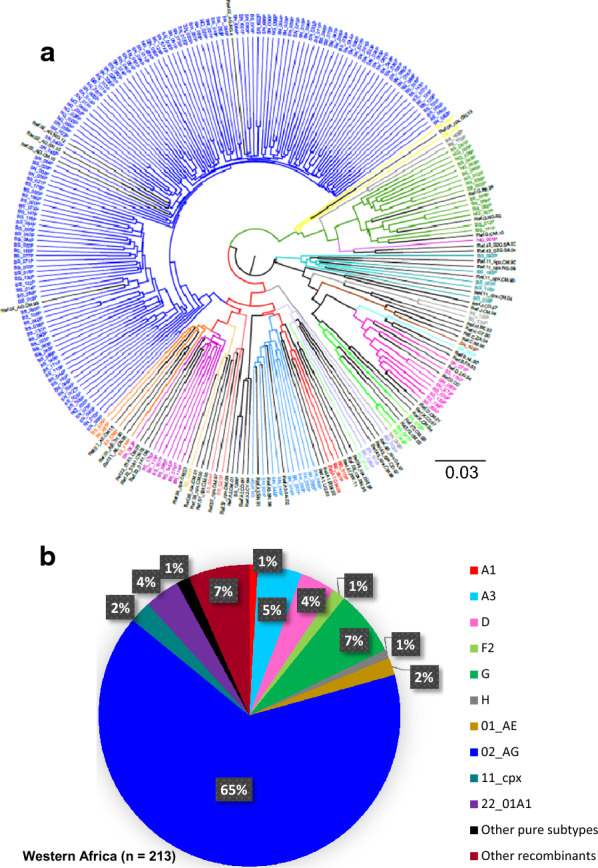
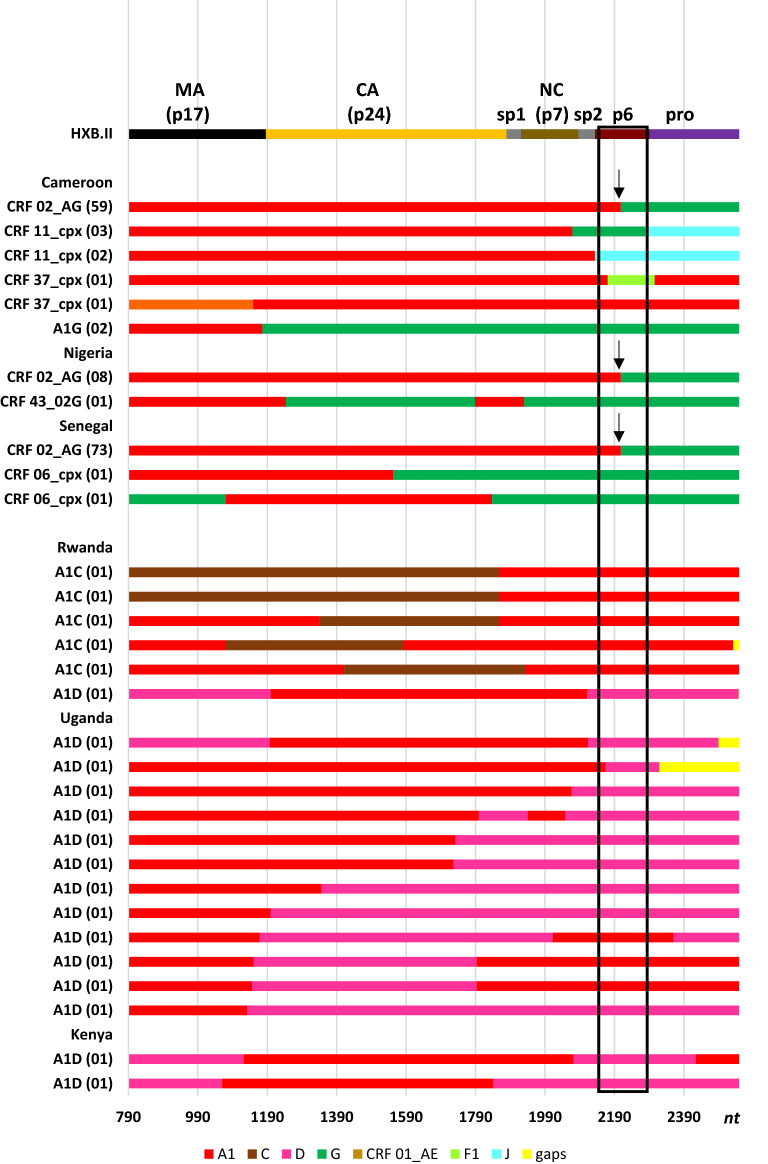
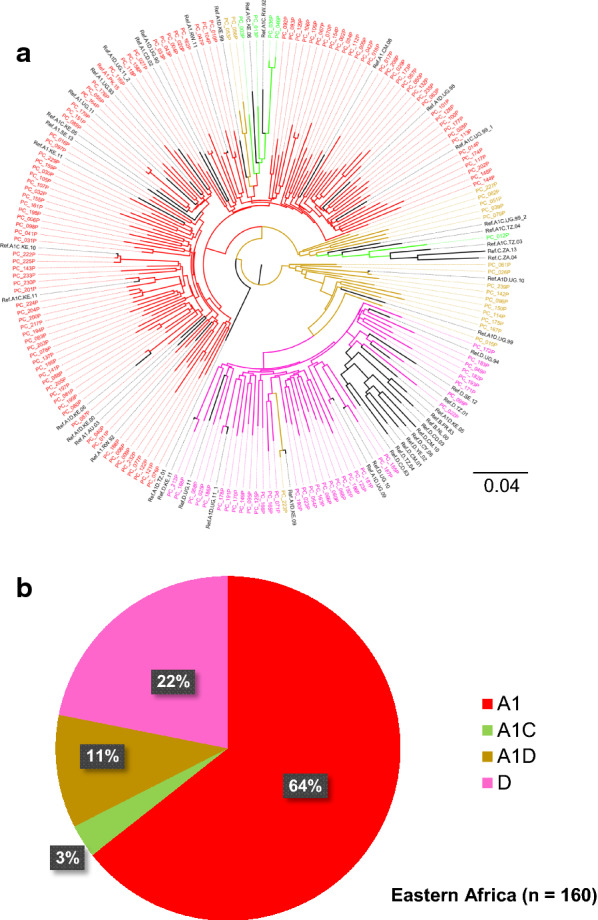
Results: Gag-protease sequencing was performed on 213 and 160 antiretroviral-naïve chronically infected participants from West and East Africa respectively and bioinformatic tools were used to infer subtypes and recombination patterns. VRC of patient-derived gag-protease chimeric viruses from West (n = 178) and East (n = 114) Africa were determined using a green fluorescent protein reporter-based cell assay. Subtype and regional differences in VRC and amino acid variants impacting VRC were identified by statistical methods. CRF02_AG (65%, n = 139), other recombinants (14%, n = 30) and pure subtypes (21%, n = 44) were identified in West Africa. Subtypes A1 (64%, n = 103), D (22%, n = 35), or recombinants (14%, n = 22) were identified in East Africa. Viruses from West Africa had significantly higher VRC compared to those from East Africa (p < 0.0001), with subtype-specific differences found among strains within West and East Africa (p < 0.0001). Recombination patterns showed a preference for subtypes D, G or J rather than subtype A in the p6 region of gag, with evidence that subtype-specific differences in this region impact VRC. Furthermore, the Gag A83V polymorphism was associated with reduced VRC in CRF02_AG. HLA-A*23:01 (p = 0.0014) and HLA-C*07:01 (p = 0.002) were associated with lower VRC in subtype A infected individuals from East Africa.
Conclusions: Although prevalent viruses from West Africa displayed higher VRC than those from East Africa consistent with the hypothesis that lower VRC is associated with higher population prevalence, the predominant CRF02_AG strain in West Africa displayed higher VRC than other prevalent strains suggesting that VRC alone does not explain population prevalence. The study identified viral and host genetic determinants of virus replication capacity for HIV-1 CRF02_AG and subtype A respectively, which may have relevance for vaccine strategies.
期刊介绍:
ACS Applied Bio Materials is an interdisciplinary journal publishing original research covering all aspects of biomaterials and biointerfaces including and beyond the traditional biosensing, biomedical and therapeutic applications.
The journal is devoted to reports of new and original experimental and theoretical research of an applied nature that integrates knowledge in the areas of materials, engineering, physics, bioscience, and chemistry into important bio applications. The journal is specifically interested in work that addresses the relationship between structure and function and assesses the stability and degradation of materials under relevant environmental and biological conditions.




 京公网安备 11010802042870号
京ICP备2023020795号-1
京公网安备 11010802042870号
京ICP备2023020795号-1

 分享
分享
 求助内容:
求助内容: 应助结果提醒方式:
 扫码关注我们
