Suppression of Adenosine Deaminase and Xanthine Oxidase Activities by Mineralocorticoid and Glucocorticoid Receptor Blockades Restores Renal Antioxidative Barrier in Oral Contraceptive-Treated Dam.
Olufunto O Badmus, Emmanuel D Areola, Eleojo Benjamin, Matthew A Obekpa, Tolulope E Adegoke, Oluwatobi E Elijah, Aminu Imam, Olayemi J Olajide, Lawrence A Olatunji
{"title":"Suppression of Adenosine Deaminase and Xanthine Oxidase Activities by Mineralocorticoid and Glucocorticoid Receptor Blockades Restores Renal Antioxidative Barrier in Oral Contraceptive-Treated Dam.","authors":"Olufunto O Badmus, Emmanuel D Areola, Eleojo Benjamin, Matthew A Obekpa, Tolulope E Adegoke, Oluwatobi E Elijah, Aminu Imam, Olayemi J Olajide, Lawrence A Olatunji","doi":"10.1155/2021/9966372","DOIUrl":null,"url":null,"abstract":"<p><strong>Objective: </strong>We tested the hypothesis that postpartum combined oral contraceptive (COC) treatment would induce oxidative stress via the adenosine deaminase-xanthine oxidase pathway in the kidney. We also sought to determine whether mineralocorticoid receptor (MR) or glucocorticoid receptor (GR ) blockade would suppress the activities of ADA and xanthine oxidase caused by postpartum COC treatment in the kidney.</p><p><strong>Methods: </strong>Twenty-four Wistar dams were randomly assigned to 4 groups (<i>n</i> = 6/group). Dams received vehicle (po), COC (1.0 <i>μ</i>g ethinylestradiol and 5.0 <i>μ</i>g levonorgestrel; po), COC with GR blockade (mifepristone; 80.0 mg/kg; po), and COC with MR blockade (spironolactone; 0.25 mg/kg; po) daily between 3rd and 11th week postpartum.</p><p><strong>Results: </strong>Data showed that postpartum COC caused increased plasma creatinine and urea, increased renal triglyceride/high-density lipoprotein ratio, free fatty acid accumulation, alanine aminotransferase, gamma-glutamyltransferase, uric acid, and activities of renal XO and ADA. On the other hand, postpartum COC resulted in decreased plasma albumin, renal glutathione, and Na<sup>+</sup>-K<sup>+</sup>-ATPase activity with no effect on lactate production. However, MR or GR blockade ameliorated the alterations induced by postpartum COC treatment. The present results demonstrate that MR or GR blockade ameliorates postpartum COC-induced increased activities of ADA and xanthine oxidase and restores glutathione-dependent antioxidative defense.</p><p><strong>Conclusion: </strong>These findings implicate the involvements of GR and MR in renal dysfunctions caused by COC in dams via disrupted glutathione antioxidative barrier.</p>","PeriodicalId":2,"journal":{"name":"ACS Applied Bio Materials","volume":" ","pages":"9966372"},"PeriodicalIF":4.7000,"publicationDate":"2021-05-18","publicationTypes":"Journal Article","fieldsOfStudy":null,"isOpenAccess":false,"openAccessPdf":"https://www.ncbi.nlm.nih.gov/pmc/articles/PMC8265027/pdf/","citationCount":"0","resultStr":null,"platform":"Semanticscholar","paperid":null,"PeriodicalName":"ACS Applied Bio Materials","FirstCategoryId":"3","ListUrlMain":"https://doi.org/10.1155/2021/9966372","RegionNum":0,"RegionCategory":null,"ArticlePicture":[],"TitleCN":null,"AbstractTextCN":null,"PMCID":null,"EPubDate":"2021/1/1 0:00:00","PubModel":"eCollection","JCR":"Q2","JCRName":"MATERIALS SCIENCE, BIOMATERIALS","Score":null,"Total":0}
引用次数: 0
Abstract
Objective: We tested the hypothesis that postpartum combined oral contraceptive (COC) treatment would induce oxidative stress via the adenosine deaminase-xanthine oxidase pathway in the kidney. We also sought to determine whether mineralocorticoid receptor (MR) or glucocorticoid receptor (GR ) blockade would suppress the activities of ADA and xanthine oxidase caused by postpartum COC treatment in the kidney.
Methods: Twenty-four Wistar dams were randomly assigned to 4 groups (n = 6/group). Dams received vehicle (po), COC (1.0 μg ethinylestradiol and 5.0 μg levonorgestrel; po), COC with GR blockade (mifepristone; 80.0 mg/kg; po), and COC with MR blockade (spironolactone; 0.25 mg/kg; po) daily between 3rd and 11th week postpartum.
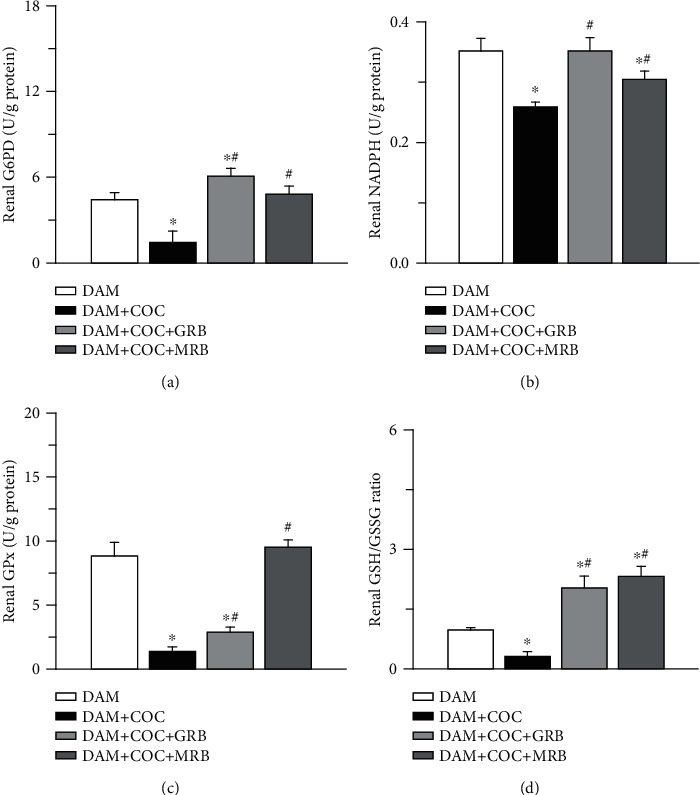
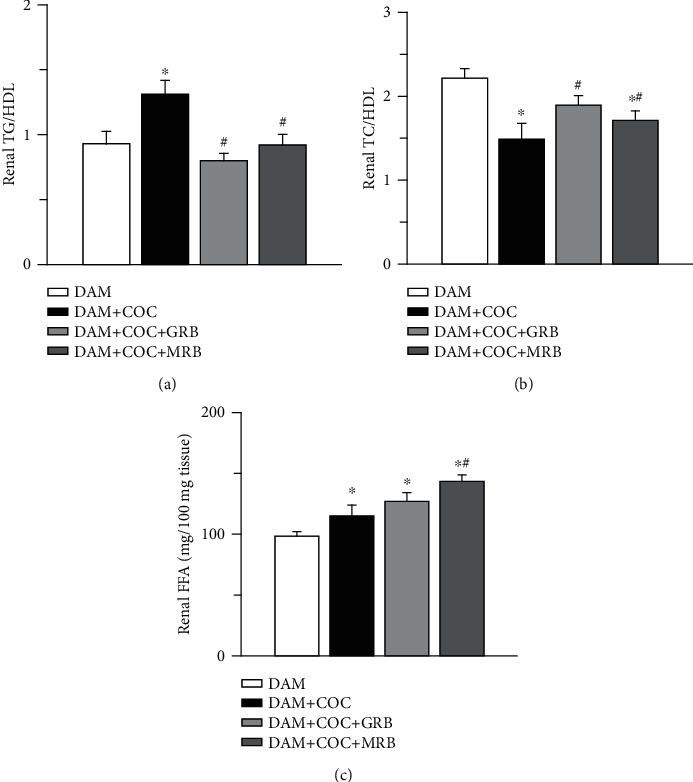
Results: Data showed that postpartum COC caused increased plasma creatinine and urea, increased renal triglyceride/high-density lipoprotein ratio, free fatty acid accumulation, alanine aminotransferase, gamma-glutamyltransferase, uric acid, and activities of renal XO and ADA. On the other hand, postpartum COC resulted in decreased plasma albumin, renal glutathione, and Na+-K+-ATPase activity with no effect on lactate production. However, MR or GR blockade ameliorated the alterations induced by postpartum COC treatment. The present results demonstrate that MR or GR blockade ameliorates postpartum COC-induced increased activities of ADA and xanthine oxidase and restores glutathione-dependent antioxidative defense.
Conclusion: These findings implicate the involvements of GR and MR in renal dysfunctions caused by COC in dams via disrupted glutathione antioxidative barrier.
期刊介绍:
ACS Applied Bio Materials is an interdisciplinary journal publishing original research covering all aspects of biomaterials and biointerfaces including and beyond the traditional biosensing, biomedical and therapeutic applications.
The journal is devoted to reports of new and original experimental and theoretical research of an applied nature that integrates knowledge in the areas of materials, engineering, physics, bioscience, and chemistry into important bio applications. The journal is specifically interested in work that addresses the relationship between structure and function and assesses the stability and degradation of materials under relevant environmental and biological conditions.




 京公网安备 11010802042870号
京ICP备2023020795号-1
京公网安备 11010802042870号
京ICP备2023020795号-1

 分享
分享
 求助内容:
求助内容: 应助结果提醒方式:
 扫码关注我们
