Wen-Cheng Zhou, Jiao Qu, Sheng-Yang Xie, Yang Sun, Hong-Wei Yao
{"title":"Mitochondrial Dysfunction in Chronic Respiratory Diseases: Implications for the Pathogenesis and Potential Therapeutics.","authors":"Wen-Cheng Zhou, Jiao Qu, Sheng-Yang Xie, Yang Sun, Hong-Wei Yao","doi":"10.1155/2021/5188306","DOIUrl":null,"url":null,"abstract":"<p><p>Mitochondria are indispensable for energy metabolism and cell signaling. Mitochondrial homeostasis is sustained with stabilization of mitochondrial membrane potential, balance of mitochondrial calcium, integrity of mitochondrial DNA, and timely clearance of damaged mitochondria via mitophagy. Mitochondrial dysfunction is featured by increased generation of mitochondrial reactive oxygen species, reduced mitochondrial membrane potential, mitochondrial calcium imbalance, mitochondrial DNA damage, and abnormal mitophagy. Accumulating evidence indicates that mitochondrial dysregulation causes oxidative stress, inflammasome activation, apoptosis, senescence, and metabolic reprogramming. All these cellular processes participate in the pathogenesis and progression of chronic respiratory diseases, including chronic obstructive pulmonary disease, pulmonary fibrosis, and asthma. In this review, we provide a comprehensive and updated overview of the impact of mitochondrial dysfunction on cellular processes involved in the development of these respiratory diseases. This not only implicates mechanisms of mitochondrial dysfunction for the pathogenesis of chronic lung diseases but also provides potential therapeutic approaches for these diseases by targeting dysfunctional mitochondria.</p>","PeriodicalId":19657,"journal":{"name":"Oxidative Medicine and Cellular Longevity","volume":" ","pages":"5188306"},"PeriodicalIF":0.0000,"publicationDate":"2021-07-27","publicationTypes":"Journal Article","fieldsOfStudy":null,"isOpenAccess":false,"openAccessPdf":"https://www.ncbi.nlm.nih.gov/pmc/articles/PMC8331273/pdf/","citationCount":"21","resultStr":null,"platform":"Semanticscholar","paperid":null,"PeriodicalName":"Oxidative Medicine and Cellular Longevity","FirstCategoryId":"99","ListUrlMain":"https://doi.org/10.1155/2021/5188306","RegionNum":2,"RegionCategory":"生物学","ArticlePicture":[],"TitleCN":null,"AbstractTextCN":null,"PMCID":null,"EPubDate":"2021/1/1 0:00:00","PubModel":"eCollection","JCR":"Q1","JCRName":"Biochemistry, Genetics and Molecular Biology","Score":null,"Total":0}
引用次数: 21
Abstract
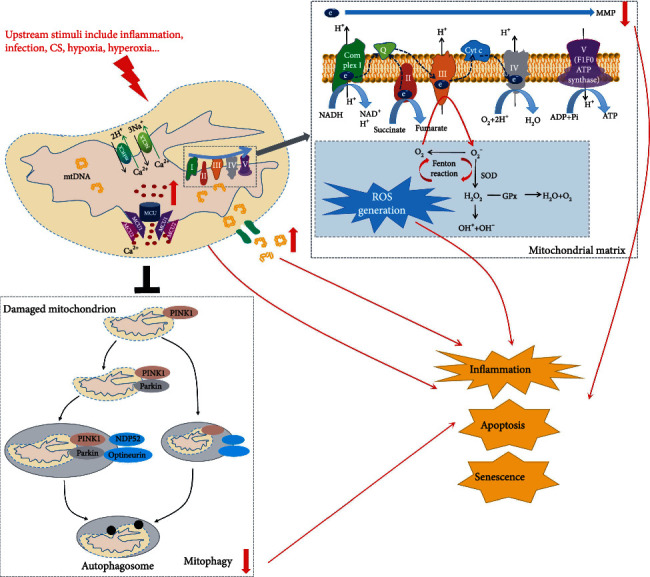
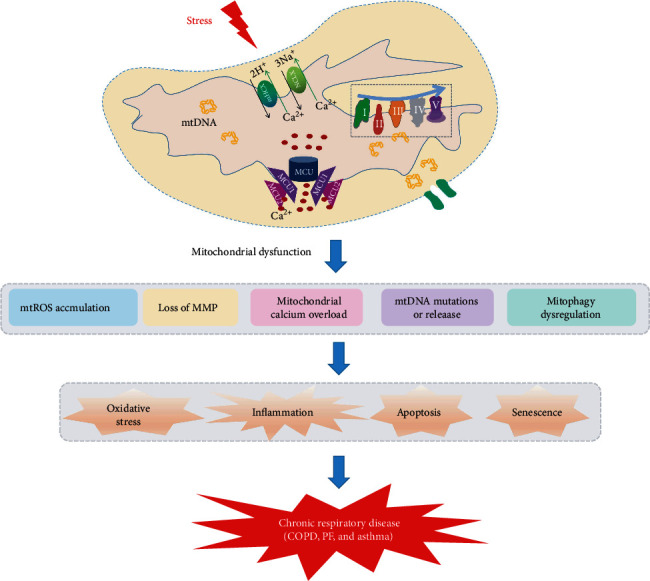
Mitochondria are indispensable for energy metabolism and cell signaling. Mitochondrial homeostasis is sustained with stabilization of mitochondrial membrane potential, balance of mitochondrial calcium, integrity of mitochondrial DNA, and timely clearance of damaged mitochondria via mitophagy. Mitochondrial dysfunction is featured by increased generation of mitochondrial reactive oxygen species, reduced mitochondrial membrane potential, mitochondrial calcium imbalance, mitochondrial DNA damage, and abnormal mitophagy. Accumulating evidence indicates that mitochondrial dysregulation causes oxidative stress, inflammasome activation, apoptosis, senescence, and metabolic reprogramming. All these cellular processes participate in the pathogenesis and progression of chronic respiratory diseases, including chronic obstructive pulmonary disease, pulmonary fibrosis, and asthma. In this review, we provide a comprehensive and updated overview of the impact of mitochondrial dysfunction on cellular processes involved in the development of these respiratory diseases. This not only implicates mechanisms of mitochondrial dysfunction for the pathogenesis of chronic lung diseases but also provides potential therapeutic approaches for these diseases by targeting dysfunctional mitochondria.
期刊介绍:
Oxidative Medicine and Cellular Longevity is a unique peer-reviewed, Open Access journal that publishes original research and review articles dealing with the cellular and molecular mechanisms of oxidative stress in the nervous system and related organ systems in relation to aging, immune function, vascular biology, metabolism, cellular survival and cellular longevity. Oxidative stress impacts almost all acute and chronic progressive disorders and on a cellular basis is intimately linked to aging, cardiovascular disease, cancer, immune function, metabolism and neurodegeneration. The journal fills a significant void in today’s scientific literature and serves as an international forum for the scientific community worldwide to translate pioneering “bench to bedside” research into clinical strategies.




 京公网安备 11010802042870号
京ICP备2023020795号-1
京公网安备 11010802042870号
京ICP备2023020795号-1

 分享
分享
 求助内容:
求助内容: 应助结果提醒方式:
 扫码关注我们
