Wenhui Zhang, Yingling Zhang, Simin Chen, Hong Zhang, Man Yuan, Lianbo Xiao, Yue Lu, Hongxi Xu
{"title":"Trigonelline, An Alkaloid From <i>Leonurus japonicus</i> Houtt., Suppresses Mast Cell Activation and OVA-Induced Allergic Asthma.","authors":"Wenhui Zhang, Yingling Zhang, Simin Chen, Hong Zhang, Man Yuan, Lianbo Xiao, Yue Lu, Hongxi Xu","doi":"10.3389/fphar.2021.687970","DOIUrl":null,"url":null,"abstract":"<p><p>Trigonelline, one of the active compounds from <i>Leonurus japonicus</i> Houtt., has been proven to have pharmacological value in diabetes, the central nervous system and cardiovascular diseases. Recent studies have shown that it may also be beneficial in controlling inflammation. However, the mechanism of the antiallergic effects of trigonelline has not been well studied. As the key effector cells participating in the development of allergies, mast cells have been linked to the pathogenesis of asthma for ages. In this study, we demonstrated the inhibitory effect of trigonelline on activated bone marrow-derived mast cells (BMMCs) and verified its anti-inflammatory properties using an ovalbumin (OVA)-induced asthma model. Trigonelline suppressed BMMC degranulation and decreased the production of the cytokines, prostaglandin D<sub>2</sub> (PGD<sub>2</sub>) and leukotriene C<sub>4</sub> (LTC<sub>4</sub>) in a dose-dependent manner. The potent mechanism is mainly through the suppression of the nuclear factor kappa B (NF-κB) and mitogen-activated protein kinase (MAPK) signaling pathways. Trigonelline can alleviate pathological damage in lung tissue and reduce the levels of serum immunoglobulin E (IgE) and T helper 2 (Th2) cytokines. RNA-seq results revealed the HIF-1α to be a potential target for the allergic reaction. Taken together, our study demonstrated that trigonelline can inhibit allergic inflammation <i>in vitro</i> and <i>in vivo</i>, which may provide a basis for novel anti-inflammatory drug development.</p>","PeriodicalId":4,"journal":{"name":"ACS Applied Energy Materials","volume":" ","pages":"687970"},"PeriodicalIF":5.5000,"publicationDate":"2021-08-04","publicationTypes":"Journal Article","fieldsOfStudy":null,"isOpenAccess":false,"openAccessPdf":"https://www.ncbi.nlm.nih.gov/pmc/articles/PMC8371462/pdf/","citationCount":"0","resultStr":null,"platform":"Semanticscholar","paperid":null,"PeriodicalName":"ACS Applied Energy Materials","FirstCategoryId":"3","ListUrlMain":"https://doi.org/10.3389/fphar.2021.687970","RegionNum":3,"RegionCategory":"材料科学","ArticlePicture":[],"TitleCN":null,"AbstractTextCN":null,"PMCID":null,"EPubDate":"2021/1/1 0:00:00","PubModel":"eCollection","JCR":"Q2","JCRName":"CHEMISTRY, PHYSICAL","Score":null,"Total":0}
引用次数: 0
Abstract
Trigonelline, one of the active compounds from Leonurus japonicus Houtt., has been proven to have pharmacological value in diabetes, the central nervous system and cardiovascular diseases. Recent studies have shown that it may also be beneficial in controlling inflammation. However, the mechanism of the antiallergic effects of trigonelline has not been well studied. As the key effector cells participating in the development of allergies, mast cells have been linked to the pathogenesis of asthma for ages. In this study, we demonstrated the inhibitory effect of trigonelline on activated bone marrow-derived mast cells (BMMCs) and verified its anti-inflammatory properties using an ovalbumin (OVA)-induced asthma model. Trigonelline suppressed BMMC degranulation and decreased the production of the cytokines, prostaglandin D2 (PGD2) and leukotriene C4 (LTC4) in a dose-dependent manner. The potent mechanism is mainly through the suppression of the nuclear factor kappa B (NF-κB) and mitogen-activated protein kinase (MAPK) signaling pathways. Trigonelline can alleviate pathological damage in lung tissue and reduce the levels of serum immunoglobulin E (IgE) and T helper 2 (Th2) cytokines. RNA-seq results revealed the HIF-1α to be a potential target for the allergic reaction. Taken together, our study demonstrated that trigonelline can inhibit allergic inflammation in vitro and in vivo, which may provide a basis for novel anti-inflammatory drug development.
期刊介绍:
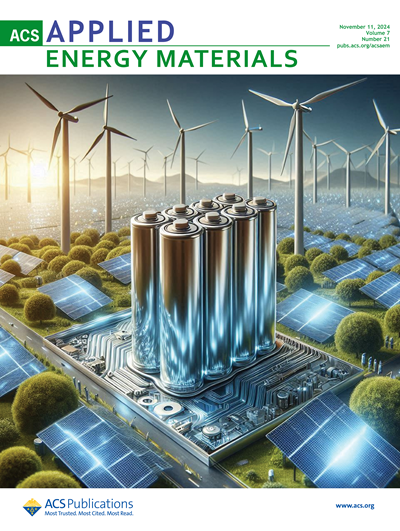
ACS Applied Energy Materials is an interdisciplinary journal publishing original research covering all aspects of materials, engineering, chemistry, physics and biology relevant to energy conversion and storage. The journal is devoted to reports of new and original experimental and theoretical research of an applied nature that integrate knowledge in the areas of materials, engineering, physics, bioscience, and chemistry into important energy applications.





 京公网安备 11010802042870号
京ICP备2023020795号-1
京公网安备 11010802042870号
京ICP备2023020795号-1

 分享
分享
 求助内容:
求助内容: 应助结果提醒方式:
 扫码关注我们
