Tobias Burkard, Caroline Dreis, Martina Herrero San Juan, Meik Huhn, Andreas Weigert, Josef M Pfeilschifter, Heinfried H Radeke
{"title":"Enhanced CXCR4 Expression of Human CD8<sup>Low</sup> T Lymphocytes Is Driven by S1P<sub>4</sub>.","authors":"Tobias Burkard, Caroline Dreis, Martina Herrero San Juan, Meik Huhn, Andreas Weigert, Josef M Pfeilschifter, Heinfried H Radeke","doi":"10.3389/fimmu.2021.668884","DOIUrl":null,"url":null,"abstract":"<p><p>Although the human immune response to cancer is naturally potent, it can be severely disrupted as a result of an immunosuppressive tumor microenvironment. Infiltrating regulatory T lymphocytes contribute to this immunosuppression by inhibiting proliferation of cytotoxic CD8<sup>+</sup> T lymphocytes, which are key to an effective anti-cancer immune response. Other important contributory factors are thought to include metabolic stress caused by the local nutrient deprivation common to many solid tumors. Interleukin-33 (IL-33), an alarmin released in reaction to cell damage, and sphingosine-1-phosphate (S1P) are known to control cell positioning and differentiation of T lymphocytes. In an <i>in vitro</i> model of nutrient deprivation, we investigated the influence of IL-33 and S1P receptor 4 (S1P<sub>4</sub>) on the differentiation and migration of human CD8<sup>+</sup> T lymphocytes. Serum starvation of CD8<sup>+</sup> T lymphocytes induced a subset of CD8<sup>Low</sup> and IL-33 receptor-positive (ST2L<sup>+</sup>) cells characterized by enhanced expression of the regulatory T cell markers CD38 and CD39. Both <i>S1P<sub>1</sub></i> and <i>S1P<sub>4</sub></i> were transcriptionally regulated after stimulation with IL-33. Moreover, expression of the chemokine receptor CXCR4 was increased in CD8<sup>+</sup> T lymphocytes treated with the selective S1P<sub>4</sub> receptor agonist CYM50308. We conclude that nutrient deprivation promotes CD8<sup>Low</sup> T lymphocytes, contributing to an immunosuppressive microenvironment and a poor anti-cancer immune response by limiting cytotoxic effector functions. Our results suggest that S1P<sub>4</sub> signaling modulation may be a promising target for anti-CXCR4 cancer immunotherapy.</p>","PeriodicalId":12622,"journal":{"name":"Frontiers in Immunology","volume":" ","pages":"668884"},"PeriodicalIF":5.9000,"publicationDate":"2021-08-24","publicationTypes":"Journal Article","fieldsOfStudy":null,"isOpenAccess":false,"openAccessPdf":"https://www.ncbi.nlm.nih.gov/pmc/articles/PMC8421764/pdf/","citationCount":"7","resultStr":null,"platform":"Semanticscholar","paperid":null,"PeriodicalName":"Frontiers in Immunology","FirstCategoryId":"3","ListUrlMain":"https://doi.org/10.3389/fimmu.2021.668884","RegionNum":2,"RegionCategory":"医学","ArticlePicture":[],"TitleCN":null,"AbstractTextCN":null,"PMCID":null,"EPubDate":"2021/1/1 0:00:00","PubModel":"eCollection","JCR":"Q1","JCRName":"IMMUNOLOGY","Score":null,"Total":0}
引用次数: 7
Abstract
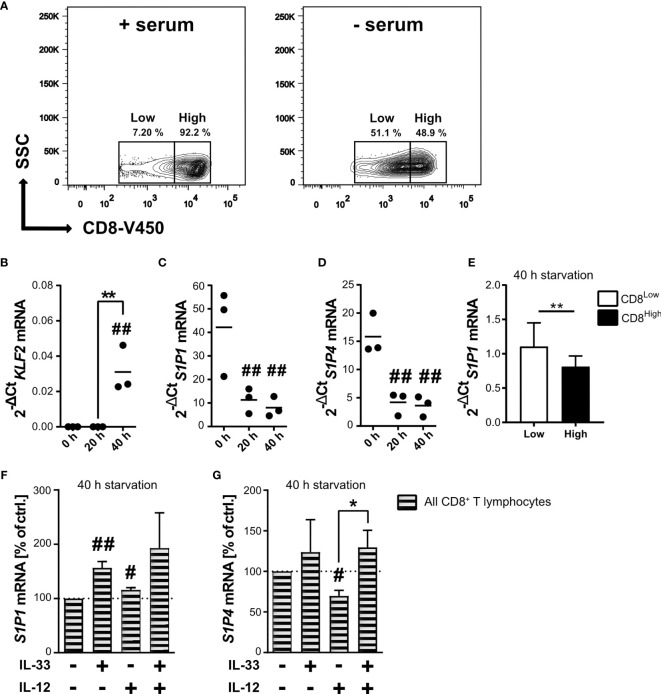
Although the human immune response to cancer is naturally potent, it can be severely disrupted as a result of an immunosuppressive tumor microenvironment. Infiltrating regulatory T lymphocytes contribute to this immunosuppression by inhibiting proliferation of cytotoxic CD8+ T lymphocytes, which are key to an effective anti-cancer immune response. Other important contributory factors are thought to include metabolic stress caused by the local nutrient deprivation common to many solid tumors. Interleukin-33 (IL-33), an alarmin released in reaction to cell damage, and sphingosine-1-phosphate (S1P) are known to control cell positioning and differentiation of T lymphocytes. In an in vitro model of nutrient deprivation, we investigated the influence of IL-33 and S1P receptor 4 (S1P4) on the differentiation and migration of human CD8+ T lymphocytes. Serum starvation of CD8+ T lymphocytes induced a subset of CD8Low and IL-33 receptor-positive (ST2L+) cells characterized by enhanced expression of the regulatory T cell markers CD38 and CD39. Both S1P1 and S1P4 were transcriptionally regulated after stimulation with IL-33. Moreover, expression of the chemokine receptor CXCR4 was increased in CD8+ T lymphocytes treated with the selective S1P4 receptor agonist CYM50308. We conclude that nutrient deprivation promotes CD8Low T lymphocytes, contributing to an immunosuppressive microenvironment and a poor anti-cancer immune response by limiting cytotoxic effector functions. Our results suggest that S1P4 signaling modulation may be a promising target for anti-CXCR4 cancer immunotherapy.
期刊介绍:
Frontiers in Immunology is a leading journal in its field, publishing rigorously peer-reviewed research across basic, translational and clinical immunology. This multidisciplinary open-access journal is at the forefront of disseminating and communicating scientific knowledge and impactful discoveries to researchers, academics, clinicians and the public worldwide.
Frontiers in Immunology is the official Journal of the International Union of Immunological Societies (IUIS). Encompassing the entire field of Immunology, this journal welcomes papers that investigate basic mechanisms of immune system development and function, with a particular emphasis given to the description of the clinical and immunological phenotype of human immune disorders, and on the definition of their molecular basis.






 京公网安备 11010802042870号
京ICP备2023020795号-1
京公网安备 11010802042870号
京ICP备2023020795号-1

 分享
分享
 求助内容:
求助内容: 应助结果提醒方式:
 扫码关注我们
