Prabhakar Semwal, Sakshi Painuli, Kartik M Painuli, Gizem Antika, Tugba Boyunegmez Tumer, Ashish Thapliyal, William N Setzer, Miquel Martorell, Mohammed M Alshehri, Yasaman Taheri, Sevgi Durna Daştan, Seyed Abdulmajid Ayatollahi, Anka Trajkovska Petkoska, Javad Sharifi-Rad, William C Cho
{"title":"<i>Diplazium esculentum</i> (Retz.) Sw.: Ethnomedicinal, Phytochemical, and Pharmacological Overview of the Himalayan Ferns.","authors":"Prabhakar Semwal, Sakshi Painuli, Kartik M Painuli, Gizem Antika, Tugba Boyunegmez Tumer, Ashish Thapliyal, William N Setzer, Miquel Martorell, Mohammed M Alshehri, Yasaman Taheri, Sevgi Durna Daştan, Seyed Abdulmajid Ayatollahi, Anka Trajkovska Petkoska, Javad Sharifi-Rad, William C Cho","doi":"10.1155/2021/1917890","DOIUrl":null,"url":null,"abstract":"<p><p>The genus <i>Diplazium</i> (family: Athyriaceae) comprises approximately 350 species of pteridophytes<i>. Diplazium esculentum</i> (Retz.) Sw. is an important member of this genus and commonly known as a wild vegetable in the Himalayan and sub-Himalayan communities. According to the literature analysis, <i>D. esculentum</i> was traditionally used for the prevention or treatment of several diseases such as diabetes, smallpox, asthma, diarrhea, rheumatism, dysentery, headache, fever, wounds, pain, measles, hypertension, constipation, oligospermia, bone fracture, and glandular swellings. Various extracts of <i>D. esculentum</i> were evaluated to elucidate their phytochemical and pharmacological activities. A wide array of pharmacological properties such as antioxidant, antimicrobial, antidiabetic, immunomodulatory, CNS stimulant, and antianaphylactic activities have been recognized in different parts of <i>D. esculentum</i>. The review covers a systematic examination of pharmacognosy, phytochemistry, and pharmacological applications of <i>D. esculentum</i>, but scientifically, it is not fully assessed regarding complete therapeutic effects, toxicity, and safety in the human body. The published literature on <i>D. esculentum</i> and its therapeutic properties were collected from different search engines including Wiley online, PubMed, Springer Link, Scopus, Science Direct, Web of Science, Google Scholar, and ACS publications by using specific terms such as \"<i>Diplazium esculentum,</i> bioactive compounds, biological activities and health benefits\" from 1984 to 2021 (March). Therefore, further studies are required to identify the detailed action mechanism of <i>D. esculentum in vitro/in vivo</i>, and also, more studies should focus on conservation, cultivation, and sustainable utilization of the species.</p>","PeriodicalId":19657,"journal":{"name":"Oxidative Medicine and Cellular Longevity","volume":" ","pages":"1917890"},"PeriodicalIF":0.0000,"publicationDate":"2021-09-02","publicationTypes":"Journal Article","fieldsOfStudy":null,"isOpenAccess":false,"openAccessPdf":"https://www.ncbi.nlm.nih.gov/pmc/articles/PMC8433033/pdf/","citationCount":"12","resultStr":null,"platform":"Semanticscholar","paperid":null,"PeriodicalName":"Oxidative Medicine and Cellular Longevity","FirstCategoryId":"99","ListUrlMain":"https://doi.org/10.1155/2021/1917890","RegionNum":2,"RegionCategory":"生物学","ArticlePicture":[],"TitleCN":null,"AbstractTextCN":null,"PMCID":null,"EPubDate":"2021/1/1 0:00:00","PubModel":"eCollection","JCR":"Q1","JCRName":"Biochemistry, Genetics and Molecular Biology","Score":null,"Total":0}
引用次数: 12
Abstract
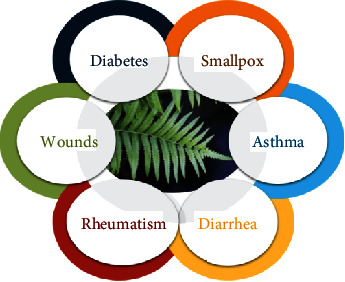
The genus Diplazium (family: Athyriaceae) comprises approximately 350 species of pteridophytes. Diplazium esculentum (Retz.) Sw. is an important member of this genus and commonly known as a wild vegetable in the Himalayan and sub-Himalayan communities. According to the literature analysis, D. esculentum was traditionally used for the prevention or treatment of several diseases such as diabetes, smallpox, asthma, diarrhea, rheumatism, dysentery, headache, fever, wounds, pain, measles, hypertension, constipation, oligospermia, bone fracture, and glandular swellings. Various extracts of D. esculentum were evaluated to elucidate their phytochemical and pharmacological activities. A wide array of pharmacological properties such as antioxidant, antimicrobial, antidiabetic, immunomodulatory, CNS stimulant, and antianaphylactic activities have been recognized in different parts of D. esculentum. The review covers a systematic examination of pharmacognosy, phytochemistry, and pharmacological applications of D. esculentum, but scientifically, it is not fully assessed regarding complete therapeutic effects, toxicity, and safety in the human body. The published literature on D. esculentum and its therapeutic properties were collected from different search engines including Wiley online, PubMed, Springer Link, Scopus, Science Direct, Web of Science, Google Scholar, and ACS publications by using specific terms such as "Diplazium esculentum, bioactive compounds, biological activities and health benefits" from 1984 to 2021 (March). Therefore, further studies are required to identify the detailed action mechanism of D. esculentum in vitro/in vivo, and also, more studies should focus on conservation, cultivation, and sustainable utilization of the species.
期刊介绍:
Oxidative Medicine and Cellular Longevity is a unique peer-reviewed, Open Access journal that publishes original research and review articles dealing with the cellular and molecular mechanisms of oxidative stress in the nervous system and related organ systems in relation to aging, immune function, vascular biology, metabolism, cellular survival and cellular longevity. Oxidative stress impacts almost all acute and chronic progressive disorders and on a cellular basis is intimately linked to aging, cardiovascular disease, cancer, immune function, metabolism and neurodegeneration. The journal fills a significant void in today’s scientific literature and serves as an international forum for the scientific community worldwide to translate pioneering “bench to bedside” research into clinical strategies.



 京公网安备 11010802042870号
京ICP备2023020795号-1
京公网安备 11010802042870号
京ICP备2023020795号-1

 分享
分享
 求助内容:
求助内容: 应助结果提醒方式:
 扫码关注我们
