{"title":"An Application of the Patient Rule-Induction Method to Detect Clinically Meaningful Subgroups from Failed Phase III Clinical Trials.","authors":"Greg Dyson","doi":"10.23937/2469-5831/1510038","DOIUrl":null,"url":null,"abstract":"<p><strong>Background: </strong>Phase III superiority clinical trials have negative results (new treatment is not statistically better than standard of care) due to a number of factors, including patient and disease heterogeneity. However, even a treatment regime that fails to show population-level clinical improvement will have a subgroup of patients that attain a measurable clinical benefit.</p><p><strong>Objective: </strong>The goal of this paper is to modify the Patient Rule-Induction Method to identify statistically significant subgroups, defined by clinical and/or demographic factors, of the clinical trial population where the experimental treatment performs better than the standard of care and better than observed in the entire clinical trial sample.</p><p><strong>Results: </strong>We illustrate this method using part A of the SUCCESS clinical trial, which showed no overall difference between treatment arms: HR (95% CI) = 0.97 (0.78, 1.20). Using PRIM, we identified one subgroup defined by the mutational profile in BRCA1 which resulted in a significant benefit for adding Gemcitabine to the standard treatment: HR (95% CI) = 0.59 (0.40, 0.87).</p><p><strong>Conclusion: </strong>This result demonstrates that useful information can be extracted from existing databases that could provide insight into why a phase III trial failed and assist in the design of future clinical trials involving the experimental treatment.</p>","PeriodicalId":91282,"journal":{"name":"International journal of clinical biostatistics and biometrics","volume":"7 1","pages":""},"PeriodicalIF":0.0000,"publicationDate":"2021-01-01","publicationTypes":"Journal Article","fieldsOfStudy":null,"isOpenAccess":false,"openAccessPdf":"https://www.ncbi.nlm.nih.gov/pmc/articles/PMC8496893/pdf/","citationCount":"0","resultStr":null,"platform":"Semanticscholar","paperid":null,"PeriodicalName":"International journal of clinical biostatistics and biometrics","FirstCategoryId":"1085","ListUrlMain":"https://doi.org/10.23937/2469-5831/1510038","RegionNum":0,"RegionCategory":null,"ArticlePicture":[],"TitleCN":null,"AbstractTextCN":null,"PMCID":null,"EPubDate":"2021/6/28 0:00:00","PubModel":"Epub","JCR":"","JCRName":"","Score":null,"Total":0}
引用次数: 0
Abstract
Background: Phase III superiority clinical trials have negative results (new treatment is not statistically better than standard of care) due to a number of factors, including patient and disease heterogeneity. However, even a treatment regime that fails to show population-level clinical improvement will have a subgroup of patients that attain a measurable clinical benefit.
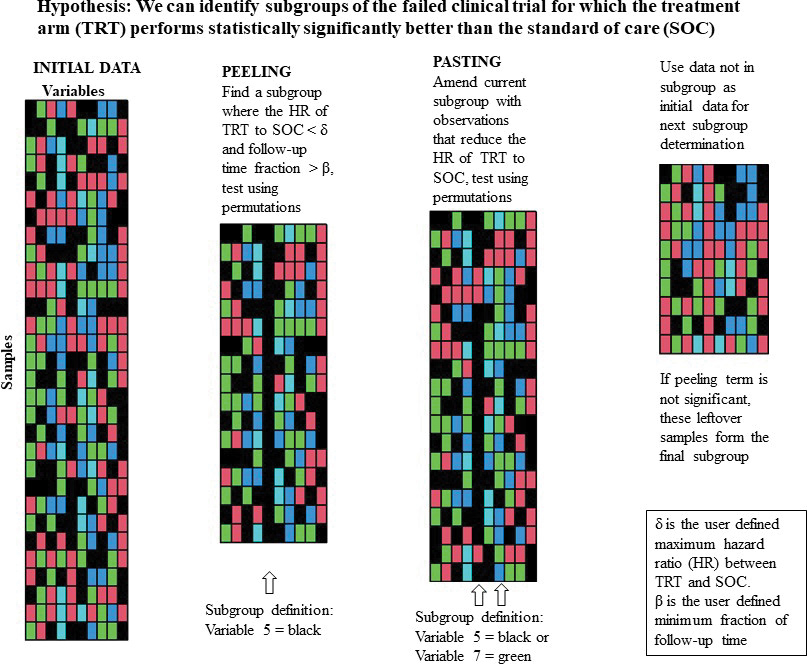
Objective: The goal of this paper is to modify the Patient Rule-Induction Method to identify statistically significant subgroups, defined by clinical and/or demographic factors, of the clinical trial population where the experimental treatment performs better than the standard of care and better than observed in the entire clinical trial sample.
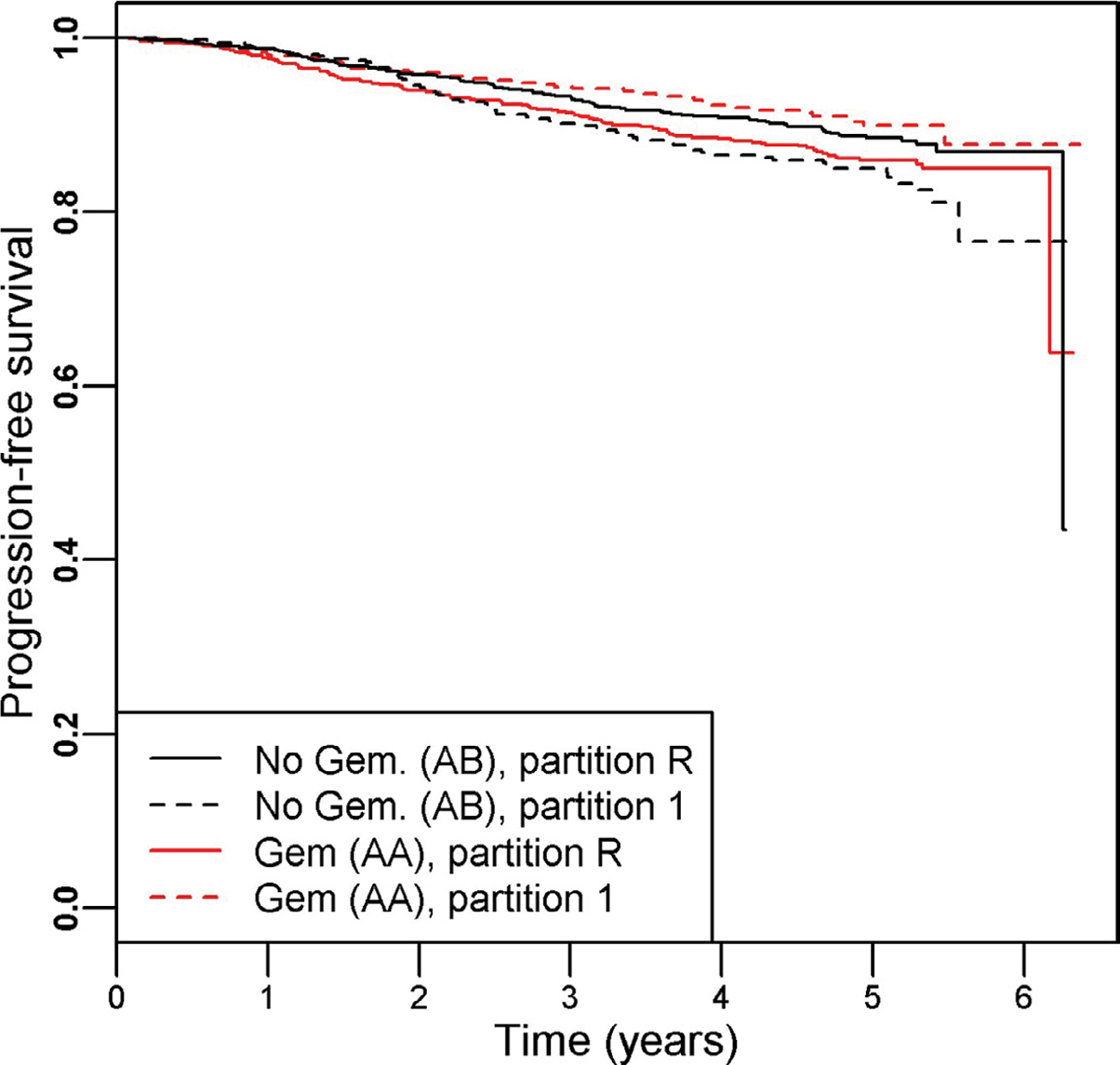
Results: We illustrate this method using part A of the SUCCESS clinical trial, which showed no overall difference between treatment arms: HR (95% CI) = 0.97 (0.78, 1.20). Using PRIM, we identified one subgroup defined by the mutational profile in BRCA1 which resulted in a significant benefit for adding Gemcitabine to the standard treatment: HR (95% CI) = 0.59 (0.40, 0.87).
Conclusion: This result demonstrates that useful information can be extracted from existing databases that could provide insight into why a phase III trial failed and assist in the design of future clinical trials involving the experimental treatment.



 京公网安备 11010802042870号
京ICP备2023020795号-1
京公网安备 11010802042870号
京ICP备2023020795号-1

 分享
分享

 求助内容:
求助内容: 应助结果提醒方式:
 扫码关注我们
