Chronic IL-1 Exposed AR+ PCa Cell Lines Show Conserved Loss of IL-1 Sensitivity and Evolve Both Conserved and Unique Differential Gene Expression Profiles.
Shayna E Thomas-Jardin, Mohammed S Kanchwala, Haley Dahl, Vivian Liu, Rohan Ahuja, Reshma Soundharrajan, Nicole Roos, Sydney Diep, Amrit Sandhu, Chao Xing, Nikki A Delk
{"title":"Chronic IL-1 Exposed AR<sup>+</sup> PCa Cell Lines Show Conserved Loss of IL-1 Sensitivity and Evolve Both Conserved and Unique Differential Gene Expression Profiles.","authors":"Shayna E Thomas-Jardin, Mohammed S Kanchwala, Haley Dahl, Vivian Liu, Rohan Ahuja, Reshma Soundharrajan, Nicole Roos, Sydney Diep, Amrit Sandhu, Chao Xing, Nikki A Delk","doi":"","DOIUrl":null,"url":null,"abstract":"<p><strong>Introduction: </strong>Inflammation drives prostate cancer (PCa) progression. While inflammation is a cancer hallmark, the underlying mechanisms mediating inflammation-induced PCa are still under investigation. Interleukin-1 (IL-1) is an inflammatory cytokine that promotes cancer progression, including PCa metastasis and castration resistance. We previously found that acute IL-1 exposure represses PCa <i>androgen receptor</i> (<i>AR</i>) expression concomitant with the upregulation of pro-survival proteins, causing <i>de novo</i> accumulation of castration-resistant PCa cells. However, acute inflammation is primarily anti-tumorigenic, while chronic inflammation is pro-tumorigenic. Thus, using the LNCaP PCa cell line as model, we found that PCa cells can evolve insensitivity to chronic IL-1 exposure, restoring AR and AR activity and acquiring castration resistance. In this paper we expanded our chronic IL-1 model to include the MDA-PCa-2b PCa cell line to investigate the response to acute versus chronic IL-1 exposure and to compare the gene expression patterns that evolve in the LNCaP and MDA-PCa-2b cells chronically exposed to IL-1.</p><p><strong>Methods: </strong>We chronically exposed MDA-PCa-2b cells to IL-1α or IL-1β for several months to establish sublines. Once established, we determined subline sensitivity to exogenous IL-1 using cell viability assay, RT-qPCR and western blot. RNA sequencing was performed for parental and subline cells and over representation analysis (ORA) for geneset enrichment of biological process/pathway was performed.</p><p><strong>Results: </strong>MDA-PCa-2b cells repress AR and AR activity in response to acute IL-1 exposure and evolve insensitivity to chronic IL-1 exposure. While cell biological and molecular response to acute IL-1 signaling is primarily conserved in LNCaP and MDA-PCa-2b cells, including upregulation of NF-κB signaling and downregulation of cell proliferation, the LNCaP and MDA-PCa-2b cells evolve conserved and unique molecular responses to chronic IL-1 signaling that may promote or support tumor progression.</p><p><strong>Conclusions: </strong>Our chronic IL-1 subline models can be used to identify underlying molecular mechanisms that mediate IL-1-induced PCa progression.</p>","PeriodicalId":73645,"journal":{"name":"Journal of cellular signaling","volume":"2 4","pages":"248-260"},"PeriodicalIF":0.0000,"publicationDate":"2021-12-01","publicationTypes":"Journal Article","fieldsOfStudy":null,"isOpenAccess":false,"openAccessPdf":"https://www.ncbi.nlm.nih.gov/pmc/articles/PMC8725614/pdf/","citationCount":"0","resultStr":null,"platform":"Semanticscholar","paperid":null,"PeriodicalName":"Journal of cellular signaling","FirstCategoryId":"1085","ListUrlMain":"","RegionNum":0,"RegionCategory":null,"ArticlePicture":[],"TitleCN":null,"AbstractTextCN":null,"PMCID":null,"EPubDate":"","PubModel":"","JCR":"","JCRName":"","Score":null,"Total":0}
引用次数: 0
Abstract
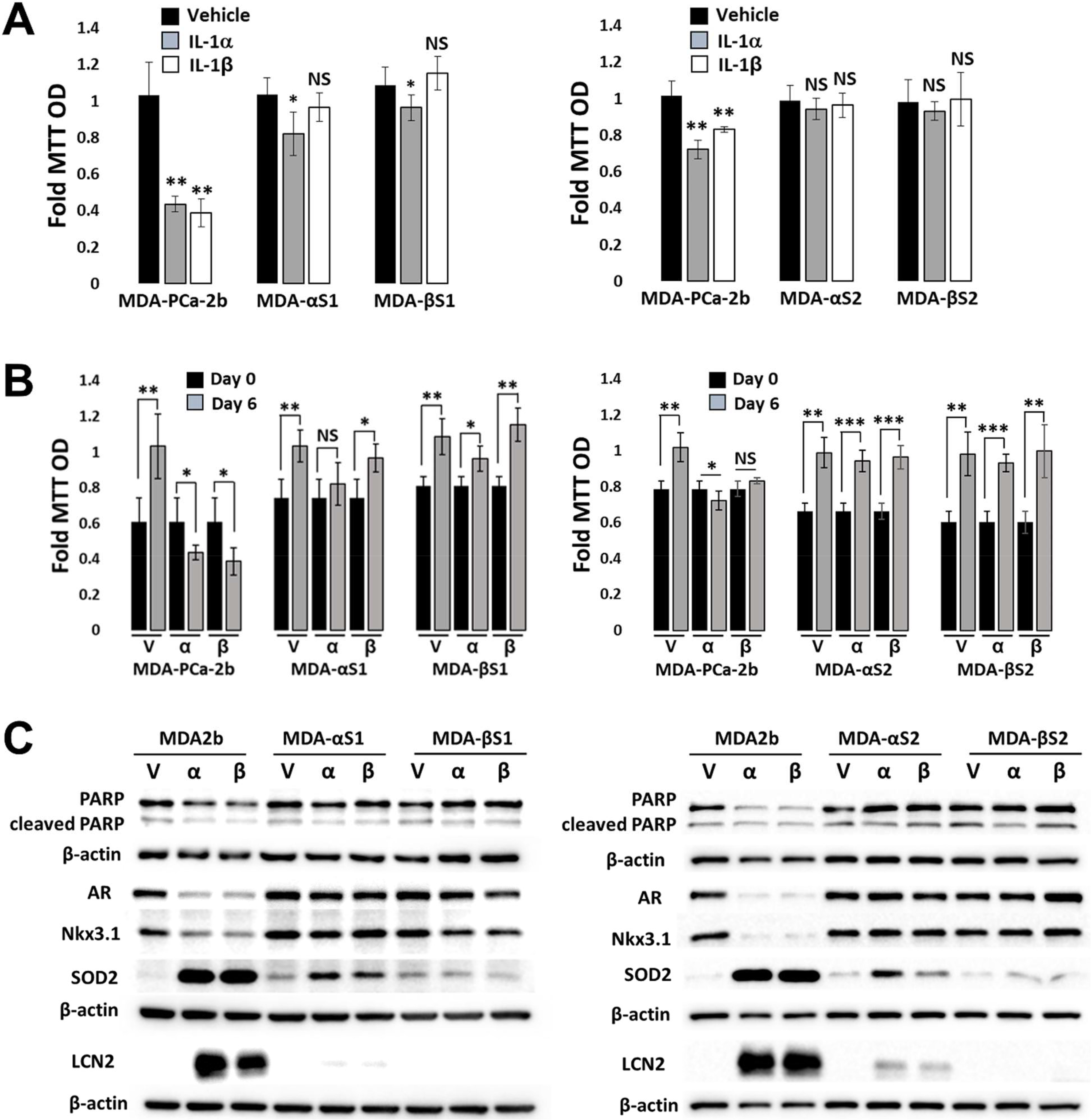
Introduction: Inflammation drives prostate cancer (PCa) progression. While inflammation is a cancer hallmark, the underlying mechanisms mediating inflammation-induced PCa are still under investigation. Interleukin-1 (IL-1) is an inflammatory cytokine that promotes cancer progression, including PCa metastasis and castration resistance. We previously found that acute IL-1 exposure represses PCa androgen receptor (AR) expression concomitant with the upregulation of pro-survival proteins, causing de novo accumulation of castration-resistant PCa cells. However, acute inflammation is primarily anti-tumorigenic, while chronic inflammation is pro-tumorigenic. Thus, using the LNCaP PCa cell line as model, we found that PCa cells can evolve insensitivity to chronic IL-1 exposure, restoring AR and AR activity and acquiring castration resistance. In this paper we expanded our chronic IL-1 model to include the MDA-PCa-2b PCa cell line to investigate the response to acute versus chronic IL-1 exposure and to compare the gene expression patterns that evolve in the LNCaP and MDA-PCa-2b cells chronically exposed to IL-1.
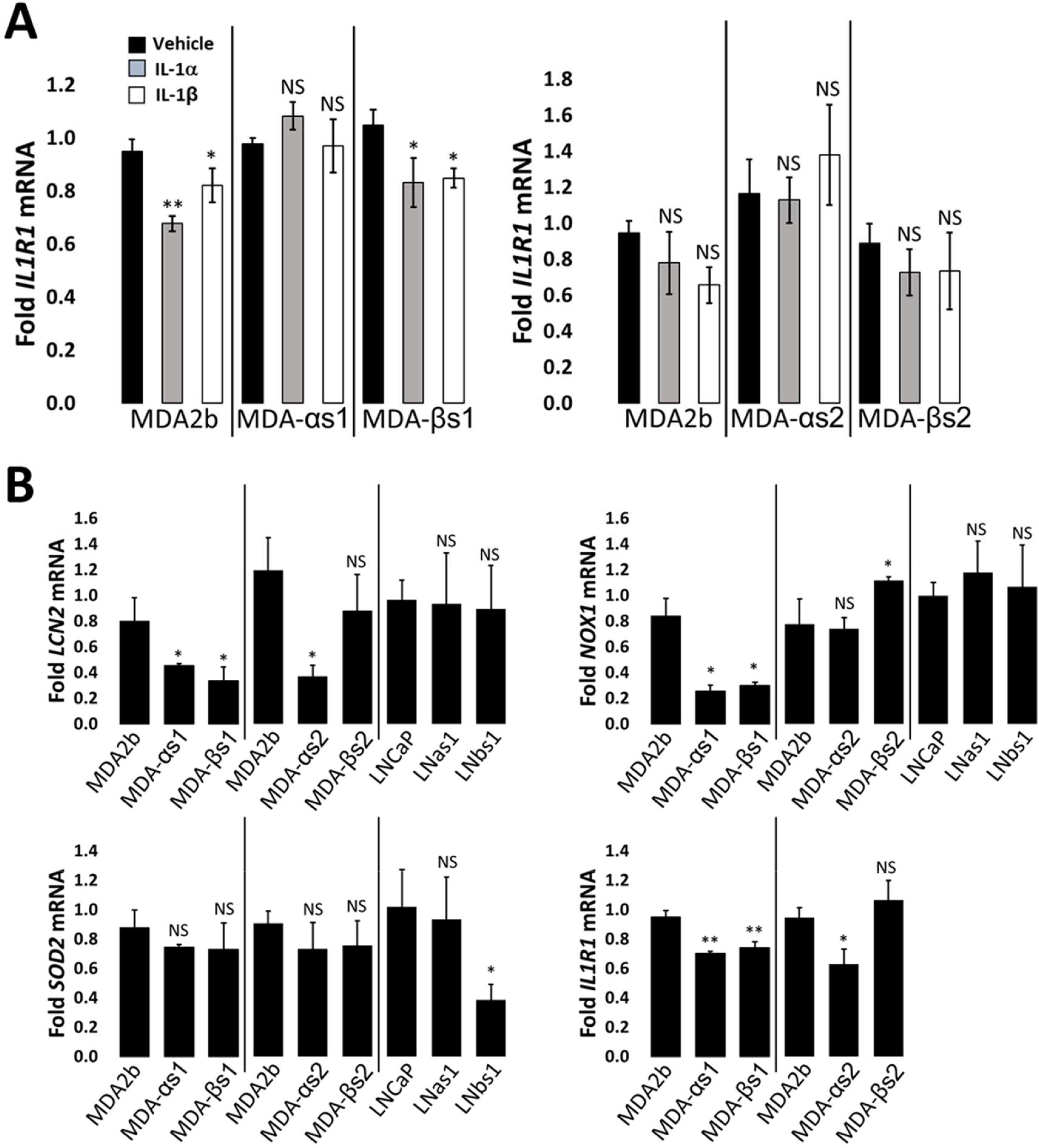
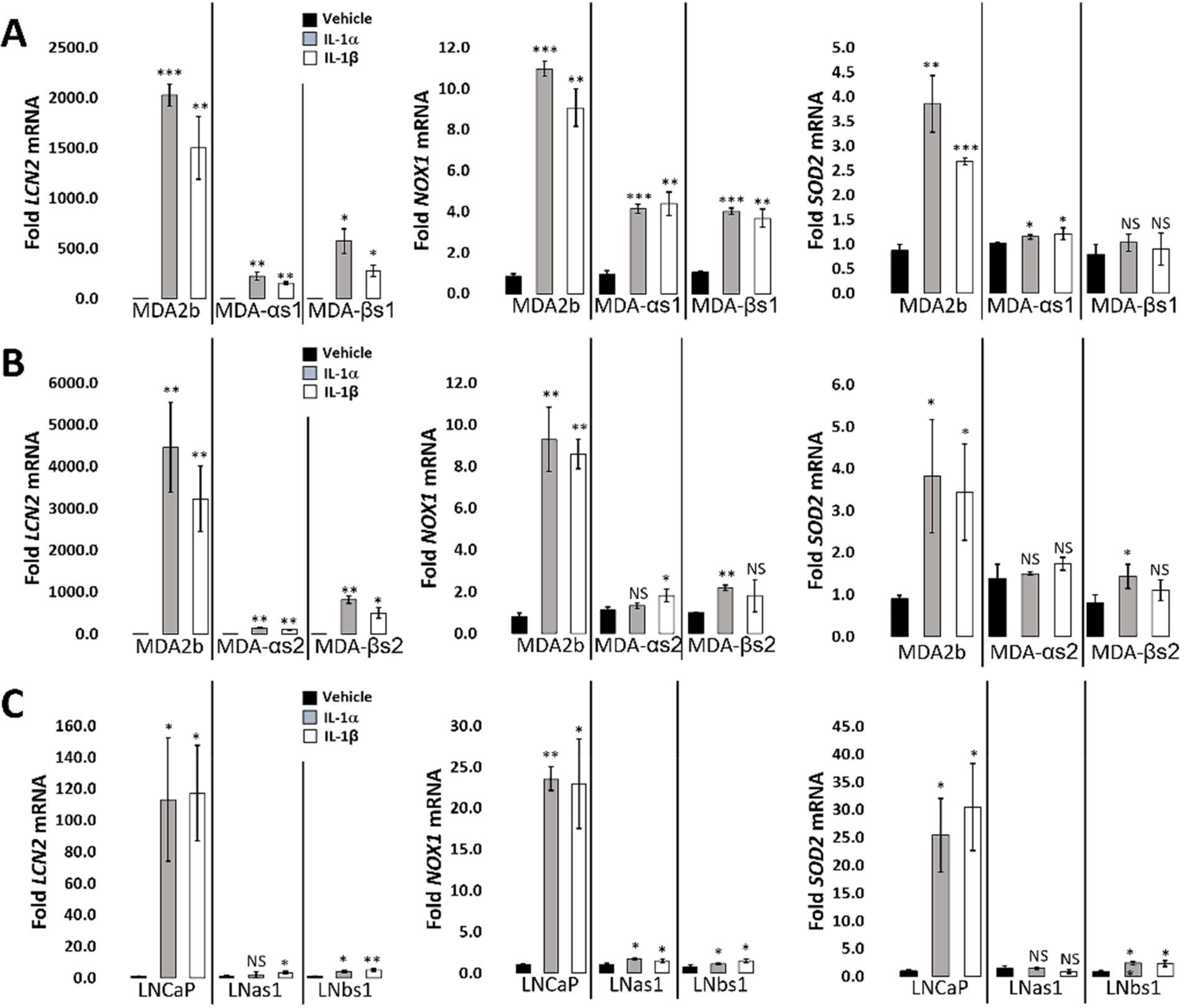
Methods: We chronically exposed MDA-PCa-2b cells to IL-1α or IL-1β for several months to establish sublines. Once established, we determined subline sensitivity to exogenous IL-1 using cell viability assay, RT-qPCR and western blot. RNA sequencing was performed for parental and subline cells and over representation analysis (ORA) for geneset enrichment of biological process/pathway was performed.
Results: MDA-PCa-2b cells repress AR and AR activity in response to acute IL-1 exposure and evolve insensitivity to chronic IL-1 exposure. While cell biological and molecular response to acute IL-1 signaling is primarily conserved in LNCaP and MDA-PCa-2b cells, including upregulation of NF-κB signaling and downregulation of cell proliferation, the LNCaP and MDA-PCa-2b cells evolve conserved and unique molecular responses to chronic IL-1 signaling that may promote or support tumor progression.
Conclusions: Our chronic IL-1 subline models can be used to identify underlying molecular mechanisms that mediate IL-1-induced PCa progression.
 分享
分享



 京公网安备 11010802042870号
京ICP备2023020795号-1
京公网安备 11010802042870号
京ICP备2023020795号-1


 求助内容:
求助内容: 应助结果提醒方式:
 扫码关注我们
