Vendela M Scheer, Malin Bergman Jungeström, Lena Serrander, Johan H Scheer, Anders Kalén
{"title":"The pencil eraser swab technique to quantify <i>Cutibacterium acnes</i> on shoulder skin.","authors":"Vendela M Scheer, Malin Bergman Jungeström, Lena Serrander, Johan H Scheer, Anders Kalén","doi":"10.5194/jbji-6-451-2021","DOIUrl":null,"url":null,"abstract":"<p><p><b>Introduction</b>: <i>Cutibacterium acnes</i> is the most common cause of postoperative infections in orthopaedic shoulder surgery and is hard to eradicate with current measures. Newer strategies focus on reducing bacterial load on the skin before surgery. Several previous studies have used a large number of both described and undescribed sampling techniques. The purpose of this study was to compare three previously described swab techniques to obtain bacterial cultures: Levine's (L) technique, the Z technique and the pencil eraser swab (PES) technique. <b>Methods</b>: Three consecutive skin swabs were collected from the right shoulder, on 15 healthy male volunteers, using Levine's technique, Z technique and PES technique from each participant. To determine the number of living bacteria, serial dilutions were made, and after culturing for 5 d, viable count (VC) was expressed as CFU/mL (with CFU representing colony-forming unit). <b>Results</b>: The PES technique yielded significantly higher VC than the two others. PES: median 3700 CFU/mL, L: 200 CFU/mL and Z: 220 CFU/mL ( <math><mrow><mi>p</mi> <mo>=</mo> <mn>0.003</mn></mrow> </math> ). There was no significant difference between the methods regarding the number of positive cultures. PES: 14/15, L: 11/15 and Z: 12/15. <b>Conclusions</b>: There is a need to harmonise sampling techniques of <i>C. acnes</i> in order to compare the efficacy of different measures to reduce the bacterial load on the skin before and during surgery. Of the three tested methods, the PES technique is simple and produces the highest bacterial counts.</p>","PeriodicalId":1,"journal":{"name":"Accounts of Chemical Research","volume":" ","pages":"451-456"},"PeriodicalIF":17.7000,"publicationDate":"2021-12-17","publicationTypes":"Journal Article","fieldsOfStudy":null,"isOpenAccess":false,"openAccessPdf":"https://www.ncbi.nlm.nih.gov/pmc/articles/PMC8738962/pdf/","citationCount":"0","resultStr":null,"platform":"Semanticscholar","paperid":null,"PeriodicalName":"Accounts of Chemical Research","FirstCategoryId":"1085","ListUrlMain":"https://doi.org/10.5194/jbji-6-451-2021","RegionNum":1,"RegionCategory":"化学","ArticlePicture":[],"TitleCN":null,"AbstractTextCN":null,"PMCID":null,"EPubDate":"2021/1/1 0:00:00","PubModel":"eCollection","JCR":"Q1","JCRName":"CHEMISTRY, MULTIDISCIPLINARY","Score":null,"Total":0}
引用次数: 0
Abstract
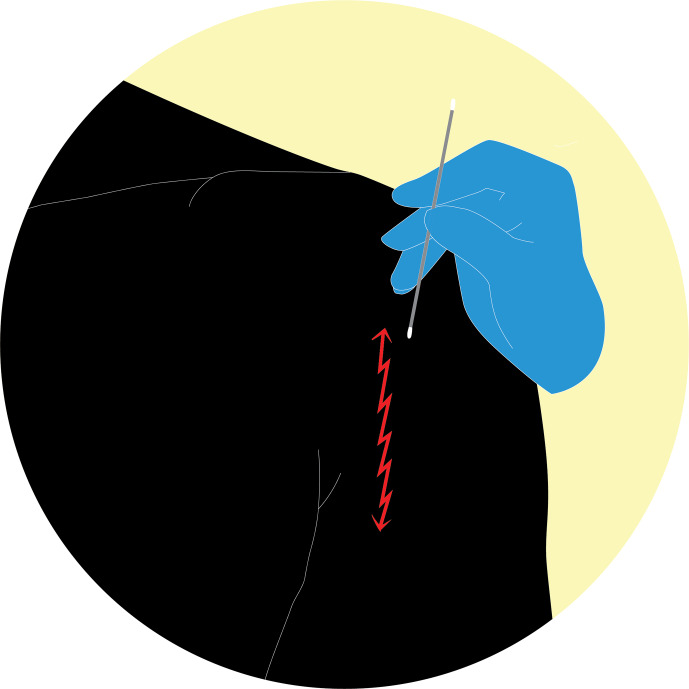
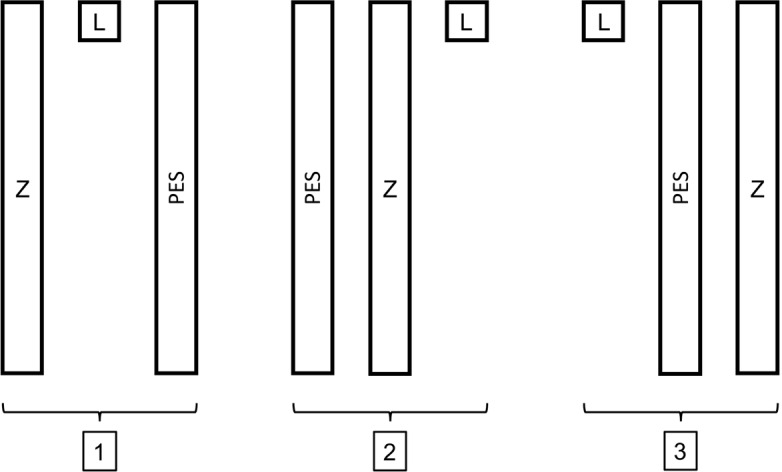
Introduction: Cutibacterium acnes is the most common cause of postoperative infections in orthopaedic shoulder surgery and is hard to eradicate with current measures. Newer strategies focus on reducing bacterial load on the skin before surgery. Several previous studies have used a large number of both described and undescribed sampling techniques. The purpose of this study was to compare three previously described swab techniques to obtain bacterial cultures: Levine's (L) technique, the Z technique and the pencil eraser swab (PES) technique. Methods: Three consecutive skin swabs were collected from the right shoulder, on 15 healthy male volunteers, using Levine's technique, Z technique and PES technique from each participant. To determine the number of living bacteria, serial dilutions were made, and after culturing for 5 d, viable count (VC) was expressed as CFU/mL (with CFU representing colony-forming unit). Results: The PES technique yielded significantly higher VC than the two others. PES: median 3700 CFU/mL, L: 200 CFU/mL and Z: 220 CFU/mL ( ). There was no significant difference between the methods regarding the number of positive cultures. PES: 14/15, L: 11/15 and Z: 12/15. Conclusions: There is a need to harmonise sampling techniques of C. acnes in order to compare the efficacy of different measures to reduce the bacterial load on the skin before and during surgery. Of the three tested methods, the PES technique is simple and produces the highest bacterial counts.
期刊介绍:
Accounts of Chemical Research presents short, concise and critical articles offering easy-to-read overviews of basic research and applications in all areas of chemistry and biochemistry. These short reviews focus on research from the author’s own laboratory and are designed to teach the reader about a research project. In addition, Accounts of Chemical Research publishes commentaries that give an informed opinion on a current research problem. Special Issues online are devoted to a single topic of unusual activity and significance.
Accounts of Chemical Research replaces the traditional article abstract with an article "Conspectus." These entries synopsize the research affording the reader a closer look at the content and significance of an article. Through this provision of a more detailed description of the article contents, the Conspectus enhances the article's discoverability by search engines and the exposure for the research.




 京公网安备 11010802042870号
京ICP备2023020795号-1
京公网安备 11010802042870号
京ICP备2023020795号-1

 分享
分享
 求助内容:
求助内容: 应助结果提醒方式:
 扫码关注我们
