Psychometric Properties of The Clinician Affective Reactivity Index for Assessment of Irritability in a Clinical Sample of Turkish Children and Adolescents.
{"title":"Psychometric Properties of The Clinician Affective Reactivity Index for Assessment of Irritability in a Clinical Sample of Turkish Children and Adolescents.","authors":"Serkan Turan, Çağatay Ermiş, Şafak Eray, Büşra Ece Yavuz, Simge Uzman, Mutlu Muhammed Ozbek, Mustafa Tunçtürk, Remzi Oğulcan Çıray, Neslihan İnal","doi":"10.2478/sjcapp-2022-0002","DOIUrl":null,"url":null,"abstract":"<p><strong>Background: </strong>No clinician-oriented scale exists to assess irritability in Turkey. This pilot study aimed to evaluate the psychometric properties of the Turkish version of The Clinician Affective Reactivity Index (CL-ARI).</p><p><strong>Method: </strong>A total of 116 children and adolescents aged between 10 to 17 years (14.1 ± 2.1 years) were recruited from the psychiatric outpatient clinics. The participants completed a set of scales (Strengths and Difficulties Questionnaire [SDQ], Affective Reactivity Index [ARI], Revised Child Anxiety and Depression Scale, Swanson, Nolan, and Pelham, Version IV Scale). Diagnostic interviews were administered to confirm psychiatric diagnoses. Cronbach's alpha was calculated to assess internal consistency. Discriminant validity was further tested using independent sample t-test and Receiver Operating Characteristic curves. Interrater reliability was tested using intraclass correlation coefficients (ICC). Convergent validity was also tested using Pearson's correlation.</p><p><strong>Results: </strong>Cronbach's alpha values of CL-ARI were 0.919 total score, 0.842 for the temper outbursts score, 0.861 for the irritable mood score, and 0.840 for the impairment score. ICC values for interrater reliability were high for the temper outbursts (r = 0.993), the irritable mood (r = 0.993), the impairment (r = 0.917), and the total score (r = 0.991). In the sample, there was a high level of correlation between the self-report ARI-child/parent form and the CL-ARI total and subscale scores. Likewise, moderate-high level of correlations were found between the behavioral SDQ child/parent forms and the CL-ARI total and subscale scores.</p><p><strong>Conclusions: </strong>This is the Turkish validation of the CL-ARI, a dedicated interview and rating scale to assess irritability in the clinical sample. The results of this study suggest that the Turkish version of CL-ARI has adequate internal consistency and interrater reliability, and sufficient convergent and discriminant validity to be used in research settings.</p>","PeriodicalId":1,"journal":{"name":"Accounts of Chemical Research","volume":" ","pages":"24-32"},"PeriodicalIF":17.7000,"publicationDate":"2022-03-30","publicationTypes":"Journal Article","fieldsOfStudy":null,"isOpenAccess":false,"openAccessPdf":"https://ftp.ncbi.nlm.nih.gov/pub/pmc/oa_pdf/96/75/sjcapp-10-024.PMC9154355.pdf","citationCount":"0","resultStr":null,"platform":"Semanticscholar","paperid":null,"PeriodicalName":"Accounts of Chemical Research","FirstCategoryId":"1085","ListUrlMain":"https://doi.org/10.2478/sjcapp-2022-0002","RegionNum":1,"RegionCategory":"化学","ArticlePicture":[],"TitleCN":null,"AbstractTextCN":null,"PMCID":null,"EPubDate":"2022/1/1 0:00:00","PubModel":"eCollection","JCR":"Q1","JCRName":"CHEMISTRY, MULTIDISCIPLINARY","Score":null,"Total":0}
引用次数: 0
Abstract
Background: No clinician-oriented scale exists to assess irritability in Turkey. This pilot study aimed to evaluate the psychometric properties of the Turkish version of The Clinician Affective Reactivity Index (CL-ARI).
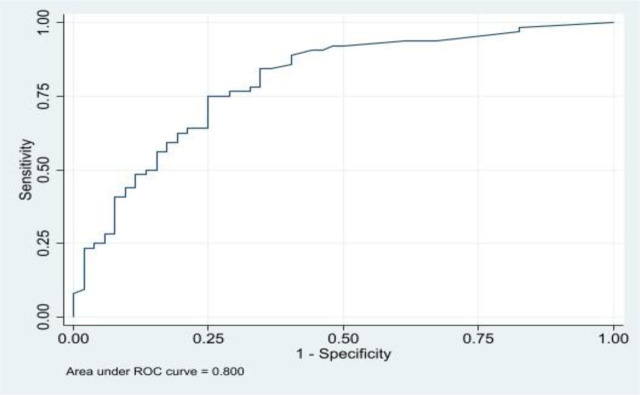
Method: A total of 116 children and adolescents aged between 10 to 17 years (14.1 ± 2.1 years) were recruited from the psychiatric outpatient clinics. The participants completed a set of scales (Strengths and Difficulties Questionnaire [SDQ], Affective Reactivity Index [ARI], Revised Child Anxiety and Depression Scale, Swanson, Nolan, and Pelham, Version IV Scale). Diagnostic interviews were administered to confirm psychiatric diagnoses. Cronbach's alpha was calculated to assess internal consistency. Discriminant validity was further tested using independent sample t-test and Receiver Operating Characteristic curves. Interrater reliability was tested using intraclass correlation coefficients (ICC). Convergent validity was also tested using Pearson's correlation.
Results: Cronbach's alpha values of CL-ARI were 0.919 total score, 0.842 for the temper outbursts score, 0.861 for the irritable mood score, and 0.840 for the impairment score. ICC values for interrater reliability were high for the temper outbursts (r = 0.993), the irritable mood (r = 0.993), the impairment (r = 0.917), and the total score (r = 0.991). In the sample, there was a high level of correlation between the self-report ARI-child/parent form and the CL-ARI total and subscale scores. Likewise, moderate-high level of correlations were found between the behavioral SDQ child/parent forms and the CL-ARI total and subscale scores.
Conclusions: This is the Turkish validation of the CL-ARI, a dedicated interview and rating scale to assess irritability in the clinical sample. The results of this study suggest that the Turkish version of CL-ARI has adequate internal consistency and interrater reliability, and sufficient convergent and discriminant validity to be used in research settings.
期刊介绍:
Accounts of Chemical Research presents short, concise and critical articles offering easy-to-read overviews of basic research and applications in all areas of chemistry and biochemistry. These short reviews focus on research from the author’s own laboratory and are designed to teach the reader about a research project. In addition, Accounts of Chemical Research publishes commentaries that give an informed opinion on a current research problem. Special Issues online are devoted to a single topic of unusual activity and significance.
Accounts of Chemical Research replaces the traditional article abstract with an article "Conspectus." These entries synopsize the research affording the reader a closer look at the content and significance of an article. Through this provision of a more detailed description of the article contents, the Conspectus enhances the article's discoverability by search engines and the exposure for the research.





 京公网安备 11010802042870号
京ICP备2023020795号-1
京公网安备 11010802042870号
京ICP备2023020795号-1

 分享
分享
 求助内容:
求助内容: 应助结果提醒方式:
 扫码关注我们
