{"title":"Codimension-2 parameter space structure of continuous-time recurrent neural networks.","authors":"Randall D Beer","doi":"10.1007/s00422-022-00938-5","DOIUrl":null,"url":null,"abstract":"<p><p>If we are ever to move beyond the study of isolated special cases in theoretical neuroscience, we need to develop more general theories of neural circuits over a given neural model. The present paper considers this challenge in the context of continuous-time recurrent neural networks (CTRNNs), a simple but dynamically universal model that has been widely utilized in both computational neuroscience and neural networks. Here, we extend previous work on the parameter space structure of codimension-1 local bifurcations in CTRNNs to include codimension-2 local bifurcation manifolds. Specifically, we derive the necessary conditions for all generic local codimension-2 bifurcations for general CTRNNs, specialize these conditions to circuits containing from one to four neurons, illustrate in full detail the application of these conditions to example circuits, derive closed-form expressions for these bifurcation manifolds where possible, and demonstrate how this analysis allows us to find and trace several global codimension-1 bifurcation manifolds that originate from the codimension-2 bifurcations.</p>","PeriodicalId":55374,"journal":{"name":"Biological Cybernetics","volume":" ","pages":"501-515"},"PeriodicalIF":1.6000,"publicationDate":"2022-08-01","publicationTypes":"Journal Article","fieldsOfStudy":null,"isOpenAccess":false,"openAccessPdf":"","citationCount":"2","resultStr":null,"platform":"Semanticscholar","paperid":null,"PeriodicalName":"Biological Cybernetics","FirstCategoryId":"5","ListUrlMain":"https://doi.org/10.1007/s00422-022-00938-5","RegionNum":4,"RegionCategory":"工程技术","ArticlePicture":[],"TitleCN":null,"AbstractTextCN":null,"PMCID":null,"EPubDate":"2022/6/20 0:00:00","PubModel":"Epub","JCR":"Q3","JCRName":"COMPUTER SCIENCE, CYBERNETICS","Score":null,"Total":0}
引用次数: 2
Abstract
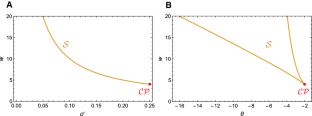
If we are ever to move beyond the study of isolated special cases in theoretical neuroscience, we need to develop more general theories of neural circuits over a given neural model. The present paper considers this challenge in the context of continuous-time recurrent neural networks (CTRNNs), a simple but dynamically universal model that has been widely utilized in both computational neuroscience and neural networks. Here, we extend previous work on the parameter space structure of codimension-1 local bifurcations in CTRNNs to include codimension-2 local bifurcation manifolds. Specifically, we derive the necessary conditions for all generic local codimension-2 bifurcations for general CTRNNs, specialize these conditions to circuits containing from one to four neurons, illustrate in full detail the application of these conditions to example circuits, derive closed-form expressions for these bifurcation manifolds where possible, and demonstrate how this analysis allows us to find and trace several global codimension-1 bifurcation manifolds that originate from the codimension-2 bifurcations.
期刊介绍:
Biological Cybernetics is an interdisciplinary medium for theoretical and application-oriented aspects of information processing in organisms, including sensory, motor, cognitive, and ecological phenomena. Topics covered include: mathematical modeling of biological systems; computational, theoretical or engineering studies with relevance for understanding biological information processing; and artificial implementation of biological information processing and self-organizing principles. Under the main aspects of performance and function of systems, emphasis is laid on communication between life sciences and technical/theoretical disciplines.



 京公网安备 11010802042870号
京ICP备2023020795号-1
京公网安备 11010802042870号
京ICP备2023020795号-1

 分享
分享
 求助内容:
求助内容: 应助结果提醒方式:
 扫码关注我们
