Joshua Weidlich, Derya Orhan Göksün, Karel Kreijns
{"title":"Extending social presence theory: social presence divergence and interaction integration in online distance learning.","authors":"Joshua Weidlich, Derya Orhan Göksün, Karel Kreijns","doi":"10.1007/s12528-022-09325-2","DOIUrl":null,"url":null,"abstract":"<p><p>Social presence is an important concept for understanding psychosocial processes in learning scenarios that make extensive use of mediated communication like online distance learning. Despite this centrality, a coherent and nuanced theory of social presence is yet to emerge from the literature. Past research has shown associations with desirable affective variables like satisfaction and perceived learning, yet our knowledge as to when and for whom these effects are expected is still very limited. By introducing two contextual explanatory variables, we provide the means toward a more mature theory of social presence. The first variable, social presence divergence, relates students experiences to their preferences, yielding three distinct scenarios: too little, too much, and just the right amount of social presence. The second variable, interaction integration, considers the centrality of social interaction in the learning scenario, suggesting that this functions as a moderator. In a sample of teacher education students (N = 305), we find evidence that these variables interact with social presence and affective dependent variables as expected. These results add nuance and context to the discussion about the practical relevance of social presence. The implications of these findings as well as limitations of this study are discussed.</p>","PeriodicalId":4,"journal":{"name":"ACS Applied Energy Materials","volume":" ","pages":"1-22"},"PeriodicalIF":5.5000,"publicationDate":"2022-06-16","publicationTypes":"Journal Article","fieldsOfStudy":null,"isOpenAccess":false,"openAccessPdf":"https://www.ncbi.nlm.nih.gov/pmc/articles/PMC9201792/pdf/","citationCount":"0","resultStr":null,"platform":"Semanticscholar","paperid":null,"PeriodicalName":"ACS Applied Energy Materials","FirstCategoryId":"95","ListUrlMain":"https://doi.org/10.1007/s12528-022-09325-2","RegionNum":3,"RegionCategory":"材料科学","ArticlePicture":[],"TitleCN":null,"AbstractTextCN":null,"PMCID":null,"EPubDate":"","PubModel":"","JCR":"Q2","JCRName":"CHEMISTRY, PHYSICAL","Score":null,"Total":0}
引用次数: 0
Abstract
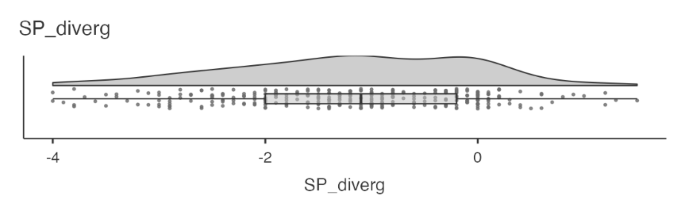
Social presence is an important concept for understanding psychosocial processes in learning scenarios that make extensive use of mediated communication like online distance learning. Despite this centrality, a coherent and nuanced theory of social presence is yet to emerge from the literature. Past research has shown associations with desirable affective variables like satisfaction and perceived learning, yet our knowledge as to when and for whom these effects are expected is still very limited. By introducing two contextual explanatory variables, we provide the means toward a more mature theory of social presence. The first variable, social presence divergence, relates students experiences to their preferences, yielding three distinct scenarios: too little, too much, and just the right amount of social presence. The second variable, interaction integration, considers the centrality of social interaction in the learning scenario, suggesting that this functions as a moderator. In a sample of teacher education students (N = 305), we find evidence that these variables interact with social presence and affective dependent variables as expected. These results add nuance and context to the discussion about the practical relevance of social presence. The implications of these findings as well as limitations of this study are discussed.
期刊介绍:
ACS Applied Energy Materials is an interdisciplinary journal publishing original research covering all aspects of materials, engineering, chemistry, physics and biology relevant to energy conversion and storage. The journal is devoted to reports of new and original experimental and theoretical research of an applied nature that integrate knowledge in the areas of materials, engineering, physics, bioscience, and chemistry into important energy applications.



 京公网安备 11010802042870号
京ICP备2023020795号-1
京公网安备 11010802042870号
京ICP备2023020795号-1

 分享
分享
 求助内容:
求助内容: 应助结果提醒方式:
 扫码关注我们
