Luuk A M J Crins, Niek J M Opdam, Cees M Kreulen, Bernadette A M M Sterenborg, Ewald M Bronkhorst, Wietska A Fokkinga, Marie-Charlotte D N J M Huysmans, Bas A C Loomans
{"title":"Prospective Study on CAD/CAM Nano-Ceramic (Composite) Restorations in the Treatment of Severe Tooth Wear.","authors":"Luuk A M J Crins, Niek J M Opdam, Cees M Kreulen, Bernadette A M M Sterenborg, Ewald M Bronkhorst, Wietska A Fokkinga, Marie-Charlotte D N J M Huysmans, Bas A C Loomans","doi":"10.3290/j.jad.b2838137","DOIUrl":null,"url":null,"abstract":"<p><strong>Purpose: </strong>The aim of this prospective study was to evaluate the clinical performance of minimally invasive, CAD/CAM nano-ceramic (composite) restorations in patients with severe tooth wear, the effect of the restorative treatment on the oral health-related quality of life (OHRQoL), and the etiology of tooth wear as a risk factor for restoration failure.</p><p><strong>Materials and methods: </strong>Patients with generalized severe tooth wear were included. Restorations (LAVA Ultimate, 3M Oral Care) were cemented (RelyX Ultimate, 3M Oral Care) on all teeth and were evaluated after 1 month and 1 year. OHRQoL was assessed via questionnaires at baseline and after 1 year. Differences were evaluated (paired t-test). Two mechanical tooth-wear lesions resulting from tooth-tooth contact, and 3 chemical tooth wear lesions resulting from intrinsic or extrinsic acids dissolving natural hard tooth substance, were evaluated to assess the etiology of tooth wear in association with restoration failure using multilevel logistic regression analyses (p < 0.05).</p><p><strong>Results: </strong>Twenty-one patients (age: 41.7 ± 10.4 years) were evaluated after 1 year (13.5 ± 1.2 months). 568 indirect CAD/CAM restorations were placed. None were replaced or lost. Twelve were repaired and 10 were refurbished. Success rates were 100% to 97.2%. Questionnaires showed a significant positive impact of the treatment on OHRQoL (p < 0.001). The presence of mechanical lesions did not pose a higher risk for restoration failure (p = 0.78). The presence of chemical lesions showed a lower risk of restoration failure (p = 0.002).</p><p><strong>Conclusion: </strong>The use of minimally invasive, CAD/CAM nano-ceramic (composite) restorations in the restorative treatment of severely worn dentitions showed satisfactory results in the short term.</p>","PeriodicalId":2,"journal":{"name":"ACS Applied Bio Materials","volume":" ","pages":"105-116"},"PeriodicalIF":4.7000,"publicationDate":"2022-03-24","publicationTypes":"Journal Article","fieldsOfStudy":null,"isOpenAccess":false,"openAccessPdf":"https://www.ncbi.nlm.nih.gov/pmc/articles/PMC11734267/pdf/","citationCount":"0","resultStr":null,"platform":"Semanticscholar","paperid":null,"PeriodicalName":"ACS Applied Bio Materials","FirstCategoryId":"1085","ListUrlMain":"https://doi.org/10.3290/j.jad.b2838137","RegionNum":0,"RegionCategory":null,"ArticlePicture":[],"TitleCN":null,"AbstractTextCN":null,"PMCID":null,"EPubDate":"","PubModel":"","JCR":"Q2","JCRName":"MATERIALS SCIENCE, BIOMATERIALS","Score":null,"Total":0}
引用次数: 0
Abstract
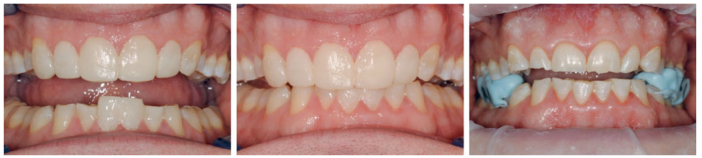
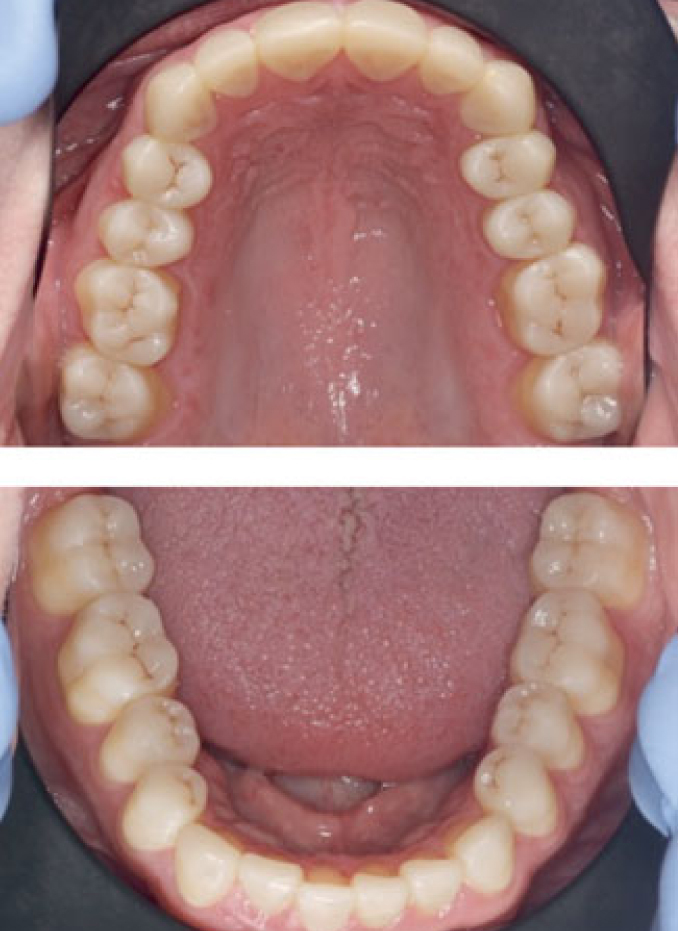
Purpose: The aim of this prospective study was to evaluate the clinical performance of minimally invasive, CAD/CAM nano-ceramic (composite) restorations in patients with severe tooth wear, the effect of the restorative treatment on the oral health-related quality of life (OHRQoL), and the etiology of tooth wear as a risk factor for restoration failure.
Materials and methods: Patients with generalized severe tooth wear were included. Restorations (LAVA Ultimate, 3M Oral Care) were cemented (RelyX Ultimate, 3M Oral Care) on all teeth and were evaluated after 1 month and 1 year. OHRQoL was assessed via questionnaires at baseline and after 1 year. Differences were evaluated (paired t-test). Two mechanical tooth-wear lesions resulting from tooth-tooth contact, and 3 chemical tooth wear lesions resulting from intrinsic or extrinsic acids dissolving natural hard tooth substance, were evaluated to assess the etiology of tooth wear in association with restoration failure using multilevel logistic regression analyses (p < 0.05).
Results: Twenty-one patients (age: 41.7 ± 10.4 years) were evaluated after 1 year (13.5 ± 1.2 months). 568 indirect CAD/CAM restorations were placed. None were replaced or lost. Twelve were repaired and 10 were refurbished. Success rates were 100% to 97.2%. Questionnaires showed a significant positive impact of the treatment on OHRQoL (p < 0.001). The presence of mechanical lesions did not pose a higher risk for restoration failure (p = 0.78). The presence of chemical lesions showed a lower risk of restoration failure (p = 0.002).
Conclusion: The use of minimally invasive, CAD/CAM nano-ceramic (composite) restorations in the restorative treatment of severely worn dentitions showed satisfactory results in the short term.
期刊介绍:
ACS Applied Bio Materials is an interdisciplinary journal publishing original research covering all aspects of biomaterials and biointerfaces including and beyond the traditional biosensing, biomedical and therapeutic applications.
The journal is devoted to reports of new and original experimental and theoretical research of an applied nature that integrates knowledge in the areas of materials, engineering, physics, bioscience, and chemistry into important bio applications. The journal is specifically interested in work that addresses the relationship between structure and function and assesses the stability and degradation of materials under relevant environmental and biological conditions.





 京公网安备 11010802042870号
京ICP备2023020795号-1
京公网安备 11010802042870号
京ICP备2023020795号-1

 分享
分享
 求助内容:
求助内容: 应助结果提醒方式:
 扫码关注我们
