{"title":"Effects of Hydrofluoric Acid Concentration and Etching Time on the Bond Strength to Ceramic-coated Zirconia.","authors":"Chunxiao Jin, Jingrong Wang, Yutian Huang, Ping Yu, Yuhuan Xiong, Haiyang Yu, Shanshan Gao","doi":"10.3290/j.jad.b2838165","DOIUrl":null,"url":null,"abstract":"<p><strong>Purpose: </strong>To evaluate the effects of different hydrofluoric acid (HF) concentrations and etching times on the surface topography, roughness, and resin bond strength to ceramic-coated zirconia (CC), and to compare them with the effects of alumina air-abrasion combined with 10-MDP (AA).</p><p><strong>Materials and methods: </strong>AA and CC specimens were divided into 12 groups (N = 10). The CC groups were etched with HF at different concentrations (5% or 9.5%) for various durations (0 min, 1 min, 2 min, 3 min, 5 min or 10 min). The surface morphology was analyzed using SEM. Energy-dispersive x-ray spectroscopy (EDS) and x-ray diffraction (XRD) were performed for chemical and crystalline-phase analyses. Surface roughness (Ra) and shear bond strength (SBS) were recorded and statistically analyzed.</p><p><strong>Results: </strong>The SBS of CC groups initially increased, but then decreased with etching time for both HF acid concentrations. The 9.5% HF group displayed more marked topographical changes and higher Ra compared with the 5% HF group for the same etching period. Mean SBS was lower in the AA group compared with the CC groups etched with 5% HF for 2-10 min and 9.5% HF for 1-3 min (p < 0.05).</p><p><strong>Conclusions: </strong>Different HF concentrations and etching times influenced the surface topography, roughness, and resin bond strength of/to ceramic-coated zirconia. Etching with 5% HF for 5 min and with 9.5% HF for 2 min, respectively, provided the highest SBS.</p>","PeriodicalId":2,"journal":{"name":"ACS Applied Bio Materials","volume":" ","pages":"125-136"},"PeriodicalIF":4.7000,"publicationDate":"2022-03-24","publicationTypes":"Journal Article","fieldsOfStudy":null,"isOpenAccess":false,"openAccessPdf":"https://www.ncbi.nlm.nih.gov/pmc/articles/PMC11734276/pdf/","citationCount":"0","resultStr":null,"platform":"Semanticscholar","paperid":null,"PeriodicalName":"ACS Applied Bio Materials","FirstCategoryId":"1085","ListUrlMain":"https://doi.org/10.3290/j.jad.b2838165","RegionNum":0,"RegionCategory":null,"ArticlePicture":[],"TitleCN":null,"AbstractTextCN":null,"PMCID":null,"EPubDate":"","PubModel":"","JCR":"Q2","JCRName":"MATERIALS SCIENCE, BIOMATERIALS","Score":null,"Total":0}
引用次数: 0
Abstract
Purpose: To evaluate the effects of different hydrofluoric acid (HF) concentrations and etching times on the surface topography, roughness, and resin bond strength to ceramic-coated zirconia (CC), and to compare them with the effects of alumina air-abrasion combined with 10-MDP (AA).
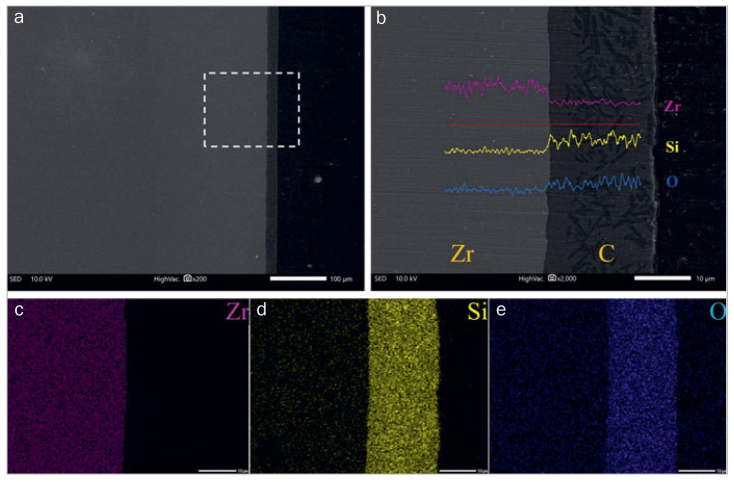
Materials and methods: AA and CC specimens were divided into 12 groups (N = 10). The CC groups were etched with HF at different concentrations (5% or 9.5%) for various durations (0 min, 1 min, 2 min, 3 min, 5 min or 10 min). The surface morphology was analyzed using SEM. Energy-dispersive x-ray spectroscopy (EDS) and x-ray diffraction (XRD) were performed for chemical and crystalline-phase analyses. Surface roughness (Ra) and shear bond strength (SBS) were recorded and statistically analyzed.
Results: The SBS of CC groups initially increased, but then decreased with etching time for both HF acid concentrations. The 9.5% HF group displayed more marked topographical changes and higher Ra compared with the 5% HF group for the same etching period. Mean SBS was lower in the AA group compared with the CC groups etched with 5% HF for 2-10 min and 9.5% HF for 1-3 min (p < 0.05).
Conclusions: Different HF concentrations and etching times influenced the surface topography, roughness, and resin bond strength of/to ceramic-coated zirconia. Etching with 5% HF for 5 min and with 9.5% HF for 2 min, respectively, provided the highest SBS.
期刊介绍:
ACS Applied Bio Materials is an interdisciplinary journal publishing original research covering all aspects of biomaterials and biointerfaces including and beyond the traditional biosensing, biomedical and therapeutic applications.
The journal is devoted to reports of new and original experimental and theoretical research of an applied nature that integrates knowledge in the areas of materials, engineering, physics, bioscience, and chemistry into important bio applications. The journal is specifically interested in work that addresses the relationship between structure and function and assesses the stability and degradation of materials under relevant environmental and biological conditions.






 京公网安备 11010802042870号
京ICP备2023020795号-1
京公网安备 11010802042870号
京ICP备2023020795号-1

 分享
分享
 求助内容:
求助内容: 应助结果提醒方式:
 扫码关注我们
