Influence of β1 Adrenergic Receptor Genotype on Longitudinal Measures of Left Ventricular Ejection Fraction and Responsiveness to ß-Blocker Therapy in Patients With Duchenne Muscular Dystrophy.
Eli F Kelley, Troy J Cross, Craig M McDonald, Cinrg Investigators, Eric P Hoffman, Christopher F Spurney, Luca Bello
{"title":"Influence of β<sub>1</sub> Adrenergic Receptor Genotype on Longitudinal Measures of Left Ventricular Ejection Fraction and Responsiveness to ß-Blocker Therapy in Patients With Duchenne Muscular Dystrophy.","authors":"Eli F Kelley, Troy J Cross, Craig M McDonald, Cinrg Investigators, Eric P Hoffman, Christopher F Spurney, Luca Bello","doi":"10.1177/11795468221116838","DOIUrl":null,"url":null,"abstract":"<p><p>The purpose of this study was to determine whether the longitudinal progression of decline in left ventricular ejection fraction (LVEF) in Duchenne muscular dystrophy (DMD) patients is moderated by ADRB1 genotype and whether the efficacy of ß-blocker therapy is influenced by genotype status. About 147 DMD patients (6-34 years.) were analyzed with a focus on β<sub>1</sub> adrenergic receptor (ADRB1) genotype variants. Patients were grouped by ADRB1 genotype resulting in Gly389 patients and Arg389 patients. A generalized additive mixed effects model was used to examine differences in the nonlinear trend of LVEF across patient ages between genotype groups and for ß-blocker use. Both genotype groups displayed a progressive decline in LVEF starting around the mean age of ambulation loss (~12 years). However, there was no difference between genotype groups in the progression of decline in LVEF. There was a significant effect of ß-blocker use on longitudinal LVEF, wherein patients on ß-blockers had systematically lower LVEF when compared to patients not on ß-blockers. However, the effect of ß-blocker therapy on LVEF was not affected by ADRB1 genotype. The current study did <i>not</i> demonstrate an influence of patient <i>ADRB1</i> genotype on longitudinal LVEF in our cohort. Despite previous literature suggesting a positive influence of ß-blocker use on cardiac function in DMD patients and of an <i>ADRB1</i> genotypic difference in responsiveness to ß-blocker use, we did not observe this in our cohort. Interestingly, our cohort did not demonstrate a positive influence of ß-blocker use on LVEF measures.</p>","PeriodicalId":2,"journal":{"name":"ACS Applied Bio Materials","volume":" ","pages":"11795468221116838"},"PeriodicalIF":4.7000,"publicationDate":"2022-08-23","publicationTypes":"Journal Article","fieldsOfStudy":null,"isOpenAccess":false,"openAccessPdf":"https://ftp.ncbi.nlm.nih.gov/pub/pmc/oa_pdf/61/5c/10.1177_11795468221116838.PMC9421016.pdf","citationCount":"0","resultStr":null,"platform":"Semanticscholar","paperid":null,"PeriodicalName":"ACS Applied Bio Materials","FirstCategoryId":"1085","ListUrlMain":"https://doi.org/10.1177/11795468221116838","RegionNum":0,"RegionCategory":null,"ArticlePicture":[],"TitleCN":null,"AbstractTextCN":null,"PMCID":null,"EPubDate":"2022/1/1 0:00:00","PubModel":"eCollection","JCR":"Q2","JCRName":"MATERIALS SCIENCE, BIOMATERIALS","Score":null,"Total":0}
引用次数: 0
Abstract
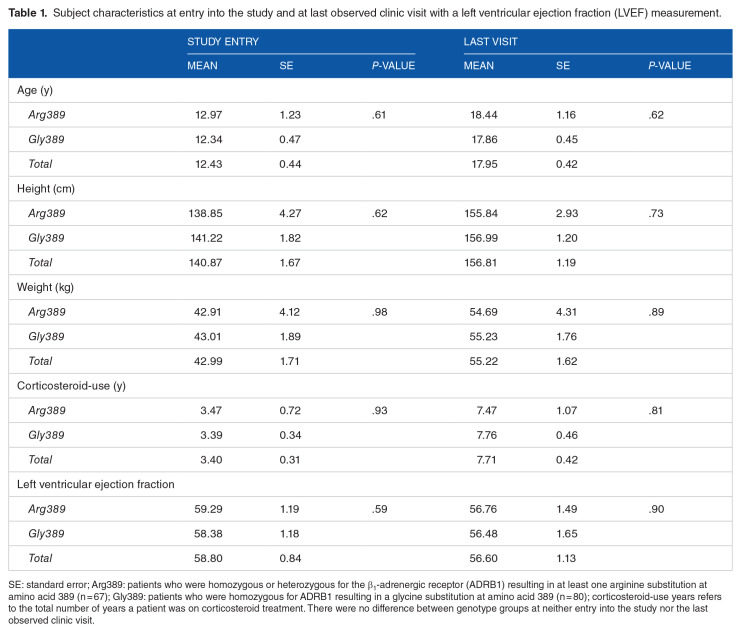
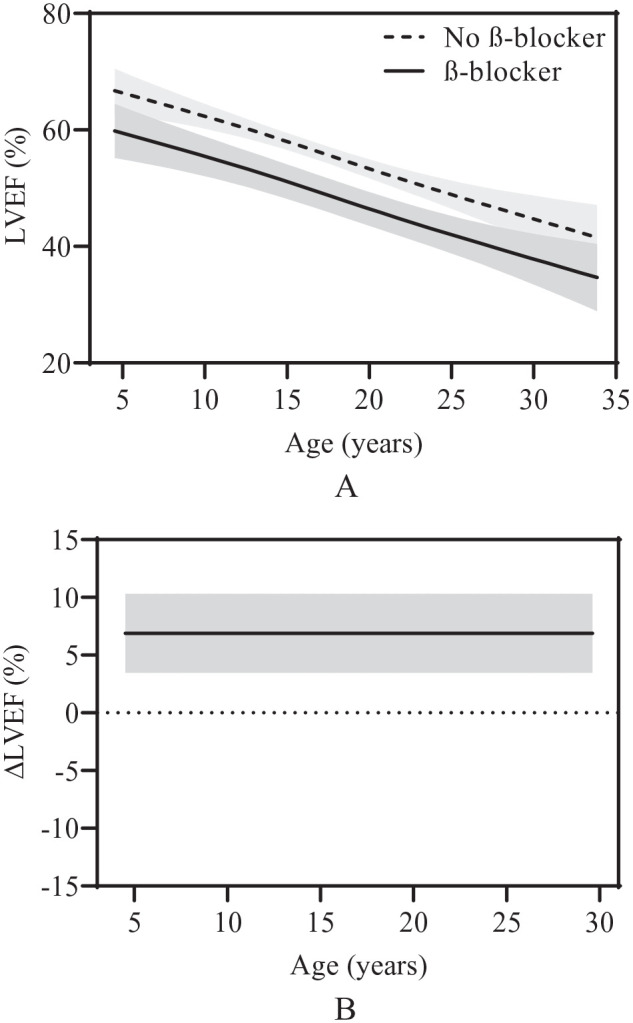
The purpose of this study was to determine whether the longitudinal progression of decline in left ventricular ejection fraction (LVEF) in Duchenne muscular dystrophy (DMD) patients is moderated by ADRB1 genotype and whether the efficacy of ß-blocker therapy is influenced by genotype status. About 147 DMD patients (6-34 years.) were analyzed with a focus on β1 adrenergic receptor (ADRB1) genotype variants. Patients were grouped by ADRB1 genotype resulting in Gly389 patients and Arg389 patients. A generalized additive mixed effects model was used to examine differences in the nonlinear trend of LVEF across patient ages between genotype groups and for ß-blocker use. Both genotype groups displayed a progressive decline in LVEF starting around the mean age of ambulation loss (~12 years). However, there was no difference between genotype groups in the progression of decline in LVEF. There was a significant effect of ß-blocker use on longitudinal LVEF, wherein patients on ß-blockers had systematically lower LVEF when compared to patients not on ß-blockers. However, the effect of ß-blocker therapy on LVEF was not affected by ADRB1 genotype. The current study did not demonstrate an influence of patient ADRB1 genotype on longitudinal LVEF in our cohort. Despite previous literature suggesting a positive influence of ß-blocker use on cardiac function in DMD patients and of an ADRB1 genotypic difference in responsiveness to ß-blocker use, we did not observe this in our cohort. Interestingly, our cohort did not demonstrate a positive influence of ß-blocker use on LVEF measures.
期刊介绍:
ACS Applied Bio Materials is an interdisciplinary journal publishing original research covering all aspects of biomaterials and biointerfaces including and beyond the traditional biosensing, biomedical and therapeutic applications.
The journal is devoted to reports of new and original experimental and theoretical research of an applied nature that integrates knowledge in the areas of materials, engineering, physics, bioscience, and chemistry into important bio applications. The journal is specifically interested in work that addresses the relationship between structure and function and assesses the stability and degradation of materials under relevant environmental and biological conditions.





 京公网安备 11010802042870号
京ICP备2023020795号-1
京公网安备 11010802042870号
京ICP备2023020795号-1

 分享
分享
 求助内容:
求助内容: 应助结果提醒方式:
 扫码关注我们
